
Show

Forgot your password?

Error message here!

Error message here!

Error message here!

Error message here!

Show Error message here!

Show Error message here!

Lost your password? Please enter your email address. You will receive a link to create a new password.

Error message here!

Back to log-in

Close

For Sale

The following items are listed by for sale by users of the site and dealers. They are in no way endorsed or guaranteed by www.antiquearmsresearch.com

Add a Classified Item
to

Clicking on the sword will take you through to the relevant classified item or dealer site.
Don't miss out! - Do you want to be kept informed weekly of new aditions? Just join our weekly update list.

You can also receive regular email notifcations when items match your keywords. To recieve them just register or logon at the top right of this page.
Page 12 of 160
  • Nation : British
  • Local Price : £5450
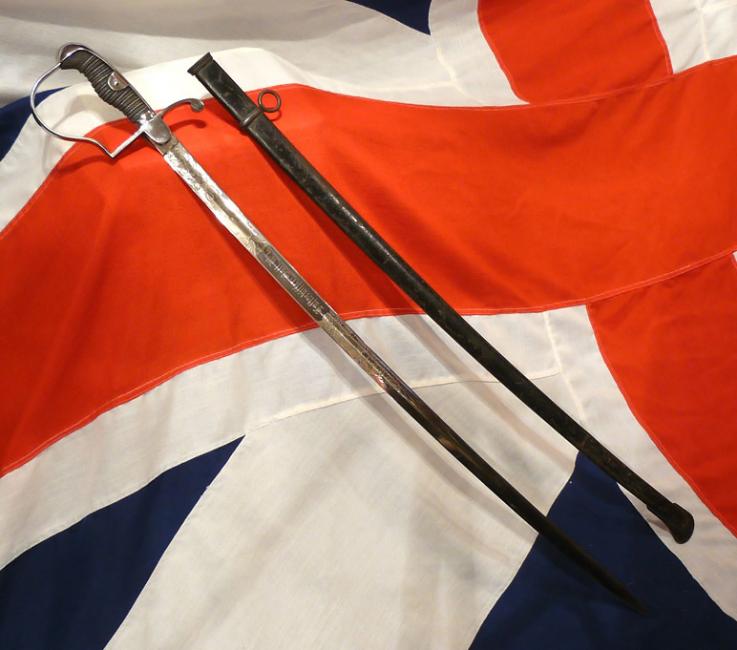
Click and use the code >23637 to search for this item on the dealer website Very Rare WW1 German Airship Bataillon ´Luftschiffer´ Regt. Nr.1 Officer&#acute;s Sword, of the Elite Imperial German Kaiser´s Zeppelin and Airship Guarde Infantry, Only The Second We Have Seen in 30 Years
  • Nation : Dutch
  • Local Price : 7500.00 USD
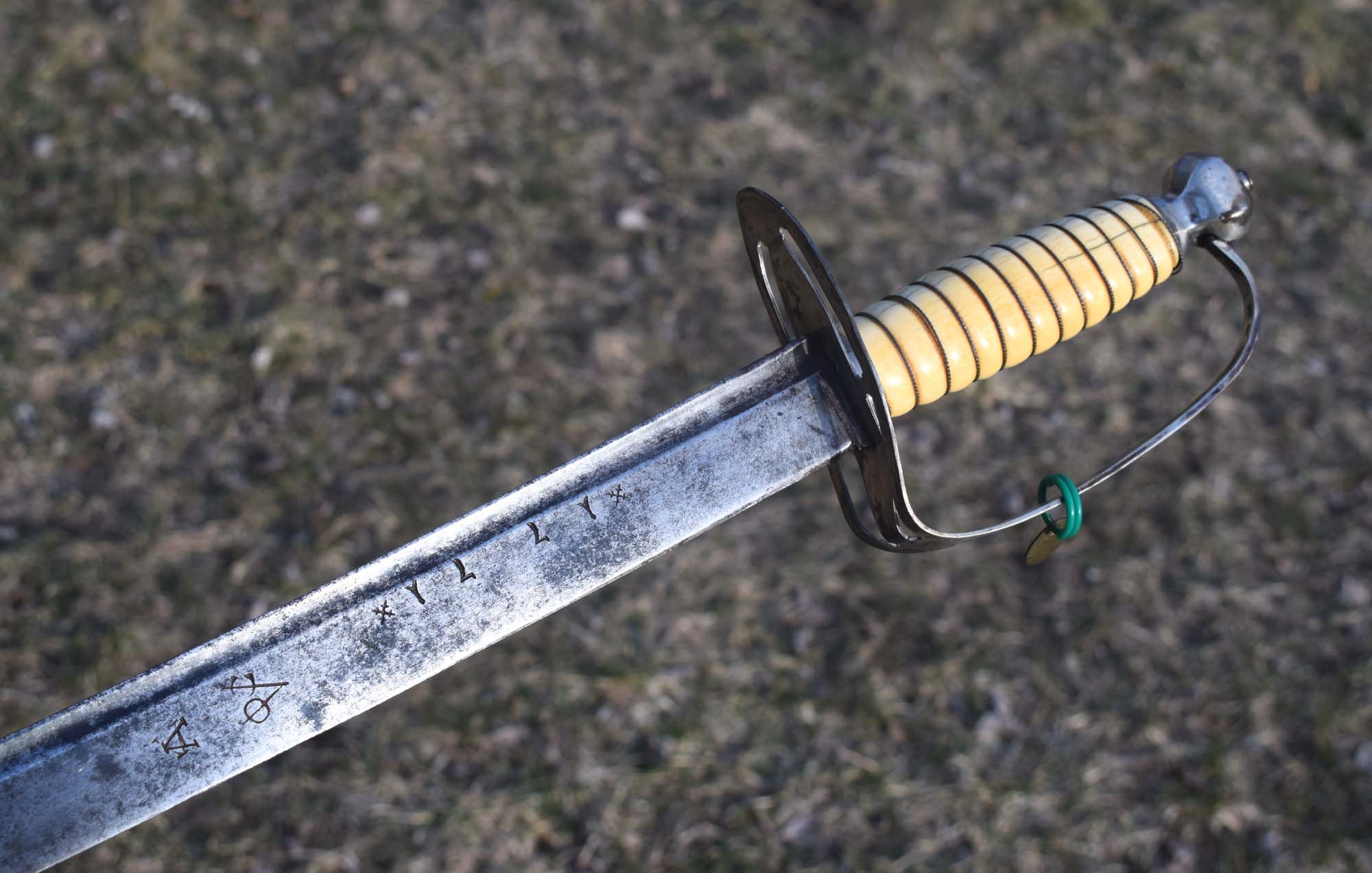
Dutch Voc Silver Hilted Officer's Saber With Scabbard Dated 1771!. A very rare VOC, Dutch East India Company, officers saber with deep blade marks of the VOC, Amsterdam and dated 1771 both sides! Exceptional early saber with full scabbard and silver mounts (scabbard age shrunken and cracked in 2 beneath mid mound, but displays perfectly.) See photos. Blade is about 29” long. The silver hilt has no cracks or repairs, just a little age deformation. It can use a better cleaning. Grip and grip wire is completely intact and grip has some age cracking. This great sword most probably belonged to a VOC captain or admiral. Original silver hilted Dutch VOC swords are very seldom, if ever, encountered! Price is firm. Thanks for looking! Be sure to check out our other listings for more great swords, arms and armor! Our direct email address is: [email protected]
  • Nation : British
  • Local Price : £5375
Click and use the code >20427 to search for this item on the dealer website Fabulous, Historical, And Important Scottish Basket Hilted Broadsword of a Distinguished Hero of the 79th Foot in the Crimean War & Subsequently Elevated, Due to His Gallantry, to a Position Within the Queen&#acute;s Bodyguard of H.M Queen Victoria
  • Nation : Spanish
  • Local Price : £5350
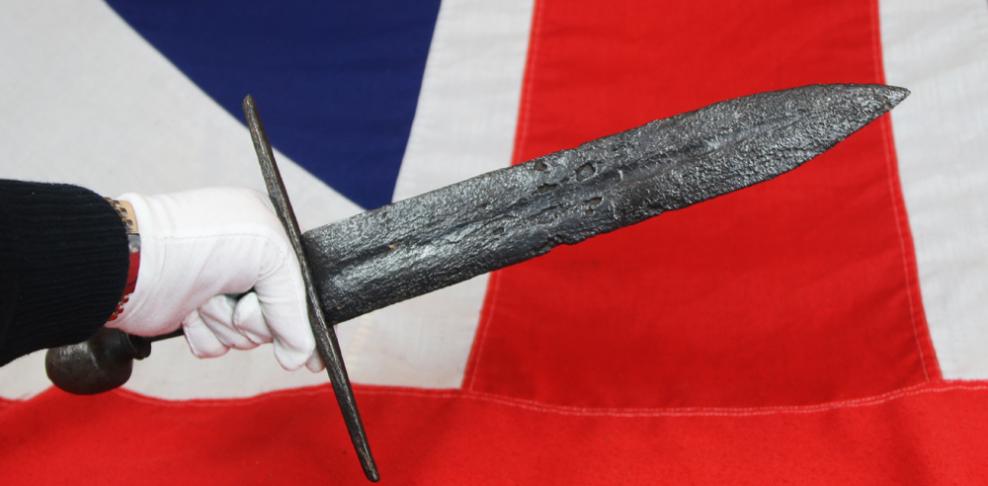
Click and use the code >23420 to search for this item on the dealer website Superb Original 12th Century Crusader Knights Templar Medieval Knight´s Dagger, A Shortened Knightly Sword, with Crucifix Hilt. The Blade Bears The Remains of a Templar Cross, Inlaid, in Gold Alloy Latten, Upon One Blade Face Below The Hilt
  • Nation : British
  • Local Price : £5250
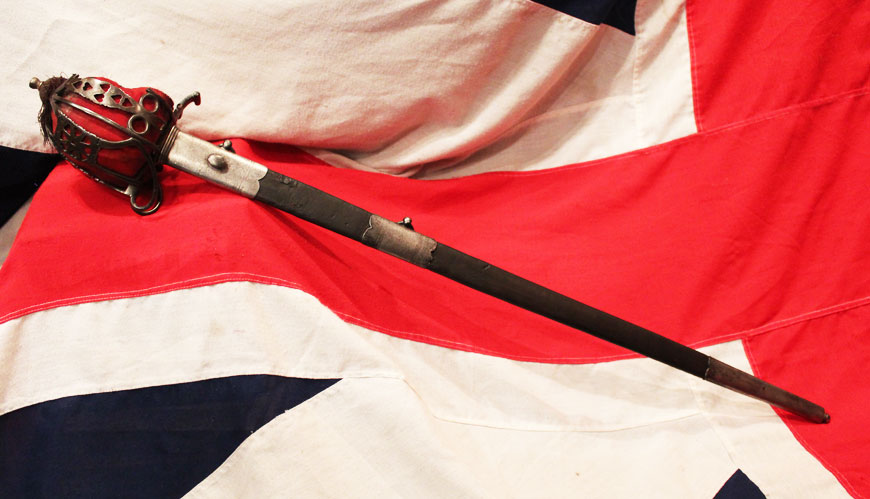
Scottish Basket Hilted Sword dating to circa 1725 to1740 mounted with an “ANDRIA FERARA” marked blade. A fine and robust Scottish basket hilted sword dating to the period preceding the last Jacobite Rebellion of 1745. The sword is a fine example of the Scottish armourers’ craft, the hilt being forged from finely rounded structural bars and pierced plates. The aperture of the basket guard is wider on one side showing that the guard was deliberately forged for a right handed user. The single edged thickly forged blade is a fine Solingen made example with a single fuller running underneath the spine. The fully developed basket guard is finely forged into an elegantly contoured profile. The two main frontal guard panels are decorated in traditional style, with vertical and horizontal border lines incised into the exterior surfaces towards the panel edges to form squares. Inside these squares a circle is pierced into the centre, The panels are further decorated with four pierced triangular arrowhead shapes which surround the centre circles supported by two pierced circles at the base of each. Further circles are pierced into each corner of the squares. The smaller, secondary guard plates to the sides, and the knuckle bow at the front, are finished in similar style. The edges of all the guard plates are skillfully symmetrically fretted with cusps, merlons and triangles. The cone-shaped pommel has a waisted button on top and is decorated with three sets of incised triple grooves, equally spaced apart, which radiate from the button, the middle groove being wider and more pronounced than those on its flanks in each case. The upper guard arm terminals of the basket fit into a chiselled groove which extends for the full circumference of the pommel just below its middle to secure the structure. The blade shoulders are secured in a chiselled groove in the cross guard bar underneath the hilt which retains its scrolled wrist guard. The spirally grooved wooden baluster shaped grip retains its original shagreen cover and iron ferrule at the top. Originally the grip was bound with a wire wrap inside the groove which is now missing.  The hilt also retains its thick leather liner at the base of the grip. The tapering single edged blade is 32.75 inches (83.5 cm) long and of fine quality. A bold fuller runs underneath the spine from the hilt and terminates 8 inches (20 cm) from the rounded tip after which the blade is double edged. The armourers’ mark “ANDRIA FERARA” is stamped into the fuller near the hilt embellished with cross marks and an incised floret beneath the fuller on one side. The blade was most likely made in Solingen. For similar styles of hilt see “Poetry in Steel The Earliest Swords of Walter Allan of Stirling”, by the Baron of Earlshall, London Park Lane Arms Fair, page 129 to 138, Spring 2018, Apollo Publishing. There are strong resemblances between this hilt and those produced in Stirling by both John and Walter Allan during this period, and particularly that shown on page 137 made by John Allan, figs 9 and 10, See also Cyril Mazansky, “British Basket-Hilted Swords”, The Boydell Press, 2005, page 102, fig F5c, for a sword in Blair Castle in Perthshire, and page 113, fig F15c for a sword in the Marischal College in Aberdeen, although the pommel has been replaced on this sword, and page 115, fig F15i, for a sword in a private American collection. The overall length of the sword is 38.5 inches (98 cm) long. The sword is in fine structural shape without repairs or damage apart from slight damage to the wrist guard. There are evenly spread light patches of blackened aging overall.
  • Nation : British
  • Local Price : £5250
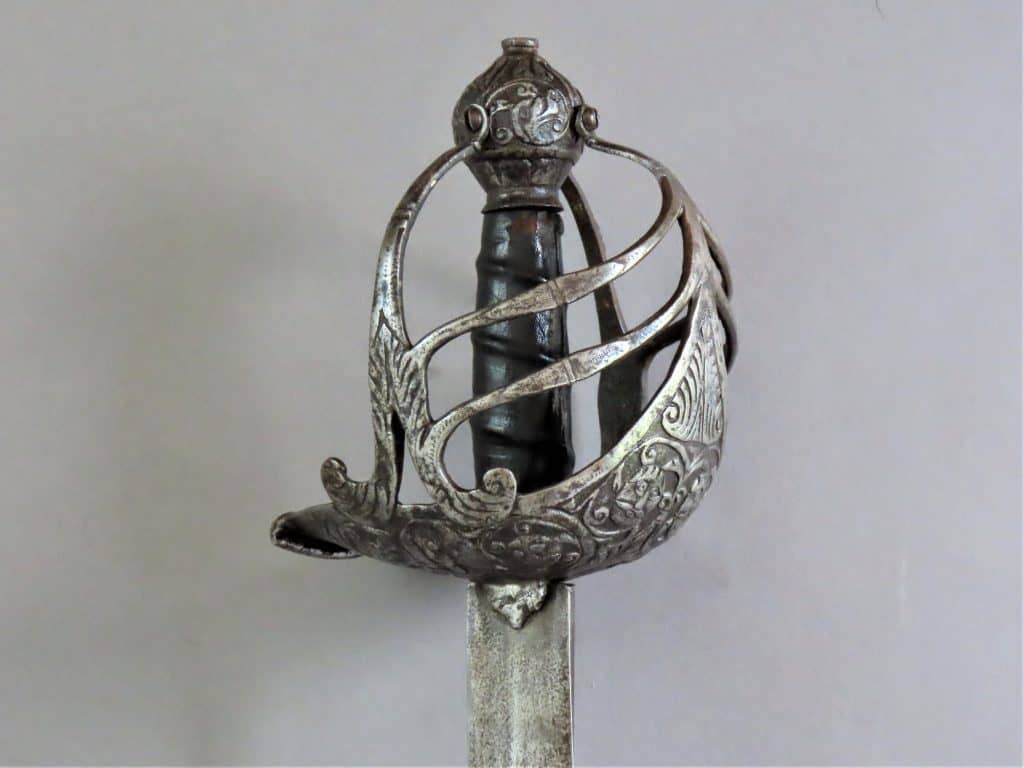
English “Mortuary” hilted sword dating to the middle part of the 17th century. A fine English “Mortuary” hilted sword dating to the middle part of the 17th century and the English Civil War, Commonwealth and Protectorate periods. The hilt of this sword is of typical form consisting of a broad saucer-shaped guard plate from which three main curved flattened guard bars taper upwards ending with flattened angled terminals screwed into the pommel. The sword is notable because of its robust build, fine condition and the higher than average quality of the chiselled decoration. The convex surface of the guard plate is covered with the finely executed busts of eight men, four located either side of the blade. Two, opposite each other, are wigged figures, probably judges. The others have a more grotesque appearance. The remaining spaces are filled with panels of delicate foliage and fine swirling tendrils. The pommel is decorated in the same foliate style. Two downward facing bars emanate from each side of the knuckle bow towards its middle and join the base of each side guard bar to add strength to the structure. The base of each side guard bar is strengthened with a fishtail or merlon terminal which joins the bars to the dish.  The downwardly curled ribbed wrist guard strengthens the rear edge of the plate. The guard bars are decorated with chiselled lines. The pommel is globular in shape and has an integral button on top and a pronounced flared neck beneath. The grip is wrapped with a leather binding which covers the original grip covering of surface mounted wire. The base sits on an iron flanged plug mounted onto the inside of the guard plate from which two langets extend through the tang aperture to flank the blade either side for a short distance below the hilt. The single-edged blade has a pronounced fullered ricasso. A broad shallow fuller runs from the hilt underneath the blunt spine of the blade and terminates a short distance from the tip after which the blade is double edged. A second shorter fuller of similar width opposite the first runs each side for the length of the ricasso after which the main cutting edge of the blade begins. An unknown Blade Maker's stamp is applied on each side within the fuller as is an orb and cross mark a short distance away. The blade was probably made in Solingen in Germany. Huge numbers of blades were imported into Britain during the Civil War period to fulfil demand for swords on both Royalist and Parliamentarian sides.  The blade is 33.75 inches long (86 cm) and overall the sword measures 40 inches (101.5 cm) long. Stuart C Mowbray in “British Military Swords”, Mowbray Publishing, 2013, dedicates a section to Mortuary Swords in pages 178 to 225, as does Cyril Mazansky, in “British Basket Hilted Swords”, Boydell Press 2005, Chapter 11, pages 233 to 280. The similarities between the engraved patterns on the hilts of the swords illustrated in these books and our sword, although they are all somewhat different, shows that the quality of chiselling and engraving present on our sword is of superior quality compared to most other than those known to have been commissioned for nobility of one form or another. This sword is of a style which does not adopt the secondary rear guard bars which appear on some mortuary swords which extend downwards from the  side guard bars to fix on the guard plate nearer to the wrist guard edge.  The robust and broad expanse of the guard of this sword dispenses with the need as can be seen in the examples present in Mowbray and Mazansky.
  • Nation : British
  • Local Price : £5250
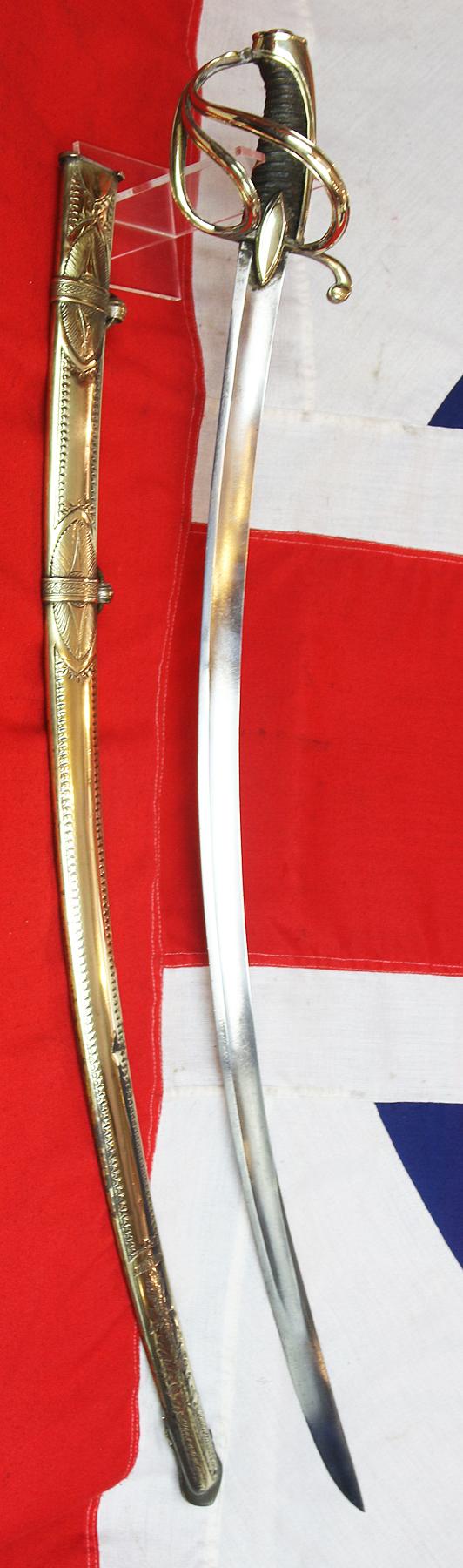
Click and use the code >25315 to search for this item on the dealer website Very Fine Napoleonic, Ist Empire, General Staff Officer´s Sabre. Three Bar Hilt with Deluxe Imperial General Staff Officer´s Scabbard. Another Museum Grade Historical Piece We Are Privileged To Offer
  • Nation : British
  • Local Price : £5000
Scottish Basket Hilted Sword dating to circa 1730-1740. A fine robust Scottish basket hilted sword dating to the period preceding the  Jacobite Rebellion of 1745. The sword is a fine example of the Scottish armourers’ craft, the hilt being forged from thick structural rounded bars and plates. The aesthetic appeal of the hilt is apparent when viewed from the front revealing the symmetry of the panels and deliberate nature of the construction.  The single edged blade is a finely forged example with a double fuller most likely of Solingen manufacture The fully developed basket guard is finely forged into an elegantly contoured profile. The two main frontal guard panels are decorated in traditional style, with vertical and horizontal parallel border lines incised into the exterior surfaces towards the panel edges to form squares. Inside these squares a circle is pierced into the centre, filed on the outside to create saltire shapes. The panels are further decorated with four pierced triangular arrowhead shapes which surround the saltires supported by two pierced circles at the base of each. Further circles are pierced into each corner of the squares. The smaller, secondary guard plates to the sides, are finished in similar style. The knucklebow plate is decorated with lines but not pierced in the middle leaving a solid panel. This blank space was normally reserved for an inscription or crest but in this instance has been left blank. The dome-shaped pommel has a waisted button on top and is decorated with four pairs of incised double lines, equally spaced apart, which radiate from the button. The upper guard arm terminals of the basket fit into a chiselled groove which extends for the full circumference of the pommel just below its middle to secure the structure. The blade shoulders are secured in a chiselled groove in the cross guard bar underneath the hilt which retains its scrolled wrist guard. The spirally grooved wooden baluster shaped grip retains its original shagreen cover together with its brass wire binding. The hilt also retains its full leather liner covered with red cloth on the outside and stitched with a blue silken hem, much of which remains. The tapering single edged blade is of fine quality. It has a  ricasso which extends 1.5 inches (4.0 cm) from the hilt. A bold fuller runs underneath the spine from the hilt and terminates 7 inches (18 cm) from the rounded tip after which the blade is double edged. A second fuller commences 7.5 from the hilt and runs underneath the first almost to the tip. The blade is 32 inches (81.5 cm) long. For similar styles of hilt see “Poetry in Steel The Earliest Swords of Walter Allan of Stirling”, by the Baron of Earlshall, London Park Lane Arms Fair, page 129 to 138, Spring 2018, Apollo Publishing. There are strong resemblances between this hilt and those produced in Stirling by both John and Walter Allan during this period, particularly that shown on page 137, figs 11 and 12, which is a robust hilt of similar profile lacking fretted edges to the guard panels. See also Cyril Mazansky, “British Basket-Hilted Swords”, The Boydell Press, 2005, page 106, fig F12, for a sword in a private American collection and pages 115, fig F15h, and page 116, fig F16, for swords in the Marischal College in Aberdeen, all of which have plain edges to the guard panels. The overall length of the sword is 37.75 inches (96 cm) long. The sword is in fine structural shape without repairs or damage and in blackened russet condition overall.
Page 12 of 160