
Show

Forgot your password?

Error message here!

Error message here!

Error message here!

Error message here!

Show Error message here!

Show Error message here!

Lost your password? Please enter your email address. You will receive a link to create a new password.

Error message here!

Back to log-in

Close

For Sale

The following items are listed by for sale by users of the site and dealers. They are in no way endorsed or guaranteed by www.antiquearmsresearch.com

Add a Classified Item
to

Clicking on the sword will take you through to the relevant classified item or dealer site.
Don't miss out! - Do you want to be kept informed weekly of new aditions? Just join our weekly update list.

You can also receive regular email notifcations when items match your keywords. To recieve them just register or logon at the top right of this page.
Page 138 of 156
  • Nation : -
  • Local Price : 1,750 kr
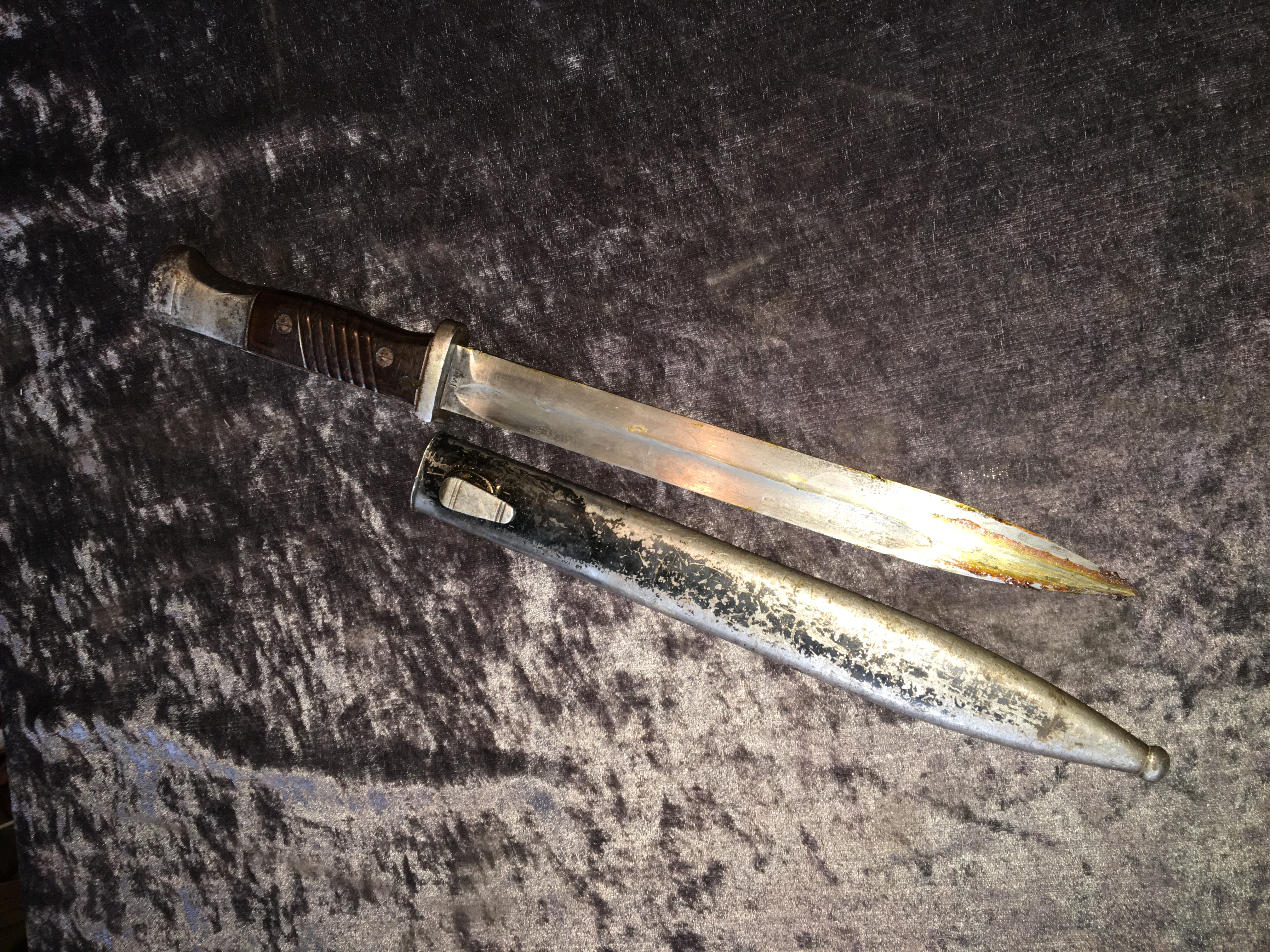
Tysk K-98 (84-98) Bajonett.
  • Nation : -
  • Local Price : 1,750 kr
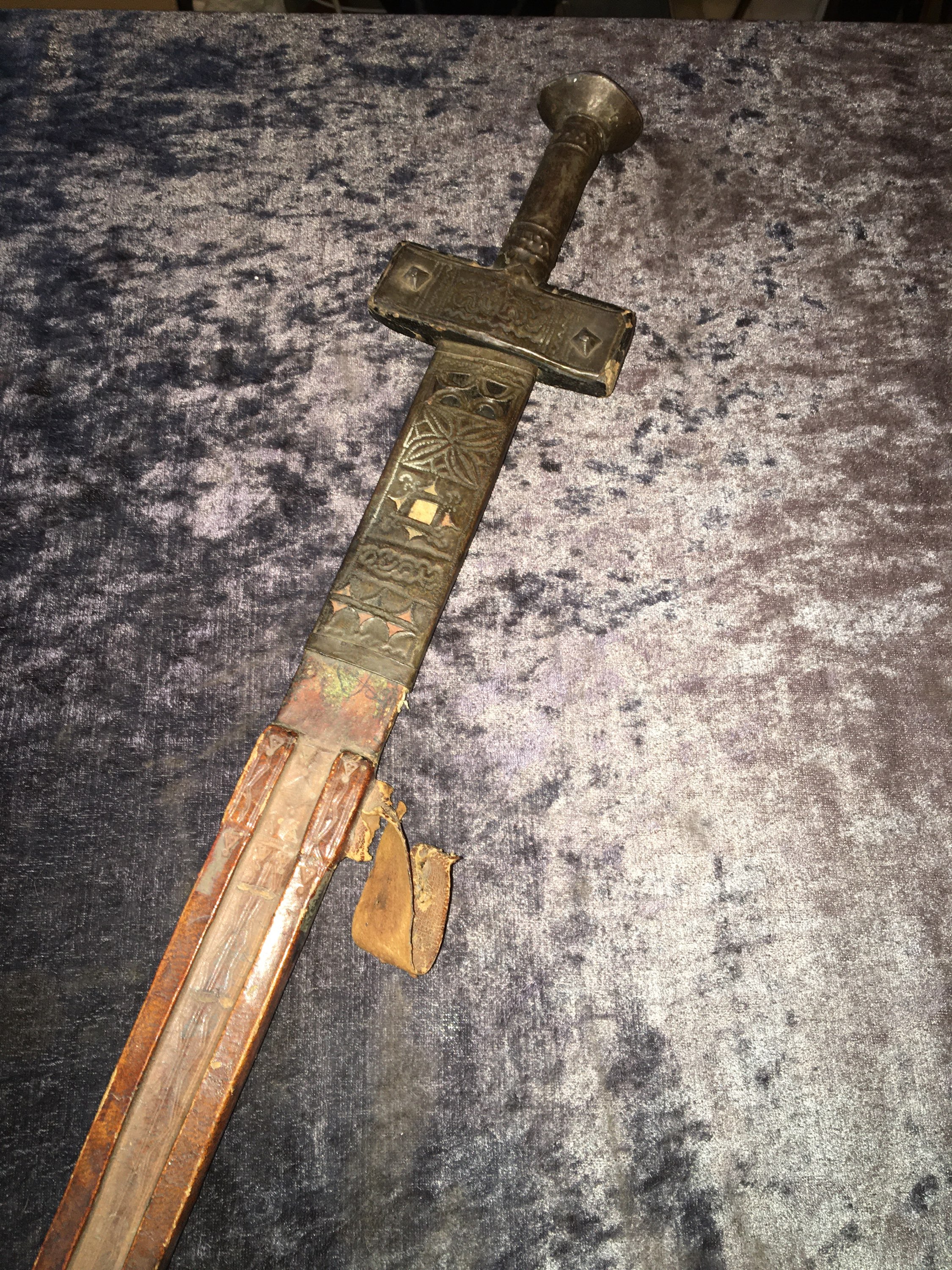
Tuareg sword/Takuba 18-1900s.
  • Nation : -
  • Local Price : 1,750 kr
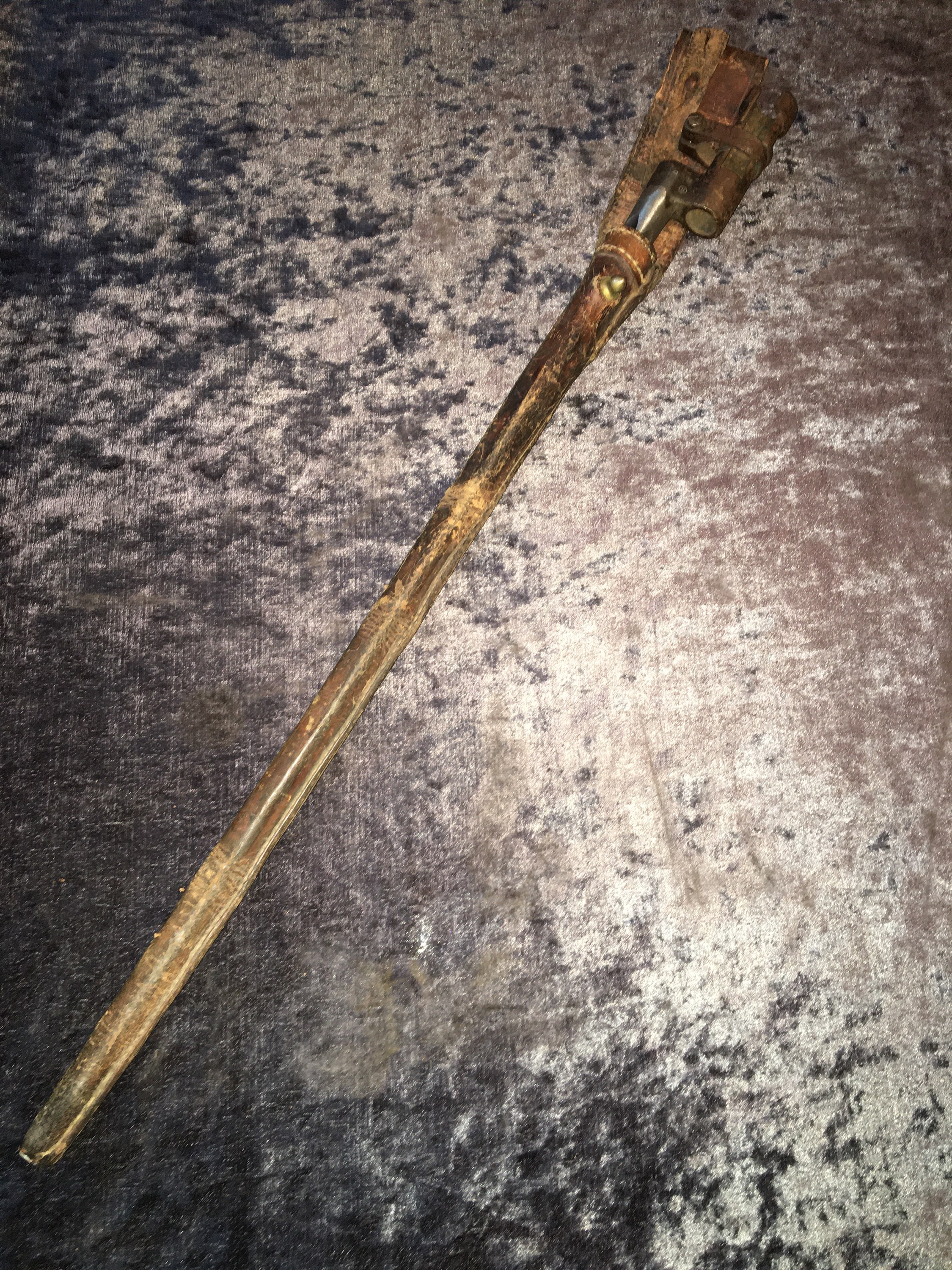
Amerikansk bajonett m/1913.
  • Nation : -
  • Local Price : £135.00
Argentine Type A Knife Bayonet for the FN FAL with Tempex Frog, Falklands War. Description Spear-pointed knife blade with partial false edge. Blade 7¾ inches in length, the bayonet 12½ inches overall. Steel hilt with muzzle ring and integral flash-hider prongs, ribbed black plastic grip scales held by two screws, exposed tang, steel pommel. Steel scabbard with throat piece and oval frog stud, green nylon canvas frog with retaining strap, plastic belt grip and wire hanger. The bayonet is stamped on the pommel with the serial number &#acute;03697&#acute;. The scabbard body is stamped with the serial number &#acute;41897&#acute;, slightly obscured by paint. The FN FAL infantry rifle and its bayonet were adopted by Argentina in the late 1950s, initially purchased from FN in Belgium but later made domestically by Argentine manufacturers. Several types of bayonet and webbing attachments were used by the Argentinean Army and Marines during the Falklands conflict: the knife model with distinctive flash-hider &#acute;prongs&#acute; on its muzzle ring was the &#acute;Type A&#acute; bayonet, which fitted to the early FALs. Its blade was based upon the US M4. This was used side by side with the tubular &#acute;Type C&#acute; model, which was introduced when a 22mm muzzle device was added to the FAL in 1962. The scabbards are not interchangeable between Types, the blades being of different shapes. Belt frogs for these bayonets are made of either green leather or nylon fabric: the &#acute;Correaje Argentino de Cuero&#acute; (Argentine Leather Belting) load-bearing system was introduced around 1970, but incorporated some preexisting elements including leather frogs and pistol holsters, which were then painted green to match. The nylon &#acute;Correaje Tempex&#acute; (Tempex Belting) was introduced in the early 1980s to replace it which included a new frog. Both forms of load-bearing system were still in use by 1982 so both were carried in the Falklands. Either frog will fit either Type of bayonet. After Argentine forces surrendered to the British on June 14 1982 their small arms were piled up by the thousand in the Islands&#acute; capital Port Stanley, where most Argentine forces had been deployed or driven back to. A large quantity of arms had also been captured earlier at Goose Green, which was a key ammunition dump for the Argentine forces, and still more were gathered later from unengaged Argentine garrisons on the island of West Falkland. The FAL rifles became British government property and were either brought to the UK or dumped at sea, while bayonets and the short machete-like officer&#acute;s sidearms frequently became personal trophies or souvenirs for British soldiers as they would not be illegal to own in civilian life. This example is most likely one such &#acute;bring-back&#acute;. The blade is very sharp with visible grinding marks, some undulation to its true edge which suggests that nicks or chips have been partly sharpened out. The tip has rounded, the sharpening runs right up to it but with no attempt to repoint. Some frosting and small spots of light patination. The hilt and scabbard retain most of their original black paint, especially where the scabbard was protected by its frog, some chipping to the paint on edges and raised areas like the frog stud exposing steel with some rust spots. The pommel and tang have a heavy grey patina. The plastic grips have only light handling wear and one small (7mm) scrape on one side. The frog has some heavy patination to its steel and brass, very minor fray to the nylon at the top corners but no loss of integrity, its buttons work and frog hook moves freely.
  • Nation : -
  • Local Price : £135.00
Argentine Type C Socket Bayonet for the FN FAL with Tempex Frog, Falklands War. Description Tubular steel one-piece bayonet with flash ports and spear-pointed blade with semicircular profile. Blade length 6½ inches (16.5cm), 11 3/8 inches (28.9cm) overall. Black plastic scabbard with eyelet chape, circular frog stud and steel throat piece, green nylon frog with retaining strap, plastic belt grip and wire hanger. The bayonet is faintly stamped on the blade with the serial number &#acute;01-76943&#acute;. The scabbard is unmarked. The FN FAL infantry rifle and its bayonet were adopted by Argentina in the late 1950s, initially purchased from FN in Belgium but later made domestically by Argentine manufacturers. Several types of bayonet and webbing attachments were used by the Argentinean Army and Marines during the Falklands conflict: the tubular model was the &#acute;Type C&#acute;, compatible with later models of the FAL (post 1962) which had a 22mm muzzle device. This was used side by side with the &#acute;Type A&#acute; knife bayonet, which fitted to the early FALs. The scabbards are not interchangeable between Types, the blades being of different shapes. Belt frogs for these bayonets are made of either green leather or nylon fabric: the &#acute;Correaje Argentino de Cuero&#acute; (Argentine Leather Belting) load-bearing system was introduced around 1970, but incorporated some preexisting elements including leather frogs and pistol holsters, which were then painted green to match. The nylon &#acute;Correaje Tempex&#acute; (Tempex Belting) was introduced in the early 1980s to replace it which included a new frog. Both forms of load-bearing system were still in use by 1982 so both were carried in the Falklands. Either frog will fit either Type of bayonet. After Argentine forces surrendered to the British on June 14 1982 their small arms were piled up by the thousand in the Islands&#acute; capital Port Stanley, where most Argentine forces had been deployed or driven back to. A large quantity of arms had also been captured earlier at Goose Green, which was a key ammunition dump for the Argentine forces, and still more were gathered later from unengaged Argentine garrisons on the island of West Falkland. The FAL rifles became British government property and were either brought to the UK or dumped at sea, while bayonets and the short machete-like officer&#acute;s sidearms frequently became personal trophies or souvenirs for British soldiers as they would not be illegal to own in civilian life. This example is most likely one such &#acute;bring-back&#acute;. The bayonet retains some of its original blued finish, with some wear and rust spotting to the socket. The blade is free of rust, protected by its scabbard, with some wear to the tip. The locking catch of the bayonet and the frog stud & throat piece of the scabbard have some wear to their black lacquer. Minor rubbing and scratching to the plastic scabbard body and belt grip. Light rust to some of the scabbard rivets and wire hanger.
  • Nation : Russian
  • Local Price : 1,700 kr
Russian Mosin-Nagant bayonet in Finnish scabbard.
  • Nation : -
  • Local Price : 1,700 kr
US Garand bayonet WW2.
  • Nation : Indian
  • Local Price : 1,700 kr
Bayonet east india company 1840.
Page 138 of 156