
Show

Forgot your password?

Error message here!

Error message here!

Error message here!

Error message here!

Show Error message here!

Show Error message here!

Lost your password? Please enter your email address. You will receive a link to create a new password.

Error message here!

Back to log-in

Close

For Sale

The following items are listed by for sale by users of the site and dealers. They are in no way endorsed or guaranteed by www.antiquearmsresearch.com

Add a Classified Item
to

Clicking on the sword will take you through to the relevant classified item or dealer site.
Don't miss out! - Do you want to be kept informed weekly of new aditions? Just join our weekly update list.

You can also receive regular email notifcations when items match your keywords. To recieve them just register or logon at the top right of this page.
Page 15 of 156
  • Nation : British
  • Local Price : £4500
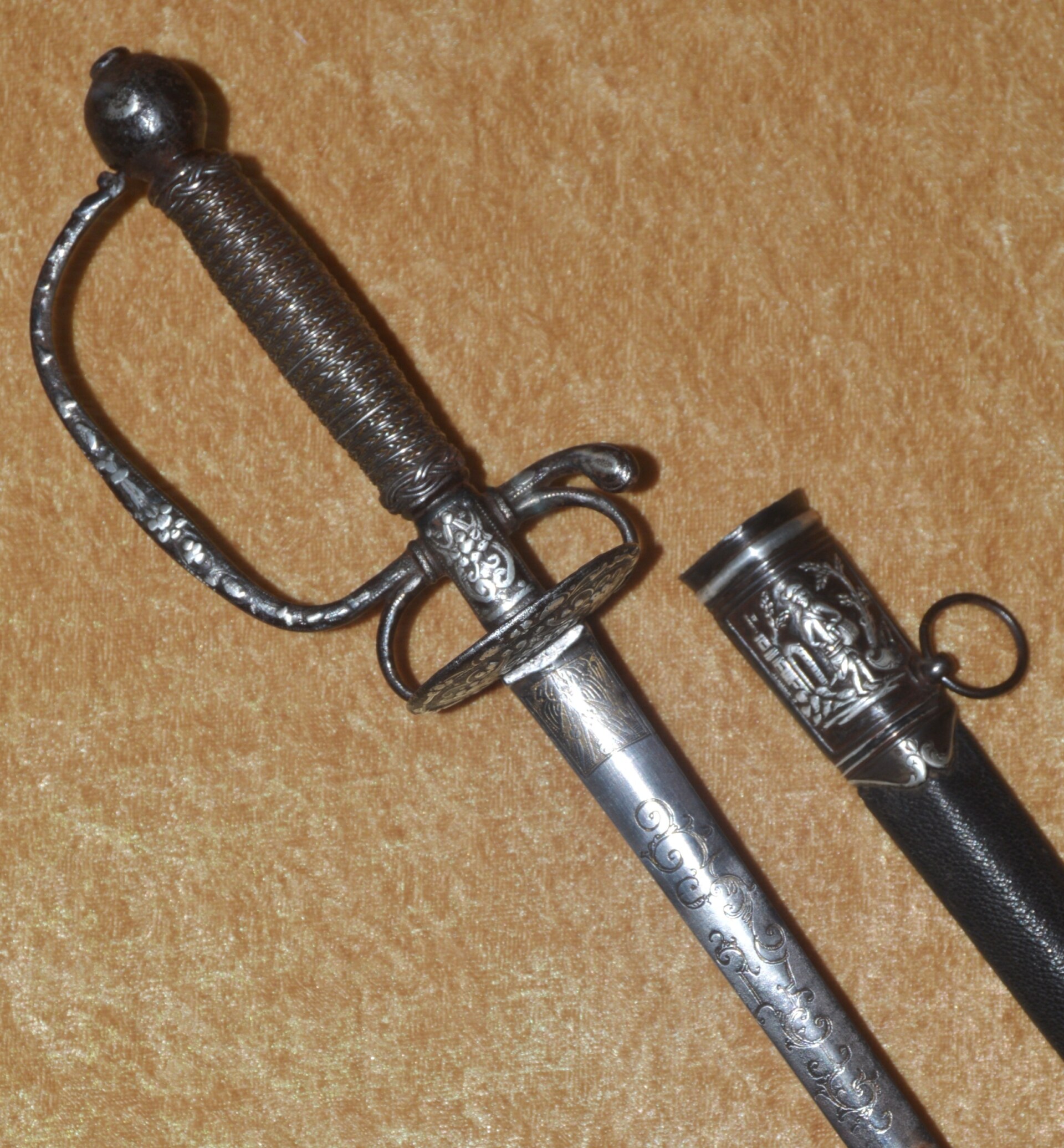
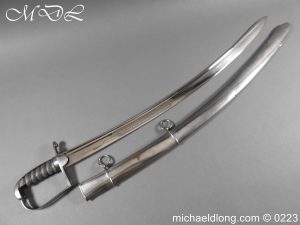
English Silver Hilted Officer’s Sabre by John Carman (II) of London with hallmarks for 1754 / 1755.. This fine officer’s sabre was once part of the Lattimer Collection and is published in Daniel D Hartzler “Silver Mounted Swords – The Lattimer Family Collection”, 2000, Josten's Printing Company, fig 130, page 68. An old collection reference number is painted in white on the blade near the hilt. See also the same sabre illustrated in Daniel D Hartzler, American Silver-Hilted and Early Federal Swords According to Their Geographical Areas of Mounting, Volume II, 2015, in the section on “Imported Swords”, fig 625, page 690. The hilt and curved fullered blade are of British mid-18th century individual proto-military / regulation type. The hilt is formed from a base made as a convex  heart shaped dish with a strengthened brim from which the knuckle bow rises to a swollen hook terminal which fixes into the pommel front. The knucklebow is supported by a single scrolling secondary guard bar which protects the outside of the right hand of the user. The globose pommel has an integral button on top and a pronounced neck beneath. The baluster shaped grip is covered with a decorous binding consisting of different thicknesses of straight and roped silver wire. The grip has a cone-shaped ferrule at its base. The dish guard has a wristguard with a swollen downward facing terminal. The knucklebow is clearly stamped with London hallmarks and the stamp of John Carman. The curved blade has a short ricasso and a broad central fuller extending for most of the blade length with a narrower fuller underneath the spine of the blade for almost the same length. The John Carman that made this hilt was the second cutler and silversmith of that name working in London in the first half of the 18th century. His father was the first who died in 1741. John Carman (II) was born in 1721 / 2 and was indentured to his father for seven years from 1736. He was sworn free by servitude of the Cutlers’ Company in 1743 and registered his first maker’s mark at Goldsmith’s Hall in London in 1748. John Carman (II) was a successful businessman and sword maker. He rose through the ranks of the Cutlers’ Company to become Master for 1761-2. He died in 1764. The length of the blade is 31.25 inches (79.5 cm). The overall length is: 37.25 inches (94.5 cm). The hilt of this sabre is somewhat similar in structure to a more complex and decorous silver spadroon hilt by the same maker hallmarked for 1755 / 1756 which sold at Bruneau Auctions in their sale of April 9th, 2022 lot, 82 (hammer price $10,000).
  • Nation : Japanese
  • Local Price : £4450
Click and use the code >24184 to search for this item on the dealer website Beautiful Antique Edo Period Wakizashi Samurai Short Sword, With a Fabulous Quality Botanical Shakudo Gold and Silver Takebori Mounts & Tsuba
  • Nation : British
  • Local Price : £4250
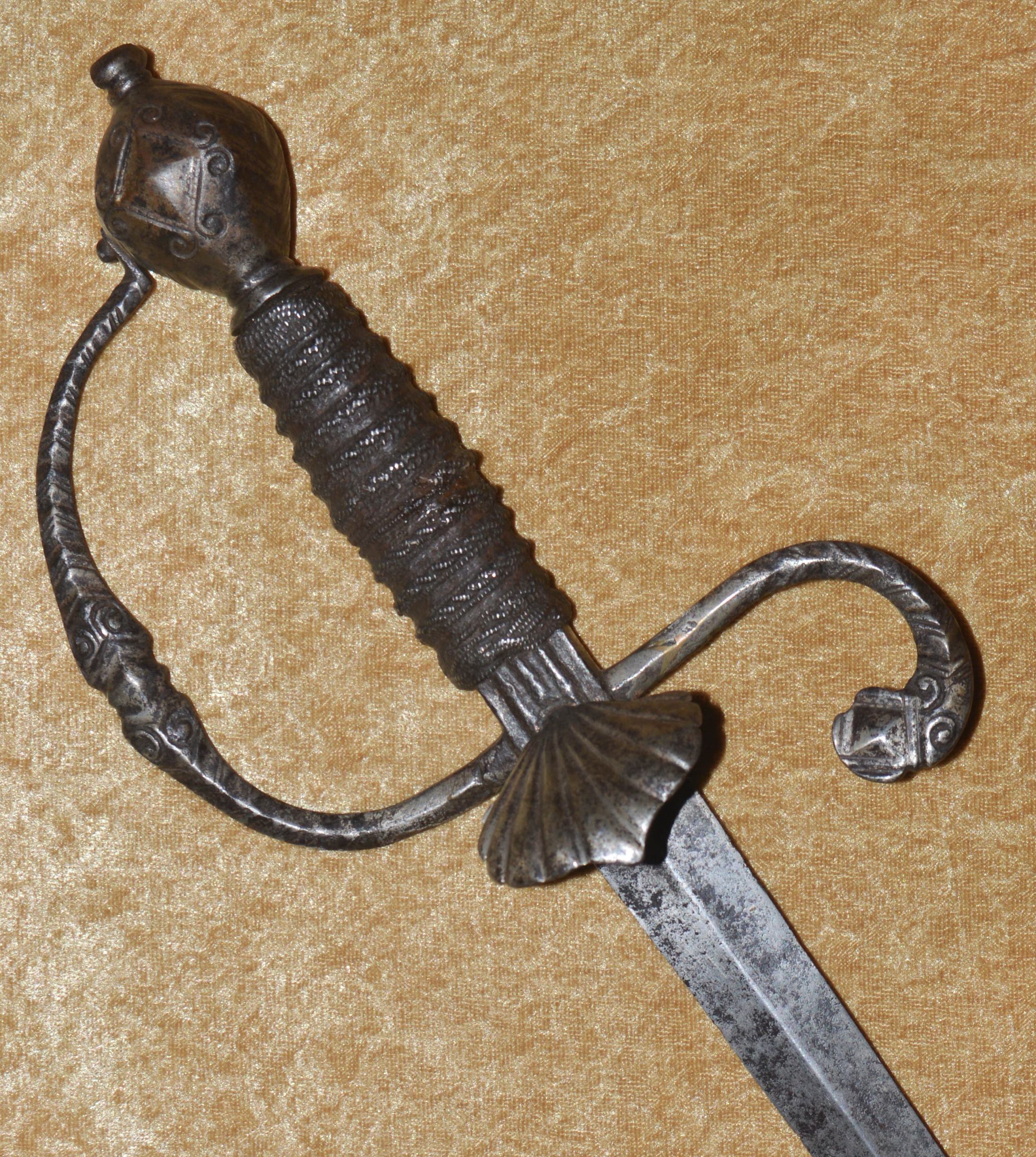
English Civil War Period Mortuary Sword Circa 1640-1660. An attractive English “Mortuary” sword with a pierced and chased hilt dating to the middle part of the 17th century and the English Civil War and Protectorate periods. The hilt is of typical form consisting of a broad boat-shaped guard plate from which three curved primary guard bars, the knuckle bow and two side guard bars, extend upwards ending in flattened angled terminals screwed through eyelets into the pommel with loop headed screws. Two downward facing secondary guard bars emanate from each side of the knuckle bow near its middle and join the base of each side guard bar to strengthen the structure. The guard plate is covered with chiselled decoration to the outside consisting of a roundel surrounding the tang aperture engraved with foliage. The roundel is surrounded by a band pierced and chiselled inside with wigged heads at each quarter separated by pierced designs of foliage and the heads of beasts. This is surrounded by a plain band. The upturned prow of the guard plate is chiselled with scales. The secondary guard bars to the front are chiselled with simple linear features to the middles. The pommel is globular in shape and has an integral button on top and a  pronounced flared neck beneath. It is also chiselled with four wigged heads separated by foliate panels. The spirally grooved wooden grip is wrapped with different thicknesses of twisted steel wire and has steel woven “Turks’ Heads mounted top and bottom. The grip base sits on an iron flanged plug mounted onto the inside of the guard plate from which two langets extend through the tang aperture to flank the blade either side for a short distance from the hilt. The single-edged blade has a pronounced ricasso extending for 1.5 inches (4 cm)  from the hilt. At the front a deep narrow fuller runs from the hilt underneath the blunt edge of the ricasso on the cutting side of the blade. At the back a fuller runs from the hilt underneath the spine of the blade to a distance of 7 inches (18 cm) from the tip after which the blade is double edged. A further broad shallow fuller runs from the end of the ricasso along the middle of the blade to its tip. A Blade Maker's stamp of a crown over a crest is applied to one side of the blade in the ricasso. A short distance from the ricasso two counter facing orb and cross marks are applied inside the shallow middle fuller. Between these stamped at the diagonal in capital letters is “CLEMENS” with “SOLIGEN” beneath and “MEFECIT” with “SOLIGEN” beneath enhanced by scrolled engraving.  Clearly the blade was made in Solingen by a bladesmith called Clemens. Solingen in Germany was an important manufacturer of blades for use in the English Civil War and huge numbers were imported into Britain during this period for use by both Royalist and Parliamentarian sides. The blade is 32.75 inches long (83 cm) and overall the sword is 39 inches (99 cm) long. For further examples of Mortuary swords see Stuart C Mowbray's “British Military Swords”, Mowbray Publishing, 2013, in the section dedicated to Mortuary Swords, pages 178 to 225. And see Cyril Mazansky, British Basket Hilted Swords, Boydell Press 2005, Chapter 11, pages 233 to 280. The sword is in good original condition overall with some light “salt and pepper” pitting to the blade. The hilt is firm and in good shape with a couple of small minor cracks and slight damage to one of the pommel screws and one of the eyelets.
  • Nation : British
  • Local Price : £4250
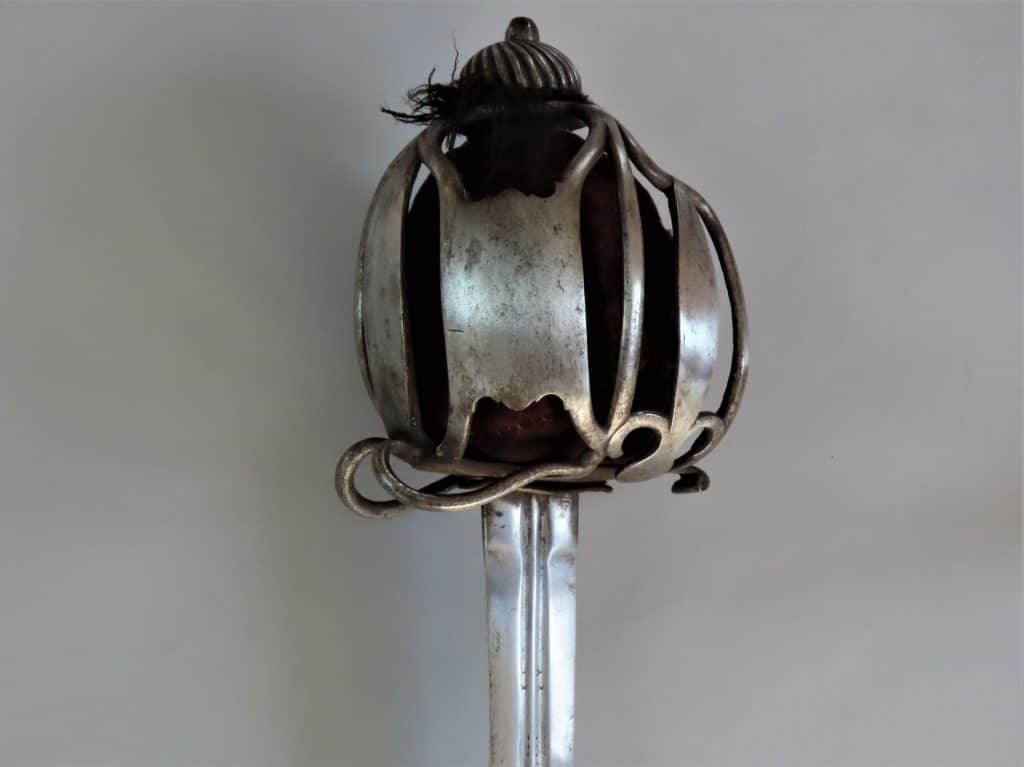
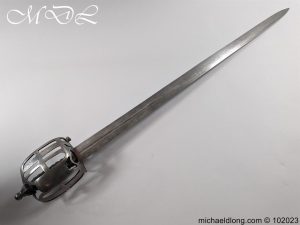
Mid 18th Century British Dragoon Basket Hilted Sword with a “G R” Cypher on the blade by HARVEY. An impressive example of a horseman's basket hilted back sword made for an Officer, or Trooper, of a North British / Scottish Regiment of Dragoons towards the middle and third quarter of the 18th century. These swords were issued by the Board of Ordnance and were manufactured in the Scottish manner. The type was first issued in the second quarter of the 18th century and used during the Jacobite Rebellion of 1745, Britain's wars in Europe and the French Indian War in North America and the American Revolutionary War. The blade is of fine quality stamped “HARVEY” and incised with the royal Cypher of King George II or III. The sword is a rare survivor, well preserved and in undamaged condition, as is visible in the photographs. The fully formed basket is pierced with hearts and circles in the main front and side panel guards which are also finely fretted at the edges with chevrons and merlons. One of the more usual frontal guard plates has been replaced in the hilt design with an oval ring in the “horseman” fashion. The arms of the guard are forged onto a circle of iron into which the base of the bun shaped pommel sits. The pronounced button is integral with the pommel and not of separate manufacture. The original spirally fluted grip is of hardwood with a shagreen cover, and retains its twisted brass wire binding. The hilt retains its leather buff coloured liner. The imposing fine quality tapering blade is just under 36 inches long (just over 91 cm) and made by HARVEY of Birmingham, a noted contractor to the British Board of Ordnance at the time, and typical of this heavy blade type. The blade is intended mainly for striking downwards at opposing infantry soldiers and cavalry with great force and reach. The blade has a thick spine and is double edged for the last 13 inches (33 cm) towards the point after the fuller terminates and the back edge has been sharpened to the tip. It has a short ricasso from which three conjoined broad fullers extend along the blade for an inch from the hilt (2.5 cm). A broad fuller commences 5 inches (13 cm) from the blade and tapers to the tip.  From the same place a narrower deeper fuller runs underneath the spine on both sides until the blade becomes double edged. The space between the two sets of fullers is engraved on both sides with the “G R” Cypher with crown above, and “HARVEY” beneath. Although many swords of this type survive with blades of shorter length, the majority of these have been shortened during their working lives. This blade retains its original length. Overall the sword is in fine condition. For a further example of this sword type see Cyril Mazansky, British Basket-Hilted Swords, Boydell Press / Royal Armouries, 2005, plate F1e page 97, for a sword in the National Museums of Scotland, collection reference LA33.
  • Nation : British
  • Local Price : £4,250.00
Naval Flintlock Flare Gun by North, Rare. SN X3061. A Rare Naval Flintlock Flare Gun by North. 23&157; overall, 7 1/2&157; round brass 1 &194;&188;&157; bore barrel, engraved ´Royal Exchange London´ with London Proofs & Foreigners mark. Brass rounded 1755 pattern lock plate with Crown GR & inspector´s mark, ´E. North 1763´ on tail, stamped internally with Crown over ´2´ &194;&160;inspector´s mark and ´VII´ on lock edge, main spring & sear. Swan neck cock & brass pan. Walnut full stock with hand rail butt, with ordnance pattern brass mounts comprising brass trigger guard, butt plate & wrist escutcheon. Brass tipped ramrod. Dated 1763&194;&160; &194;&160; &194;&160; &194;&160; &194;&160; &194;&160; &194;&160; &194;&160; &194;&160; &194;&160; &194;&160; &194;&160; &194;&160; &194;&160; &194;&160; &194;&160; &194;&160; &194;&160; &194;&160; &194;&160; &194;&160; &194;&160; &194;&160; &194;&160; &194;&160; &194;&160; &194;&160; &194;&160; &194;&160; &194;&160; &194;&160; &194;&160; &194;&160; &194;&160; &194;&160; &194;&160; &194;&160; &194;&160; &194;&160; &194;&160; &194;&160; &194;&160; &194;&160; &194;&160; &194;&160; &194;&160; &194;&160; &194;&160; &194;&160; &194;&160; &194;&160; &194;&160; &194;&160; &194;&160; &194;&160; &194;&160; &194;&160; &194;&160; &194;&160; &194;&160; &194;&160; &194;&160; Very rare, never seen another, Ordnance Pattern brass locks are extremely rare. Edward North II apprenticed to his father 1754, & free of Gunmakers Co 1761,Lt in HAC, maker to Hudson Bay Company. Images courtesy of West Street Antiques (https://antiquearmsandarmour.com/)
  • Nation : British
  • Local Price : £4250
Click and use the code >25355 to search for this item on the dealer website Wonderful, Museum Piece. A Rare, Ancient Bronze and Iron Incredibly Long, High Status, Combat Cavalry Sword. 36 Inches Long. A Finely Engraved ´Eared´ Bronze Hilt With a Long Iron Back Sword Blade. Around 3200 Years Old
  • Nation : Austrian
  • Local Price : £4250
Click and use the code >25313 to search for this item on the dealer website Fine French Consular Period Sabre of A Cavalry Officer, With ´Marengo´ Hilt. A Sabre D´Officier De Cavalrie Legere, By Repute, Said To Be The Privilege of Officer´s To Wear That Served At the Battle Of Marengo, Personally, With Nap
  • Nation : British
  • Local Price : £4000
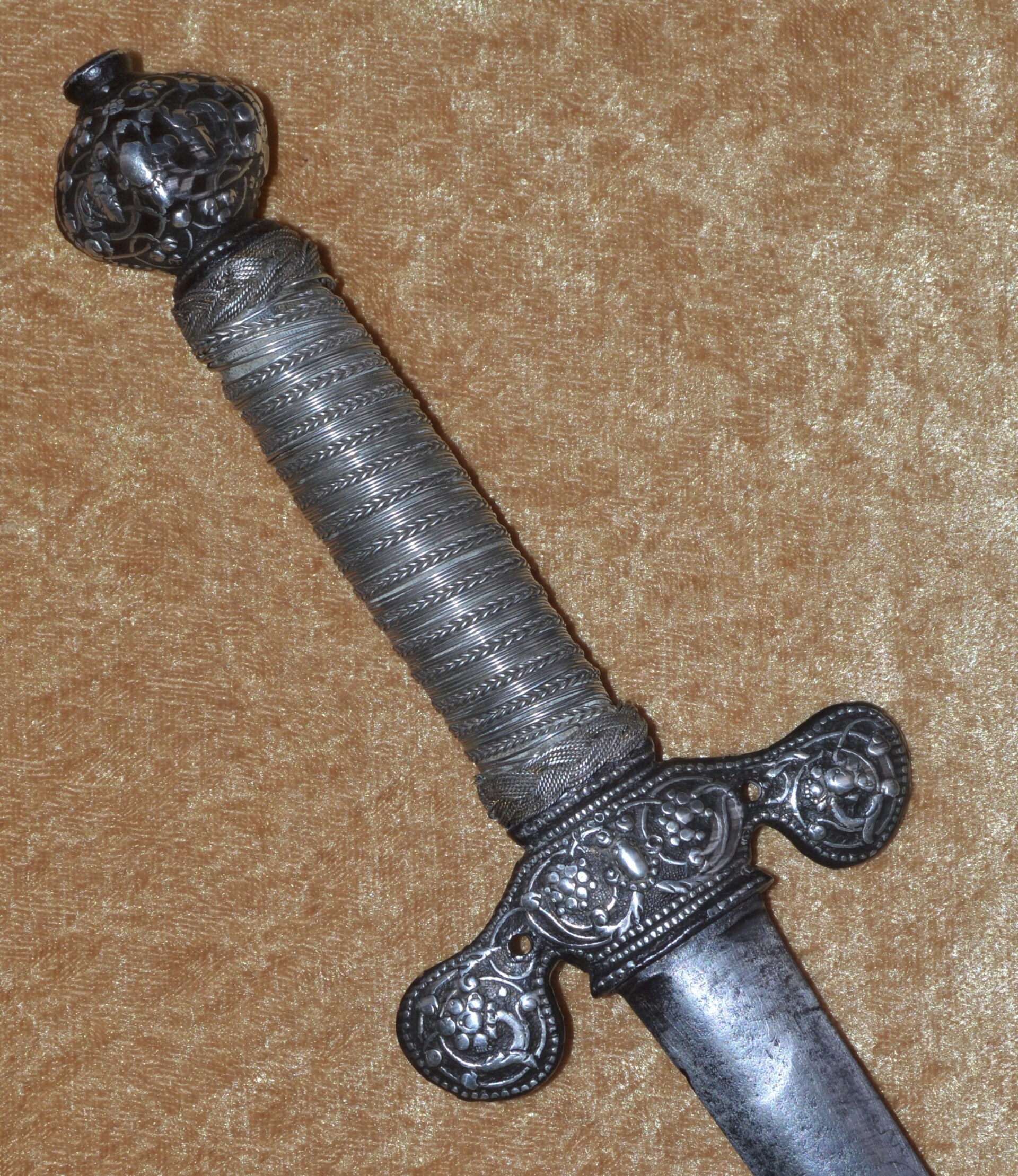
Late 17th century Silver Mounted Hanger by Thomas Vicaridge of London with slave trade associations. An important hanger by the accomplished cutler and silversmith Thomas Vicaridge of London. The hanger is distinctive because of its blackamoor head pommel which means the hanger probably has slave trade associations. The hanger is featured in Howard L Blackmore, “The blackamoor swords”, Royal Armouries Yearbook, Volume 3, 1998, pages 74 and 75, Figs 14a and b. In the late 17th and early 18th centuries when swords were a popular weapon for gentlemen, hangers were a robust secondary side arm used for self-defence when hunting and travelling. They were also used in parts of the British Army and Navy. Hangers appear in some military portraits of the time. The high quality hanger described here was a gentleman's weapon. The knuckle bow is stamped with Thomas Vicaridge's first pre-Britannia maker's mark of “T V” in raised relief inside a shield, with a three point crown above and a pellet below, which dates the hanger to 1682 to 1697. Vicaridge lived in exciting times as London was remodelled in the decades after the turbulence of the Civil War period, the Great Plague of 1665 and the Great Fire of 1666. The city was more outward looking, international trade was growing, military success was being achieved abroad and more interest and investment was being expressed in art and culture. Vicaridge was one of the leading craftsmen of his day and the quality of his work represents the styles and fashions of late 17th and early 18th century Baroque London. The hilt is comprised of a bold faceted quillon block with a downward facing flattened circular rear quillon pierced and chased with a cherub's head on top of a double scroll. The knuckle bow is of flattened oval section and swollen in the middle where it is pierced with a foliate panel inside a cartouche on each side. The pommel cap is scalloped around its folded edge which envelopes the natural stag antler grip with its pronounced “V” shaped groove on top. The pronounced blackamoor head sits prominently in this groove protected by its sides. The terminal of the knuckle bow is fixed into the pommel rim with the tip placed into the mouth of the blackamoor to emulate the playing of a musical instrument. The grip has a silver ferrule at its base with a scalloped edge. Thomas Vicaridge completed his apprenticeship with Joseph Jones, a London Cutler, on 25th April 1682 when he was sworn “Free” upon completion of his term of servitude at a well-attended meeting at Cutler's Hall. Until 1697, along with other silversmiths, Vicaridge used his own mark as described above and stamped it onto this sword. Two examples of this mark are struck onto a copper plate still preserved at Goldsmith's Hall in London. In 1697, with the advent of the Higher, or “Britannia”, Standard for silver, smiths were required to record a new punch mark bearing the first two initials of their surnames. As a result, Vicaridge recorded the mark “VI” with a crown above and pellet below inside a shield. This mark was used from 1697 onwards until his death in 1715. Only a few surviving edged weapons by this maker are known and all are of high quality. The slightly curved single edged blade is 20 inches long (51 cm) and is forged with a short ricasso and a wide shallow central fuller which extends from the hilt almost to the pointed tip on both sides. A narrower, deeper fuller runs from the hilt underneath the blunt back edge for four fifths of the blade length after which it is double edged for the remainder of its length to the tip. The sword is in good condition and has survived the centuries well. The hilt has retained its attractive shape and contours. There is some wear to the blade which has a consistent layer of light pitting. There are two stamps both on one side of the knuckle bow. One is located underneath the central cartouche and is discernible whilst the remains of the other located above the cartouche is just realisable but only in light of examination of the first. Swords and other valuable ornaments were produced featuring blackamoor heads as exotic adornments for European nobility for centuries before our hanger was made by Vicaridge. In his paper published in 1998 Howard L Blackmore explored the subject of “The blackamoor swords”. In the last part of this study he describes four English silver hilted hangers of the late 17th century with blackamoor heads which he thought at the time was the entire known population. He describes these as the “last of their kind” at a time when the blackamoor had lost much of its mystical appeal and after which it did not appear again in the same manner as it did in the past. By the end of the 17th century black Africans were reduced to being perceived more as slaves and trade cargo. In his conclusion he suggests in explanation for the swords that they may have been made for members of a secret society or bizarre club in London that used the blackamoor head as its emblem. This is unlikely. Figure 15 illustrated by Blackmore shows a sword by Thomas Vicaridge which he dates to around 1700. Significantly the middle of the knuckle guard has a royal bust with a crown above which undoubtedly represents an English monarch. This is not a one-off. A similar bust appears on another sword by Thomas Vicaridge with a blackamoor head pommel recently sold through our business. There were probably many more made which have not survived. The link between the royal bust and the blackamoor head should be explored further. The ruling monarchs of England held a monopoly on the British slave trade through the Royal African Company that lasted from 1660 to 1698. Vicaridge's mark on the sword we recently sold dates to 1682 to 1697. Blackmore dates his Figure 15 to “about 1700” indicating that the date is uncertain.  The hanger is described as in a private collection and is not available for examination. It is probable that both hangers were worn as symbols by employees and others to affirm their association with the Company, engaged because of the Crown's involvement in the slave trade, either before or after the monopoly was opened up, and English merchants were allowed access to this business. The bust together with the blackamoor pommel seems sufficient to establish a connection between both these hangers and royal patronage of the slave trade. Subsequently is follows that hilts mounted with the blackamoor heads and not stamped with the royal busts have the same association. The sword featured here is illustrated in Figure 14a and b by Blackmore. However, there are errors in his description. Blackmore dates the sword by its hallmarks to 1702 yet none are present and he does not acknowledge the presence of Vicaridge's pre-Britannia stamp on the knucklebow. Of the four “blackamoor” hangers in Blackmore's paper three are complete and one is a detached grip. So five hilts of this type are now known. Blackmore assumed that the swords may not have all been made by Vicaridge. However, of the population of five, three are known to be by Vicaridge. The marks on the other two are probably too worn to identify a maker or have not been examined well enough. However, the workmanship involved in these two hilts is so similar to the other three blackamoor swords by Vicaridge, and other surviving swords by Vicaridge with more usual pommels, that we can reasonably assume he made all of the blackamoor pommel silver hilted hangers. Some of these other surviving hangers with more usual pommels are discussed in a paper by Leslie Southwick published in the Royal Armouries Yearbook (Volume 5 in 2000) alongside other swords by Vicaridge. The styles of grip, ferrules, guards and quillon terminals are notably similar to the blackamoor pommel group. Taking into account all of the above, production of these blackamoor pommel hangers can be tied to a short time period at the very end of the 17th century and it would seem that Vicaridge alone was specifically commissioned to make these hangers for reasons and by people now unknown who were associated with the slave trade.
Page 15 of 156