
Show

Forgot your password?

Error message here!

Error message here!

Error message here!

Error message here!

Show Error message here!

Show Error message here!

Lost your password? Please enter your email address. You will receive a link to create a new password.

Error message here!

Back to log-in

Close

For Sale

The following items are listed by for sale by users of the site and dealers. They are in no way endorsed or guaranteed by www.antiquearmsresearch.com

Add a Classified Item
to

Clicking on the sword will take you through to the relevant classified item or dealer site.
Don't miss out! - Do you want to be kept informed weekly of new aditions? Just join our weekly update list.

You can also receive regular email notifcations when items match your keywords. To recieve them just register or logon at the top right of this page.
Page 103 of 158
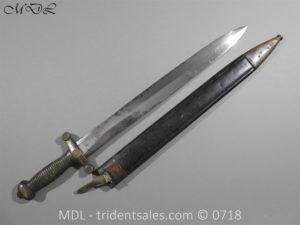
  • Nation : French
  • Local Price : £385.00
French 1831 Foot Artillery Sidearm. Brass on piece grip, crossguard and pommel. Crossguard marked with original small  number 578 & later larger numbers 369, other side with a &#acute;star&#acute; inspection stamp. Steel double edged blade marked at ricasso with Thiebaut 1832 on one side and an Inspection stamp on the other.(Thiebaut is a private manufacturer)  In its brass mounted black leather scabbard, locket also stamped 578 & 369. Length 632mm Blade 481mm
  • Nation : German
  • Local Price : £385.00
German Mauser M1871 Bayonet, 35th Reserve Infantry Regiment, dated 1874 by Gebr. Weyersberg. Description Single fullered, spear pointed blade. Steel hilt with forward upper quillon atop the muzzle ring and reverse lower quillon. Brass grip with beaked pommel, steel external leaf spring for the locking mechanism. Black leather scabbard with brass fittings at the throat and chape. Blade 18½ inches in length, the bayonet 23½ inches overall. The hilt is stamped with the unit mark &#acute;35.R.3.115&#acute;, indicating that it belonged with rifle number 115 of the 3rd Company, 35th Reserve Infantry Regiment. The throat piece of the scabbard is stamped with the unit mark &#acute;35.R._.30&#acute;, a close match to the bayonet, belonging to rifle 30 of an unknown company of the 35th Infantry Regiment. The blade is stamped at the ricasso on one side with the maker&#acute;s mark &#acute;GEBR WEYERSBERG SOLINGEN&#acute;, indicating Gebruder Weyersberg (Weyersberg Brothers) based in the city of Solingen. The spine of the blade is stamped with a crown and &#acute;W74&#acute;, indicating that it was manufactured in 1874 during the reign of Wilhelm I, as well as a crown acceptance stamp. The belly of the blade is stamped at the ricasso with &#acute;1&#acute;. The top of the hilt next to the lower quillon is stamped with a crown inspection mark, as is the exposed tang, and the pommel is stamped with two more next to the locking button. The mouth of the scabbard is stamped on either side with crown inspection marks. The chape piece is stamped next to the staple on one side with &#acute;H&#acute;. The blade has been previously repolished with a few patches of cleaned pitting and polishing marks overall. The hilt and grip have a few small dents and only a few small spots of patination. The scabbard leather has some rubbing and scattered dents, its stitching is all intact. Light dents to the scabbard fittings which do not interfere with smooth sheathing and drawing.
  • Nation : -
  • Local Price : 535.00 USD
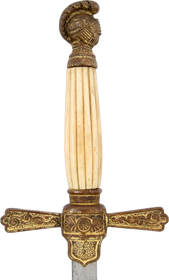
CIVIL WAR MILITIA SWORD. Antebellum period, C. 1840-50. Type carried by Non Commissioned Officers in both the North and South. See The America Sword, Peterson, #11.  27 1/4” double edged blade. Brass hilt with about 80% gold remaining and bone grip. State militias comprised the majority of combatants at the outbreak of the Civil War. As this sword survived the war and later, it can surely be assumed to have served. The absence of the stars and bars logo as found on the langets of many of these including this one, may indicate Southern use, as the prospect of war was festering by the 1830's. The doctrine of nullification was made law in South Carolina and in 1832, resulted in President Andrew Johnson threatening to send Federal troops to enforce the tariff laws. South Carolina's militias were called up and the state prepared for war. From the famous Frank Barnyak collection.
  • Nation : Russian
  • Local Price : 4,900 kr
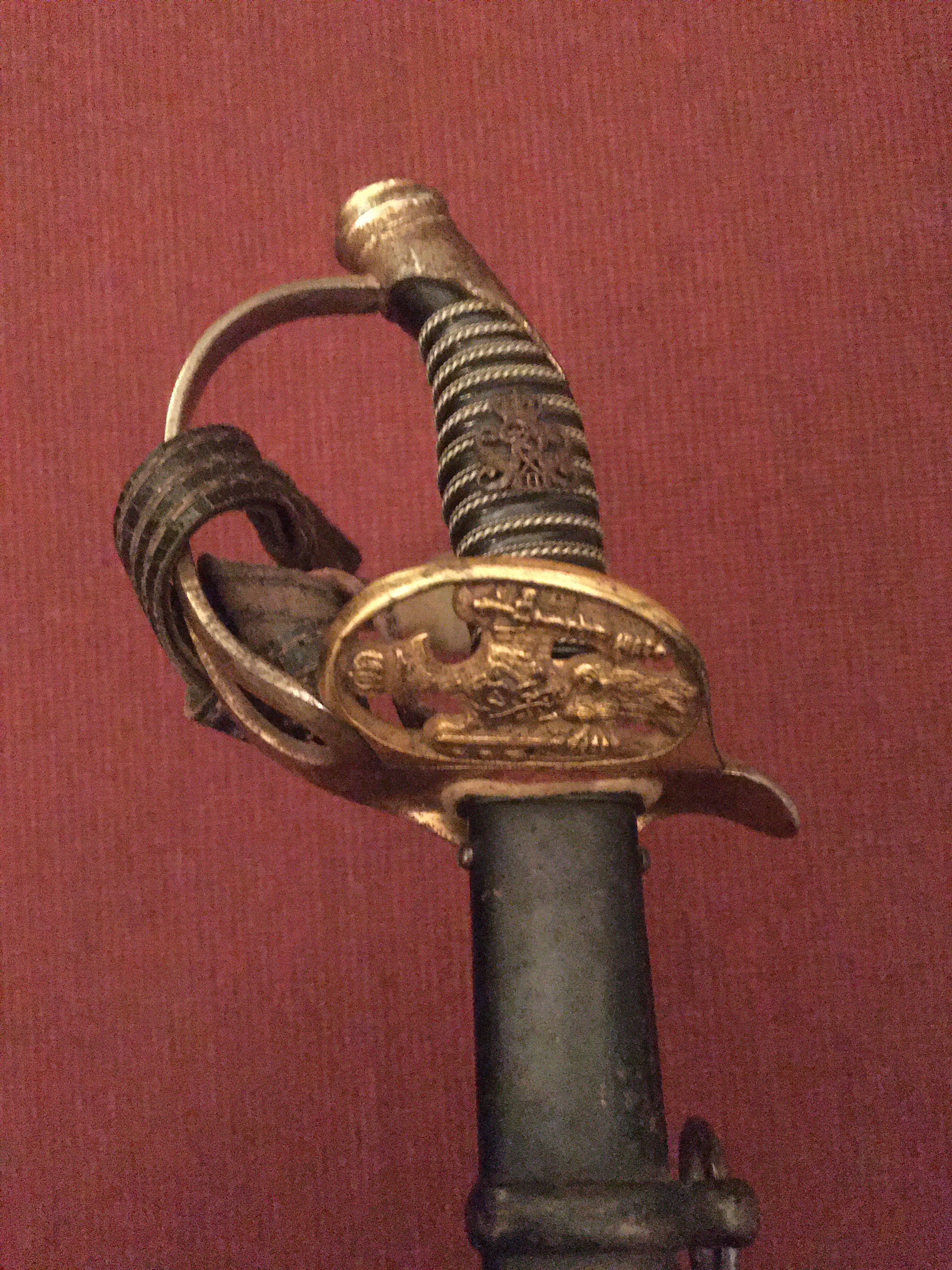
Prussian saber w/1889 for officer.
  • Nation : -
  • Local Price : 4,900 kr
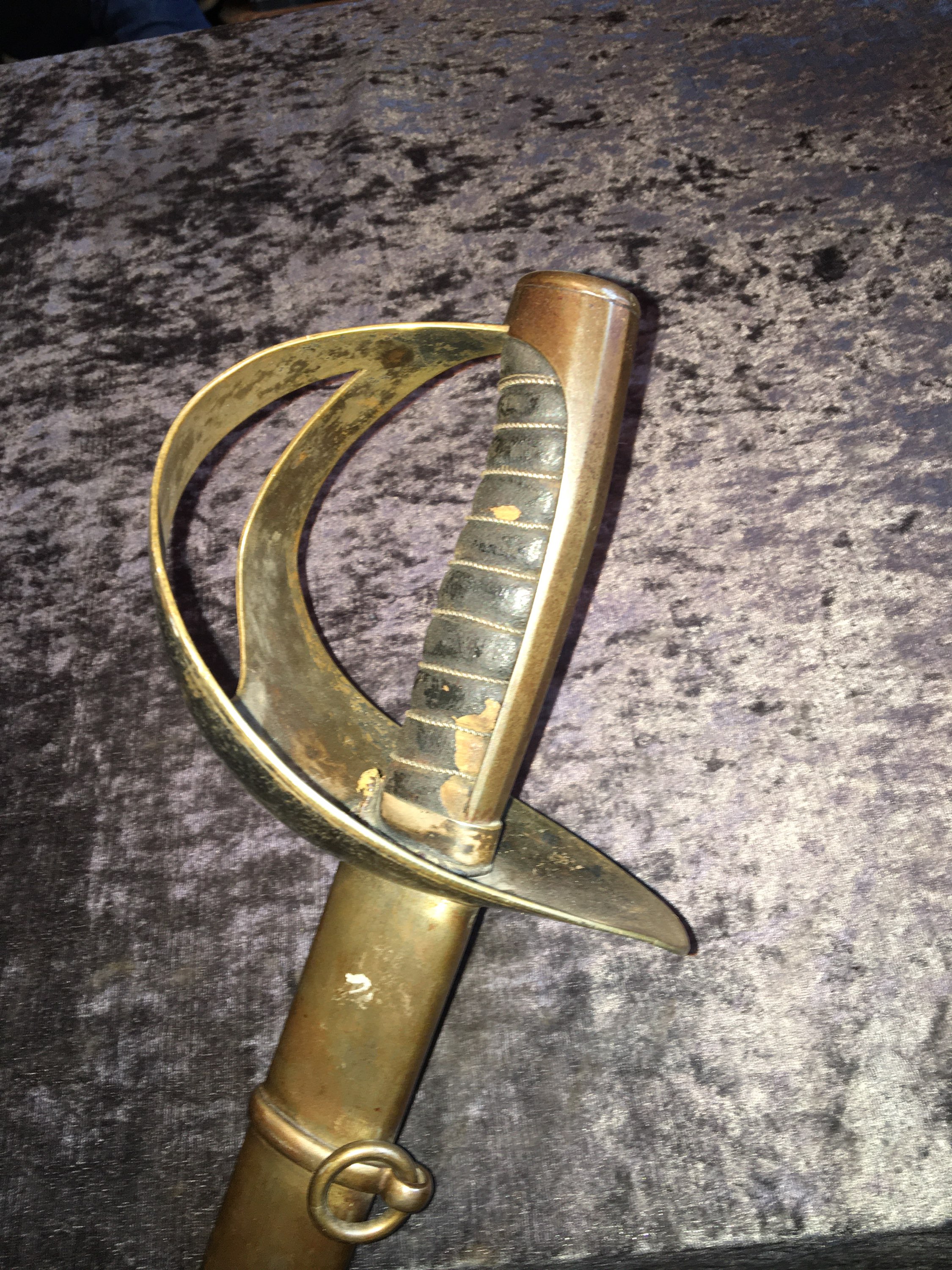
Sabel/Pallach för tungt kavalleri ca:1830-40.
  • Nation : -
  • Local Price : 4,850 kr
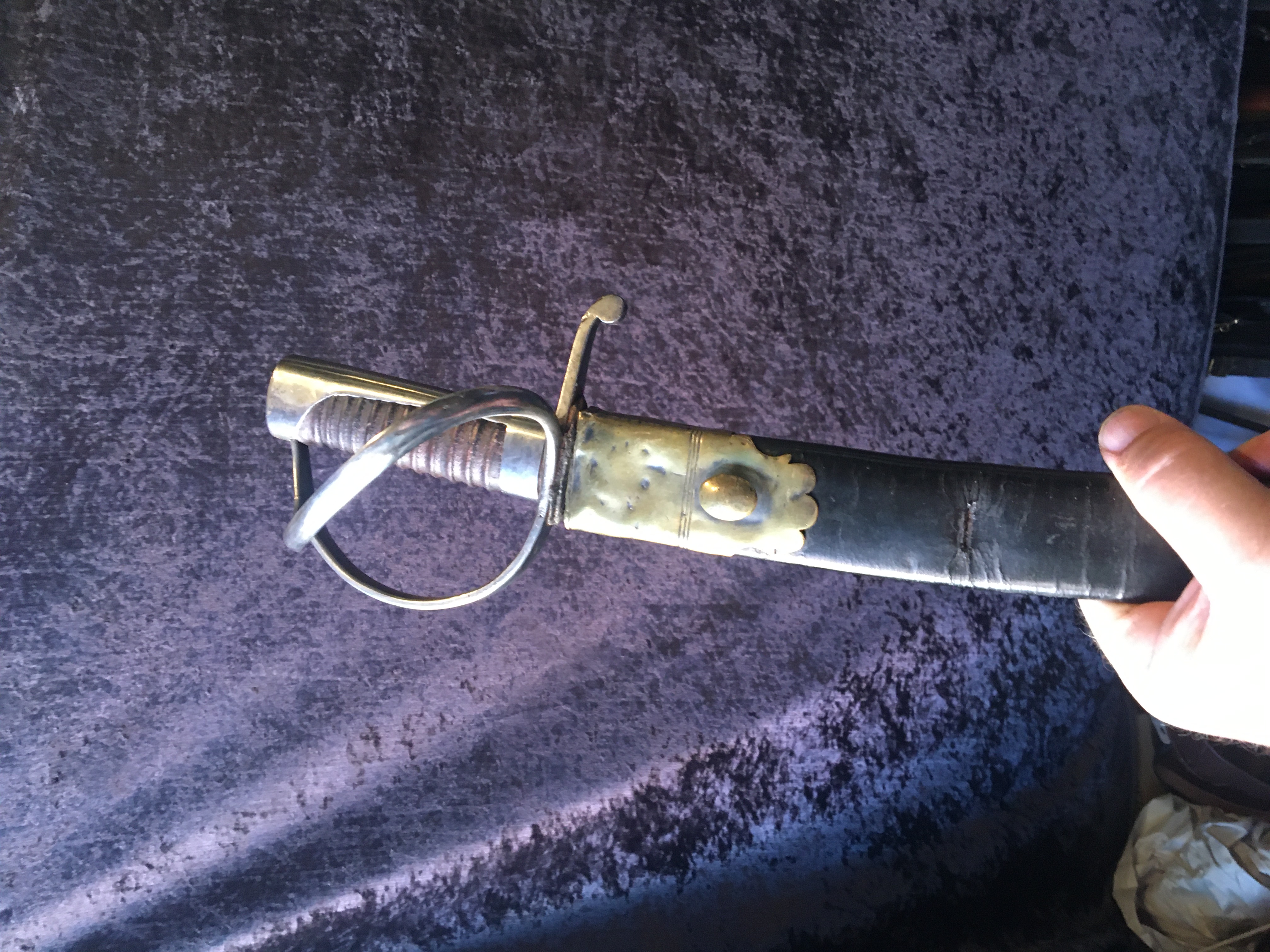
Huggare Österrike 1700tal.
  • Nation : British
  • Local Price : £380.00
British Circa 1820 India Pattern Brown Bess Socket Bayonet with India Spring. Description Triangular blade with unfullered top surface and fullered lower surfaces. A roughly rectangular leaf spring is attached to the outer surface of the socket, retained by a single screw. Wood-lined black leather scabbard with brass locket and chape piece. The blade is stamped with the maker&#acute;s mark &#acute;S HILL&#acute;, indicating the manufacturer Stephen Hill, who traded from Pritchett Street in Birmingham from around 1830, then changed the trade name to S. Hill & Sons from 1849-1855, an inspection mark &#acute;D 4&#acute;, and the letter &#acute;F&#acute; at the very base of the blade. The blade markings are partly worn: Indian socket bayonets were repolished often to keep them bright, which often resulted in the loss of detail to the markings. The rear rim of the socket is stamped with &#acute;6&#acute; and four incised lines. The leather at the throat end is stamped with decorative criss-crossing lines. The &#acute;Indian Spring&#acute; was reputedly designed by Ezekiel Baker, the same gunsmith who created the famous Baker Rifle, to improve the fastening of the socket bayonet to the India Pattern Brown Bess musket. This is the later version of the spring introduced around 1820 with an almost rectangular shape, still doing the same job of preventing the bayonet from shifting position once it had been fixed to the rifle, but stronger than the early type, which was more triangular. The bayonet is clean overall with only small areas of patina and some very light pitting near the tip of the blade. The brass chape piece and a small amount of leather have become detached from the rest of the scabbard. The detached chape piece has several dents, the throat piece has one very small one to its rim. The leather of the scabbard is quite worn in places, with rubbing to raised edges and surface cracking.
  • Nation : Portuguese
  • Local Price : £380.00
Portuguese 19th Century Cavalry Trooper’s Sword. Description Curved, single fullered unsharpened sabre blade, black leather washer, three-bar steel hilt with forward curving comma-shaped quillon and pierced thumb guard. Steel backstrap with integral oval pommel cap and riveted &#acute;ears&#acute; over a wire-bound brown shagreen grip. Plain steel scabbard with single hanging ring. Blade 34 inches in length past the washer, the sword 40 inches in length overall. One side of the quillon is stamped &#acute;AE&#acute;, and faintly, &#acute;F&#acute;. The AE mark stands for &#acute;Arsenal do Exercito&#acute;, the Army Arsenal of Portugal. The opposite side of the quillon is stamped &#acute;D63 2&#acute;, a serial or unit number. The scabbard is also stamped on the band with &#acute;AE&#acute; on one side and &#acute;G67&#acute; on the other. Swords like this one were manufactured outside Portugal on contract for the Arsenal, principally by Reeves of Birmingham as well as by German makers and Ballesteros of Madrid. It is an imitation of the British 1821 Pattern Light Cavalry officer&#acute;s sword (with the fullered sabre blade used after 1845). While this example does not bear a maker&#acute;s mark, this perhaps having been polished off over time, it is probably by Reeves. The blade is bright and unsharpened with no edge damage. The metal parts of the hilt are likewise bright with only tiny spots of light patination. There is slight side-to-side movement to the hilt and a few small dents to the guard. The shagreen of the grip is in good condition with light handling wear, the wire binding of the grip is all intact with fractional movement to two of the loops. The scabbard would have been formed by curling sheet metal into a cylinder and brazing the join together at the trailing edge: this is normally very strong but for unknown reasons Reeves used 0.7mm thick sheet metal on their scabbards compared with the 1.5mm used by the other contractors. This makes the scabbard noticeably light - it weighs 495g while a British 1821 Pattern scabbard that I compared it with weighed 861g. There is one noticeable dent at the chape on one side, below which is what appears to be a period repair, and there are a few other smaller and shallower dents including one next to the band. None of these interfere with sheathing and drawing. The brazing of the scabbard has short cracks in three places, perhaps due to the same knocks that formed the dents.
Page 103 of 158