
Show

Forgot your password?

Error message here!

Error message here!

Error message here!

Error message here!

Show Error message here!

Show Error message here!

Lost your password? Please enter your email address. You will receive a link to create a new password.

Error message here!

Back to log-in

Close

For Sale

The following items are listed by for sale by users of the site and dealers. They are in no way endorsed or guaranteed by www.antiquearmsresearch.com

Add a Classified Item
to

Clicking on the sword will take you through to the relevant classified item or dealer site.
Don't miss out! - Do you want to be kept informed weekly of new aditions? Just join our weekly update list.

You can also receive regular email notifcations when items match your keywords. To recieve them just register or logon at the top right of this page.
Page 19 of 119
  • Nation : American
  • Local Price : $3,495.00
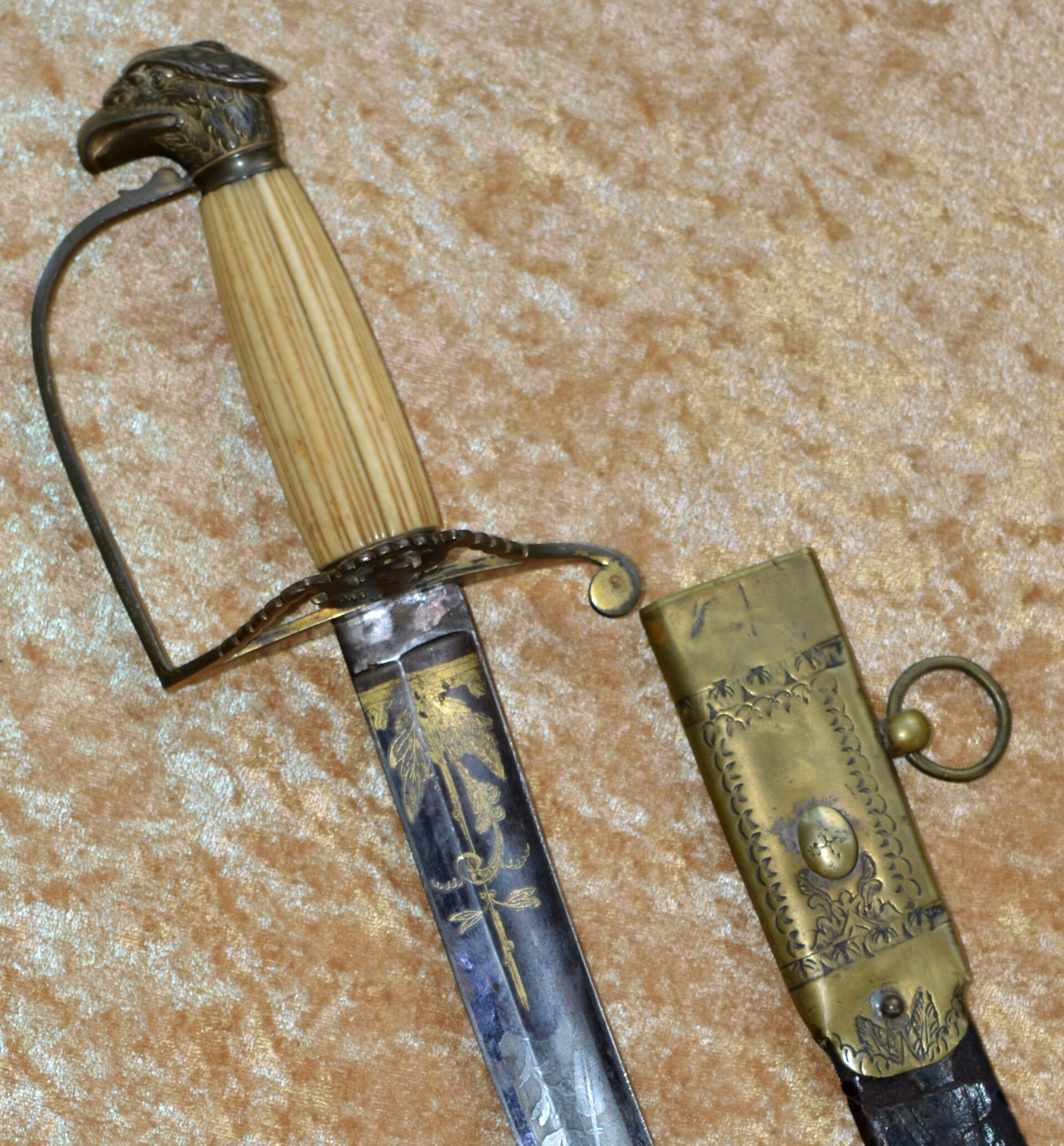
High Quality ID’d US Eagle Pommel Infantry Officer’s Saber, ca. 1810. Featuring gilt brass hilt, comprising reverse scroll quillon, pierced counterguard depicting a spread-wing eagle and shield surrounded by stars, and stirrup-shaped knuckle bow connected to the “floating” eagle-head pommel. Ribbed bone grip. Deeply curved 30″ single-edged blade with single fuller; the upper half etched, blued, and gold and silver gilt with scrolling foliage, stands of arms, and Federal Shield. Original black leather scabbard with decorated brass mounts, including long drag, middle band with carry ring, and throat with carry ring and frog stud; the reverse of the throat period engraved “Nathaniel Cook/his sword” in script. The sword in very good plus condition for its age, retaining approximately 90% of its original bright bluing and gilding (bluing with some spotting); the guard slightly loose and retaining approximately 30% of its original gilding, primarily in protected areas; grip smooth and defect free. Scabbard leather is dry and flaking, with electrical tape repairs and the drag separated; mounts very good. Overall length 35 1/2″, not including scabbard. Though unmarked, this sword is almost certainly the work of Birmingham maker Solomon Jackson (active 1803-1815). This sword clearly shows the close economic ties between Great Britain and the fledgling United States on the eve of the War of 1812. Sword with identical counterguard illustrated in “The American Eagle Pommel Sword, The Early Years 1794-1830″ by E. Andrew Mowbray, p. 109, fig. 13.B Nathaniel Cook was born in Orange County, Virginia around 1776. His family later moved to Kentucky, and in 1802 he married Honour Madden in Ste Genevieve District, New France, which became part of the Missouri Territory after the Louisiana Purchase. He served in the War of 1812 as a Major in the Missouri Rangers under Henry Moses Dodge. Cook was appointed as Colonel around 1816 and commanded the 6th Regiment. In 1820 he was a member of the Missouri Constitutional Convention. He made out his will on 26 August, 1852 in Washington County, Missouri and is thought to have died shortly thereafter. Positively identified early American swords are quite scarce, especially with rare Missouri Territory history. Well worth having the leather restored on the scabbard.
  • Nation : French
  • Local Price : $2,495.00
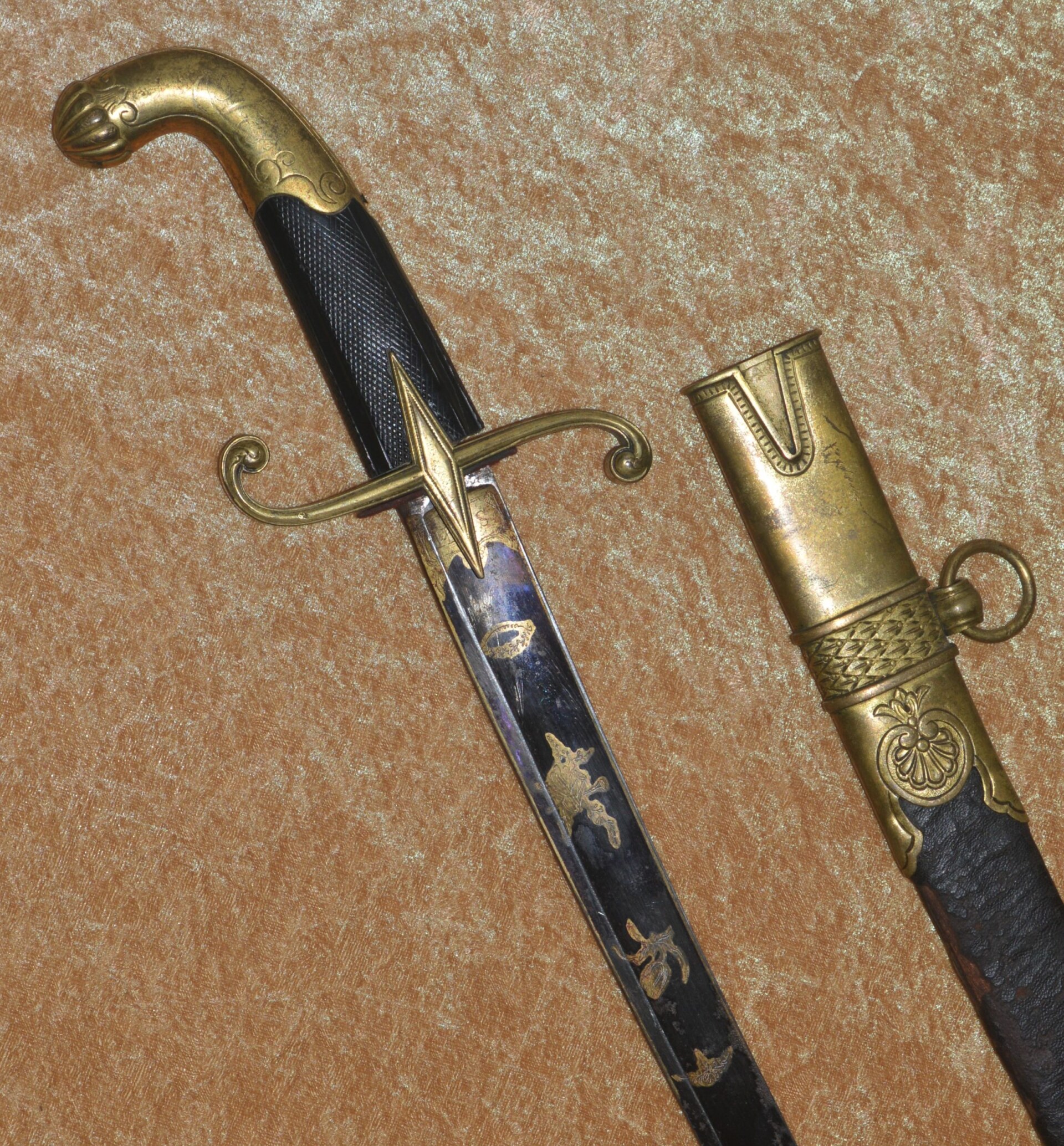
Fine French First Empire Senior Officer’s Saber. Styled after the Mameluke sabers which gained popularity during the Napoleonic era, this fine saber features gilt hilt with recurved quillons, pointed double langets, and long curved pommel; checkered one-piece black composite grip (tight 1” crack on reverse). Deeply curved 30 3/4” (78 cm) single-edged blade with broad single fuller extending to within 3” of the point; the upper third blued and gilt with engraved floral decoration and stands of arms and the initials “SH” on the ricasso. Original wood scabbard with black leather covering and beautiful gilt brass mounts decorated with classical shell motif, including twin carry rings. Beautiful sword in very good condition, the guard slightly loose; leather on scabbard flaking and missing small pieces. Overall length 36 1/4” (92 cm), not including scabbard.
  • Nation : Swiss
  • Local Price : $2,495.00
Swiss Lion Head Saber, Late 17th/Early 18th C. This example, of much better quality than usually found, featuring multi-piece brass hilt formed of round-section bars and plates, comprising knuckle bow with double central knob, with bars extending to each side and joining the asymmetrical side rings; additional side bar with double central know extending from the obverse side and screwed to the lion-head pommel. Side rings each with integrally cast brass plates depicting rampant lions holding a crown on the larger, and a prancing lion amid scrolling foliage on the smaller (small casting flaw); thumb ring on the reverse. Grip wrapped with thick twisted brass wire (some tarnished). The highly detailed lion-head pommel with open mouth and hollowed out throat, showing bared teeth and revealing the blade tang inside its mouth. Detailed downcurved lion-head reverse quillon. Gently curved 29″ (73.7 cm) single-edged blade, the last 4″ double-edged, with inscribed arm holding a scimitar on one side (worn). This symbol was commonly found on Hungarian swords and other countries which faced Ottoman incursions. The blade cleaned, with sharp edge and showing patches of light pitting. Overall length 35 3/8″ (90 cm).
  • Nation : British
  • Local Price : £2,495.00
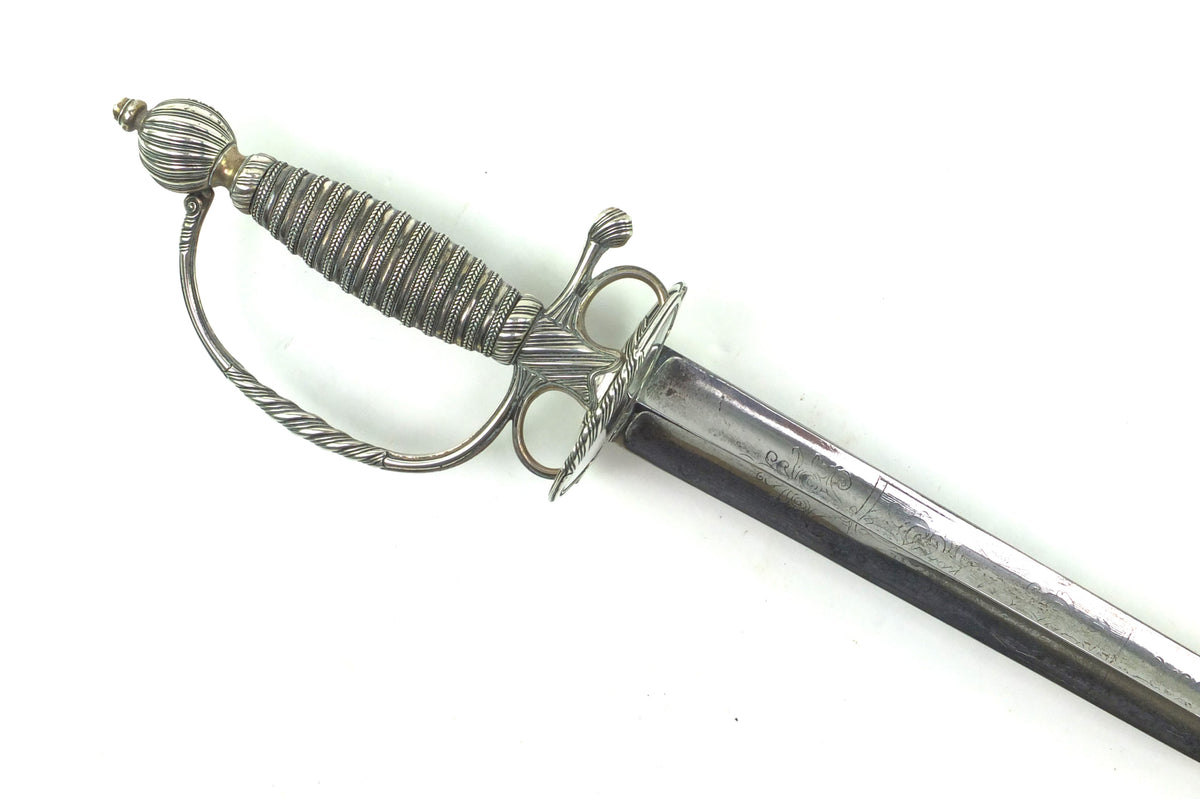
Officers Small Sword, Georgian, very fine. Ref 9216. A Very Fine Georgian Officers Small Sword.&194;&160;39 1/2" overall, 33" colichemarde blade with etched panels and engraved ´Honi soit qui mal y pense´. Double shell guard with gadrooned edge, quillon bloc en suite, gadrooned knucklebow with indistinct London Hall Mark and a clear IR and pellet between, maker´s mark for John Radborn. Gadrooned round pommel and quillon terminal. Grip of double twisted silver wire and silver ribbons. Circa 1765-75&194;&160; &194;&160; &194;&160; &194;&160; &194;&160; &194;&160; &194;&160; &194;&160; &194;&160; &194;&160; &194;&160; &194;&160; &194;&160; &194;&160; &194;&160; &194;&160; &194;&160; &194;&160; &194;&160; &194;&160; &194;&160; &194;&160; &194;&160; &194;&160; &194;&160; &194;&160; &194;&160; &194;&160; &194;&160; &194;&160; &194;&160; &194;&160; &194;&160; &194;&160; &194;&160; &194;&160; &194;&160; &194;&160; &194;&160; &194;&160; &194;&160; &194;&160;&194;&160; A very pretty sword in good condition. Lacks scabbard&194;&160; Honi soit qui mal y pense &194;&160;"Shame be to him who thinks ill of it"&194;&160;The motto of the Order of the Garter and used by Horse Guards, The Life Guards, Grenadier Guards and Coldstream Guards. John Radborn indentured to the cutler Nathaniel Young in 1737, and John Smith from 1742 until Free in 1745,&194;&160;&194;&160; worked in New Street from 1737 till his death in 1780 .One London´s finest sword cutlers. Examples of his work in the Royal Armouries and the Metropolitan in New York. Images courtesy of West Street Antiques (https://antiquearmsandarmour.com/)
  • Nation : British
  • Local Price : £2,450.00
18th Hussars Officer’s Mameluke. Victorian period regimental mameluke by Hawkes and Co to the 18th hussars, pattern hilt with XVIII and motto to center of gilt cross guard. The curved blade is engraved with VR Crown to one side and motto plus XVIII to reverse with two battle honors, Peninsula and Waterloo surrounded by floral decoration. Complete with correct decorative scabbard with age wear but no damage and full dress knot, note one grip stud cover missing
  • Nation : British
  • Local Price : £2,450.00
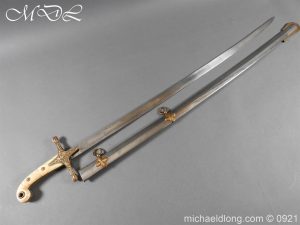
15th Hussars Officer&#acute;s Mameluke. 15th Hussars Officer&#acute;s Mameluke very nice condition regimental hilt and bone grip. The slightly curved blade with faint etching but William 4th cypher and I V visible Hilt and blade tight and complete with steel scabbard with gilt brass mounts. Reference: Swords of The British Army by Robson plate 84 – 85 Blade Length: 32.25 inch Overall Length: 38.0 Inch
  • Nation : British
  • Local Price : £2450.00
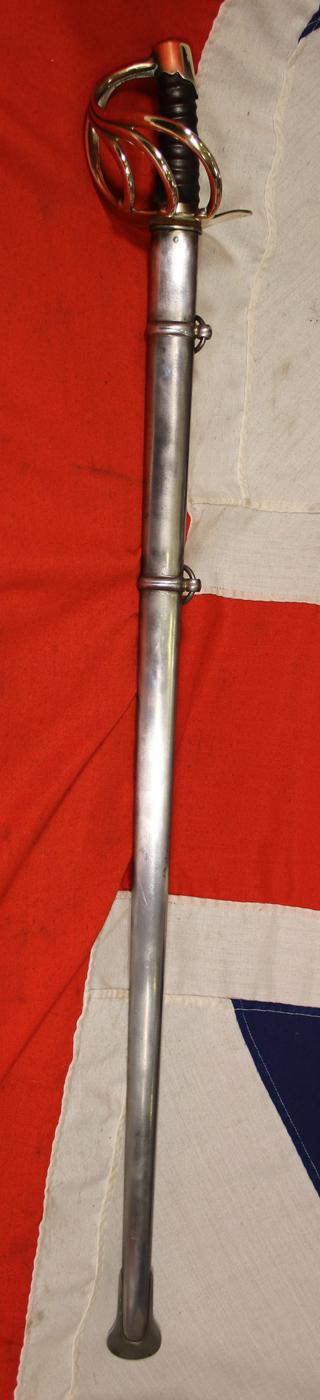
Grande Armee Issue, From the Consular To Ist Empire Period. French Napoleonic Year 13 Cuirassier Sword, Manufactured at Versailles in the Early Imperial Period, Circa 1804-1806. Inspected by Nicholas Cherrer, Chef De Battalion. Blade stamped with the mark of the Fasces for the 'Petit Garantie' 1798 to 1809, plus AP for L'Atelier Precision Paris, Paris Workshop and the hilt has the Versailles approval stamp. Versailles was the premier hilt manufactury and assembly workshop for the Republic and Empire, and only the very finest would pass acceptance. All of the Elite Imperial Guard sword hilts were supplied from here. The Versailles Director was Boutet, probably the greatest & most respected Arms maker that ever lived, his pistols and guns, made for the King and Napoleon, are some of the most beautiful objects ever created by man. This would have seen service in the Elite Cuirassiers of Napoleon's great heavy cavalry regiments of the Grande Armee such as in 1807 at Friedland. And in the French invasion of Russia ( Campagne de Russie) that began on 24 June 1812 when Napoleon's Grande Armee crossed the Neman River in an attempt to engage and defeat the Russian army. Napoleon hoped to compel Tsar Alexander I of Russia to cease trading with British merchants through proxies in an effort to pressure the United Kingdom to sue for peace. The official political aim of the campaign was to liberate Poland from the threat of Russia. Napoleon named the campaign the Second Polish War to curry favour with the Poles and provide a political pretence for his actions. The Grande Armee was a very large force, numbering nearly half a million men from several different nations. Through a series of long marches Napoleon pushed the army rapidly through Western Russia in an attempt to bring the Russian army to battle, winning a number of minor engagements and a major battle at Smolensk in August. Napoleon hoped the battle would mean an end of the march into Russia, but the Russian army slipped away from the engagement and continued to retreat into Russia, while leaving Smolensk to burn. Plans Napoleon had made to quarter at Smolensk were abandoned, and he pressed his army on after the Russians. The battles continued, but once the winter set in Napoleon's army was facing insurmountable odds that left it effectively shattered beyond repair. Napoleon fled, it is said, dressed as a woman, and the army left to it's sad and miserable fate. Only around 27,000 were able to return after a mere six months of the Russian campaign. The campaign was a turning point in the Napoleonic Wars. The reputation of Napoleon was severely shaken, and French hegemony in Europe was dramatically weakened. The Grande Armee, made up of French and allied invasion forces, was reduced to a fraction of its initial strength. These events triggered a major shift in European politics. France's ally Prussia, soon followed by Austria, broke their alliance with France and switched camps. This triggered the War of the Sixth Coalition. The Cuirassiers Heavy Cavalry Regiments used the largest men in France, recruited to serve in the greatest and noblest cavalry France has ever had. They fought with distinction at their last great conflict at the Battle of Waterloo in 1815, and most of the Cuirassiers swords in England very likely came from that field of conflict, after the battle, as trophies of war. However, this sword was one of the few that were allowed to remain in the elite cuirassier corps after Waterloo, serving King Loius XVIIIth both before Napoleon's 100 days, and after his crushing defeat by Wellington at Waterloo. In fact one can see it has been issued, re-issued and even re-inspected by Capt. Louis Balaran, at least twice times with numerous serial numbers and inspection stamps stamped and struck out in its working life from 1806. Every warrior that has ever entered service for his country sought trophies. The Mycenae from a fallen Trojan, the Roman from a fallen Gaul, the GI from a fallen Japanese, the tradition stretches back thousands of years, and will continue as long as man serves his country in battle. In the 1st century AD the Roman Poet Decimus Iunius Iuvenalis Juvenal wrote; "Man thirsts more for glory than virtue. The armour of an enemy, his broken helmet, the flag ripped from a conquered trireme, are treasures valued beyond all human riches. It is to obtain these tokens of glory that Generals, be they Roman, Greek or barbarian, brave a thousand perils and endure a thousand exertions". A truly magnificent Napoleonic sword in superb condition for it's age. The largest sword of its kind that was ever made or used by the world's greatest cavalry regiments. The cuirassiers were the greatest of all France's cavalry, allowing only the strongest men of over 6 feet in height into its ranks. The French Cuirassiers were at their very peak in 1815, and never again regained the wonder and glory that they truly deserved at that time. To face a regiment of, say, 600 charging steeds bearing down upon you mounted with armoured giants, brandishing the mightiest of swords that could pierce the strongest breast armour, much have been, quite simply, terrifying. The brass basket guard on this sword is first class, the blade is double fullered and absolutely as crisp as one could hope for. Made in the early Napoleonic Wars period. Just a basic few of the battles this would have been used at such as Friedland in 1807, in 1812 and beyond 1812: Borodino and Moscow, Ostrowno, and Winkowo 1813: Reichenbach and Dresden, Leipzig and Hanau 1814: La Rothiere, Rosnay, Champaubert, Vauchamps, Athies, La Fere-Champenoise and Paris 1815: Quatre-Bras and Waterloo. The blade has fabulous steel bright colour, and hilt has fabulous patina. Overall 45.75 inches long in its scabbard, the spear pointed blade is 37.5 inches long. Just old staining to the scabbard steel. The French Elite Cuirassier Sword is surely one of the most impressive Heavy Cavalry swords ever made, being of incredible size quality and stature. Used in the great campaigns of Napoleon by the Elite Grande Armee Cavalry, from Austria through the Russian Campaign, into the Peninsular War and finally the The Battle of Waterloo. All the Cuirassier were front line regiments, none ever utilized as Militia. With steel combat scabbard, multi fullered blade, brass 4 bar hilt with wire bound leather grip. Circa 1806. The blade is exactly as it should be, and bearing the matching Atelier Paris and Versailles stamp of 1806. Leather grip re-covered some time long past. Excellent condition hilt, and blade, later scabbard
  • Nation : ?
  • Local Price : £2,450.00
US Model 1850 Foot Officers Sword by Ames. US Model 1850 Foot Officers Sword by Ames deluxe quality with early block US etching which generally dates to the 1850s The sword is in excellent condition with bright gilt finish to the hilt note small wear area to pommel cap. The grip again in very good condition secured with twisted wire. The blade clean and in polish with super etching couple of small areas of discolour towards the tip, maker marks Ames MFG Co Chicopee Mass US which is repeated on the top scabbard mount. The early form black leather scabbard with matching gilt mounts and still retains traces of red leather to the throat, overall length 36.5 inch the blade30.75 inches – Ames produced high-grade swords and sabres for private purchase and to fill certain government contracts. The finely crafted workmanship exhibited on all its blades, especially its officers blades, was more than equal to those of the best European sword makers of the time.
Page 19 of 119