
Show

Forgot your password?

Error message here!

Error message here!

Error message here!

Error message here!

Show Error message here!

Show Error message here!

Lost your password? Please enter your email address. You will receive a link to create a new password.

Error message here!

Back to log-in

Close

For Sale

The following items are listed by for sale by users of the site and dealers. They are in no way endorsed or guaranteed by www.antiquearmsresearch.com

Add a Classified Item
to

Clicking on the sword will take you through to the relevant classified item or dealer site.
Don't miss out! - Do you want to be kept informed weekly of new aditions? Just join our weekly update list.

You can also receive regular email notifcations when items match your keywords. To recieve them just register or logon at the top right of this page.
Page 20 of 157
  • Nation : Dutch
  • Local Price : £3650
Click and use the code >26012 to search for this item on the dealer website Rare and Absolutely Spectacular, J. & W. Richards, All-Brass Flintlock Blunderbuss With Sprung Top Mounted Bayonet. Finest ´Juglans Regia´ Walnut Stock. Circa 1800. Much Favoured by Ship´s Captains
  • Nation : Spanish
  • Local Price : £3650
Click and use the code >24940 to search for this item on the dealer website Superb Spanish Cup Hilt Rapier Circa 1660. Double Shell Asymmetrical Hilt Guard With Long Crossguard, Octohedral Double Conical Pommel & Large Pas Dans
  • Nation : Persian
  • Local Price : £3650
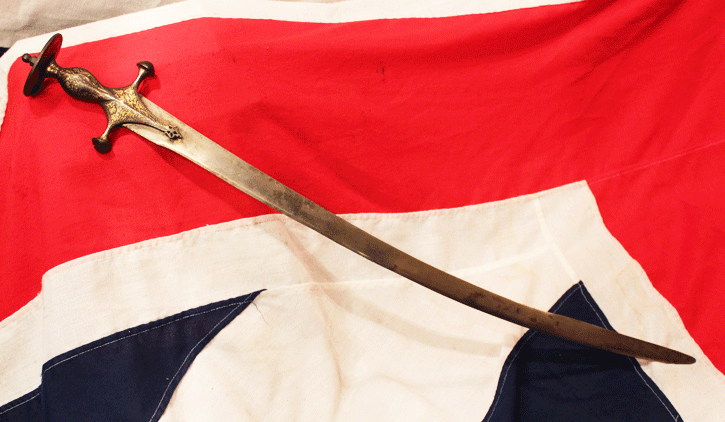
Click and use the code >25684 to search for this item on the dealer website Simply Exquisite Original Bronze Age Short Sword Used From The Trojan Wars To The Greco-Persian Wars Era. The Trojan War Was Waged Against the City of Troy by the Achaeans (Greeks) After Paris of Troy Took Helen From Her Husband Menelaus, King of Sparta
  • Nation : Indian
  • Local Price : £3,650.00
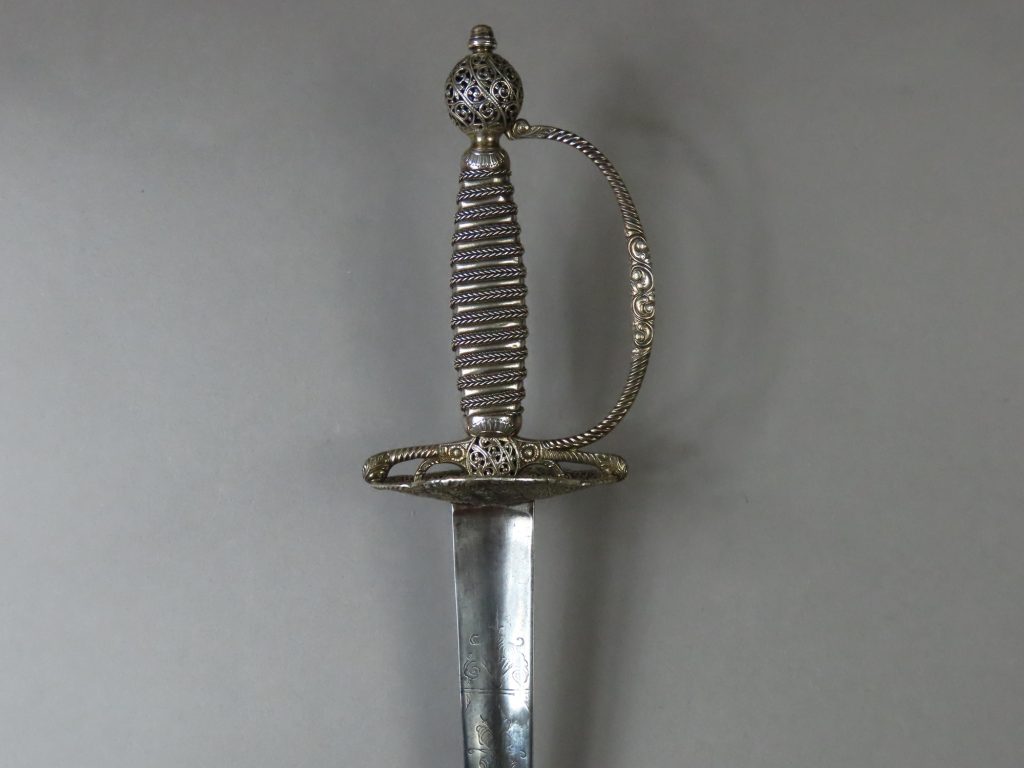
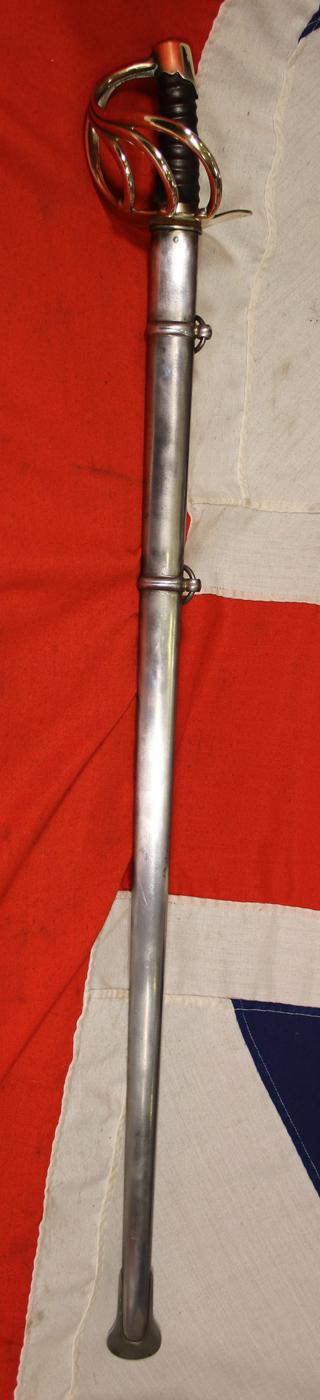
James Hills-Johnes VC GCB Royal Artillery Sword. Lieutenant General Sir James Hills-Johnes VC GCB Royal Artillery Sword. Regulation pattern with 3 bar steel hilt and stepped pommel, the fisk skin grip show wear. The blade again regulation, engraved with regimental devises to both sides, owners initials J H J and crest. Maker marked Pillin London and proof plug, complete with steel scabbard with 2 loose rings. Although we can not confirm this was the actual sword used in the action for which he received the Victoria Cross along with Henry Tombs during the Indian mutiny at the Siege of Delhi it has been field sharpen and shows signs of action. Notes: Hills had been on picket duty with two guns near the camp when enemy cavalry attacked. In order to give the guns time, Hills rode straight at the enemy, cutting down two of them before he was knocked from his horse. Getting up he was attacked by the enemy. Hills shot one, avoided the lance of another and cut him with his sword before finishing the first attacker. A third grappled with Hills and took his sword from him but Tombs, who had come up to check the guns, arrived in time and shot the man. On the way back to the position, they encountered another of the enemy. Hills and Tombs parried the first attacks but Hills then took a blow to the head and went down Tombs put his sword through the man saving Hills for the second time
  • Nation : British
  • Local Price : £3600
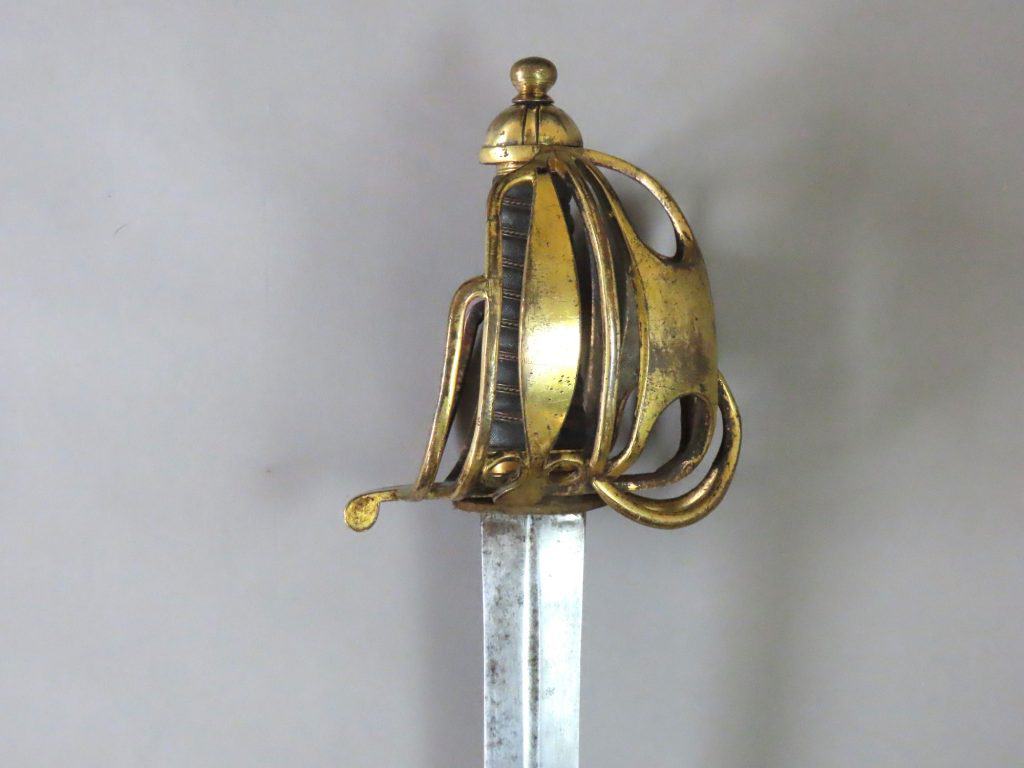
English Mortuary Sword of Early Form dating to the second quarter of the 17th century. A fine English “Mortuary” hilted sword dating to the second quarter of the of the 17th century and the English Civil War period. The spacious hilt is of boatshell type uniquely and boldly chiselled and engraved with monsters and busts in the English manner. The hilt has a wristguard, a knucklebow to the front and guard bars on each side. The secondary scrolled guard bars present on later Mortuary hilts had not yet evolved at the time this sword was made indicating that it is of early type probably dating to the time just after Mortuary swords evolved from the “Proto” Mortuary types. It is mounted with a robust double edged blade. The hilt is of typical form consisting of a broad boat-shaped guard plate  from which the three main curved flattened guard bars taper upwards ending with flattened angled terminals screwed into the pommel. The base of each side guard bar is strengthened with a fishtail terminal which joins the bars to the dish. The downwardly curled wrist guard strengthens the rear edge of the plate. The sword is notable because of its robust build, fine condition and the higher than average quality and depth of the chiselled decoration. The convex surface of the guard plate is chiselled with three finely executed busts of men with wigs and mustaches which may represent King Charles I. Each bust is surrounded by two scaly sea monsters within floral bordered panels.  The heavy solid pommel is of slightly flattened globular shape with an integral button on top and a flared neck beneath. It  is chiselled in the same style as the hilt with busts on each side surrounded by monsters which demonstrates the homogeneity of the parts. The grip is an impressive piece of work. It consists of a fluted wooden core horizontally wrapped with twisted brass wire depressed into the six flutes. Vertical lengths of twisted wire are applied to the flutes and Turks Heads are present at the top and bottom of the grip. The base of the grip sits on an iron flanged plug mounted onto the inside of the guard plate from which two langets extend through the tang aperture to flank the blade either side for a short distance below the hilt. The double-edged blade is of flattened hexagonal section and tapers gently to its tip. It has a stylised orb and cross armourers mark on both sides with crosses and geometric shapes below. The blade was probably made in Solingen in Germany from where huge numbers of blades were imported into Britain during the Civil War period to fulfil demand for swords on both Royalist and Parliamentarian sides.  The blade is 32 inches long (81.25 cm) and overall the sword measures 38.5 inches (98 cm) long. Stuart C Mowbray in “British Military Swords”, Mowbray Publishing, 2013, dedicates a section to Mortuary Swords in pages 178 to 225, as does Cyril Mazansky, in “British Basket Hilted Swords”, Boydell Press 2005, Chapter 11, pages 233 to 280.
  • Nation : Italian
  • Local Price : 4,850.00 USD
AN ITALIAN CRAB CLAW BROADSWORD DATED 1644. So-called crab claw form hilt after its curved cross guard. See Armi Bianche Italiane, pl.585-91 for related examples and particularly pl.586 which is closely related. Iron hilt with radially fluted shell guard and fluted pommel. Oval ring guard with scalloped medial and matching scallops to the quillon terminals. Iron wire wrapped grip. 31 ¾ d.e. blade of flattened diamond section. The front with large 1644 and the reverse with the running wolf mark chiseled. This is an infantry sword of well know type. Its blade length is calculated to optimize its effect for close hand to hand fighting. At the time, Venice was a city state which encompassed most of north of the Italian peninsula and the territories north and east of the Adriatic. It was the power which held the Ottoman Turks in check. Her fleet of over 3000 ships protected the coastline from marauding Turks and pirates both on land and at sea. This sword likely saw service aboard a ship as well as on land.
  • Nation : American
  • Local Price : $3495.00
Scarce US Model 1863 Lindsay Double Rifle Musket, with Bayonet. Patented on the eve of the Civil War by J. P. Lindsay in October, 1860, using the same principle as his earlier two-shot percussion pistols, the M1863 Double Rifle Musket was a novel idea, but ultimately proved ineffective in the field. It used a single rifled .58 caliber barrel, with twin hammers and percussion nipples operated by a single trigger to fire superimposed charges, one loaded atop the other. The principle was that the forward-most charge would be fired first, with the rear-most charge firing second. The idea was apparently well-received because the U.S. Ordnance Department contracted for 1,000 of them. In actuality, however, the mechanism proved somewhat involved and often resulted in both charges firing simultaneously, frequently causing damage and/or injury. They were not well received by the units issued them and ultimately their use was abandoned. It features a 41 1/8” round barrel with semi-octagonal breech stamped “LINDSAY/PATENT’D OCT. 9. 1860”; with 3-position folding rear sight and front blade sight that doubles as a bayonet lug. Rather than having a traditional lock and lockplate set in from the right side of the stock, the firing mechanism drops into a mortise from the top and is not exposed from the side. This made servicing the weapon more difficult than traditional muskets. Walnut full stock with two stamped ADK inspector cartouches (Andrew D. King) on the left flat and iron mounts, including 3 barrel bands, fore end cap, ramrod, and butt plate. Sling swivels mounted on the front of the trigger guard and middle barrel band. Included is an original angular socket bayonet, stamped “US” at the base of the blade. Overall length 56”. Metal is smooth and mostly bright, with remains of an old layer of grease. Walnut stock shows minor handling marks, but the left side has a crack running from the rear of the trigger guard to the back of the mechanism tang (not visible from the right side). This was possibly caused by both charges firing simultaneously.
  • Nation : Spanish
  • Local Price : $3495.00
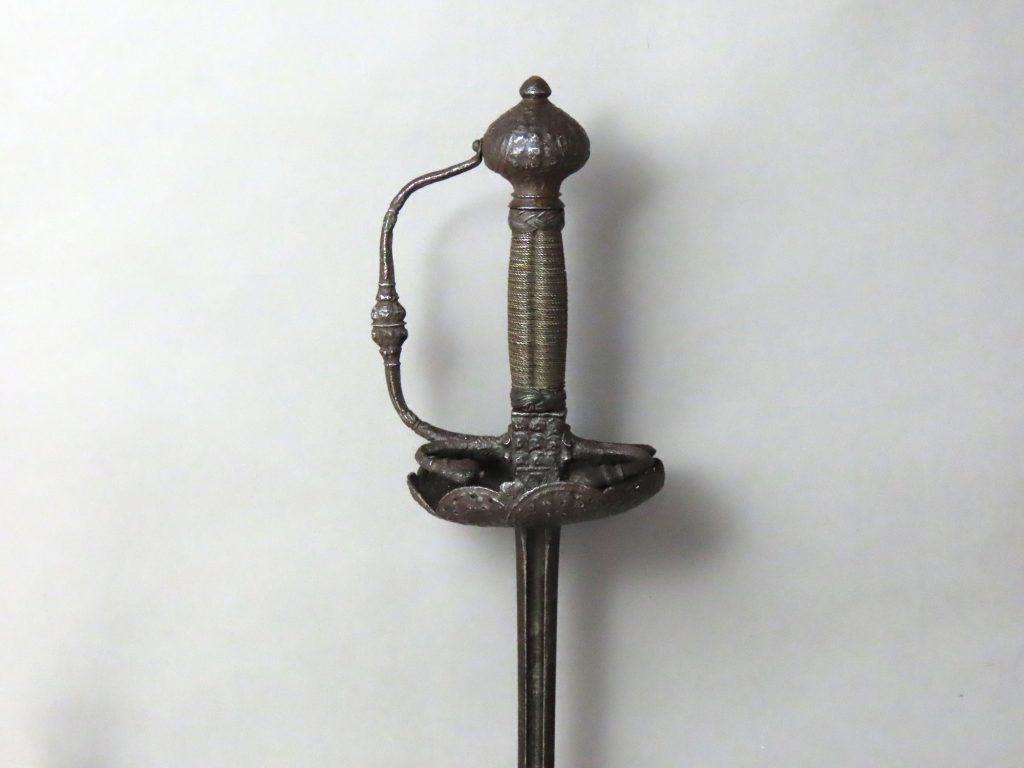
Spanish or Italian Shell Guard Rapier, 2nd Half 17th C. Forged iron hilt formed with two large upturned shell guards, each with decorative chiseled border. Long, straight round-section quillons with turned finials; large pas d’ane integrally forged with the shells; and a number of smaller looping bars which cover the spaces between the shells and join with the integrally forged knuckle bow. Bun-shaped pommel with turned base; grip wrapped with twisted copper wire secured with iron ferrules top and bottom. Broad double-edged 36” (91.4 cm) blade of flattened hexagonal section with shallow central fuller stamped with maker’s name “* GIO * KNEGT ” on one side and “* IN * SOLINGEN *” on the other, with anchor mark at the end of the fuller on both sides. The Knecht Family of Solingen, Germany has been active from the early 17th Century, well into the 20th Century, and George Knecht’s name has been found on many blades exported to the Caribbean and the Spanish colonies, as well as swords on the European Continent. Guard and grip slightly loose, one small bar has a separated forge weld (see photo), dark gunmetal patina and scattered rust marking to metal, and several shallow nicks in the blade. Overall length 43” (109.2 cm). Formerly in the War Museum Collection.
Page 20 of 157