
Show

Forgot your password?

Error message here!

Error message here!

Error message here!

Error message here!

Show Error message here!

Show Error message here!

Lost your password? Please enter your email address. You will receive a link to create a new password.

Error message here!

Back to log-in

Close

For Sale

The following items are listed by for sale by users of the site and dealers. They are in no way endorsed or guaranteed by www.antiquearmsresearch.com

Add a Classified Item
to

Clicking on the sword will take you through to the relevant classified item or dealer site.
Don't miss out! - Do you want to be kept informed weekly of new aditions? Just join our weekly update list.

You can also receive regular email notifcations when items match your keywords. To recieve them just register or logon at the top right of this page.
Page 23 of 124
  • Nation : Polish
  • Local Price : £3250.00
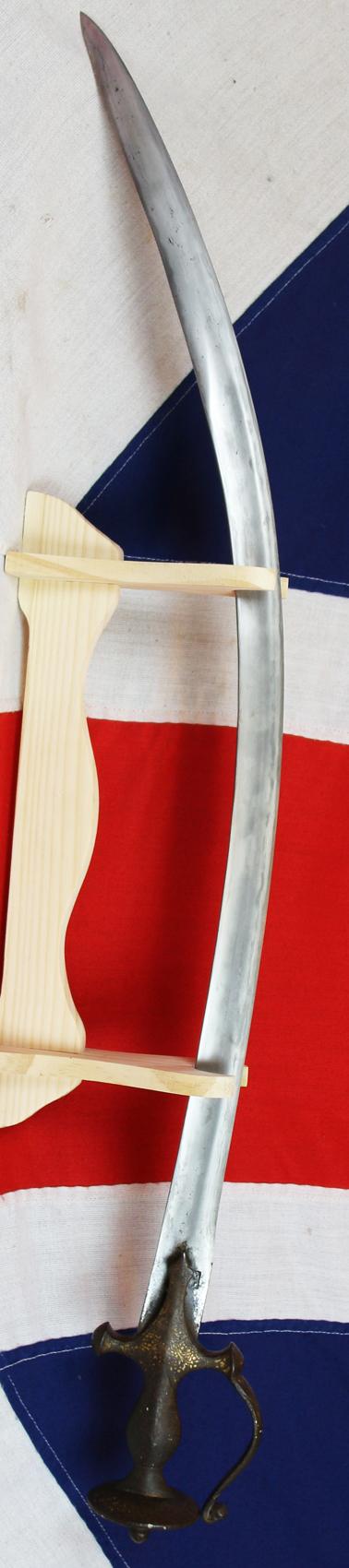
A Beautiful 17th-18th Century Sikh Tulwar With Gold Inlaid Royal Hilt & Seal Stamped Blade, With Double Crescent Armourer’s Marks. It Has Just Returned From Expert Museum Grade Conservation, Polishing & Etching of The Blade To Reveal Its Stunning Pattern. The tulwar hilt is covered in pure gold Koftgari decoration. superb hybrid wootz Damascus shamshir blade with square seal mark and twin crescent armourer's mark to the blade. It has now returned from a no expense spared museum grade conservation and polish that has revealed its absolutely stunning hybrid wootz Damascus grain. The blade was not removed from the gold hilt, so the blade polishing had started below the hilt, in order to maintain its historical integrity. The beauty of this wonderful historical sword and blade is breathtaking in its combination of opulence and subtlety. The blade has a wondrous and elegant deep curvature, that joined with its material beauty is a joy to behold. It would have been a credit to the former Dr Leo S.Figial Collection that, until it’s auction and dispersal in 1998 at Butterfields Auction, was one of the finest in the world outside of any national museum. Persian: شمشیر (type, which refers to a Persian or Iranian sword with a radical curve. The name is derived from the shamshīr, which means “lion’s claw or lions tale” in the Persian language – pointing towards the curve of the blade. These types of blades are normally used for slashing unarmored opponents either on foot or mounted; while the tip could be used for thrusting. In India, the term ‘Goliya’ (meaning circle) was used to describe these types of blades; referring to their curve. The Tulwar had historically been the quintessential combat sword used by Sikhs as their sacred kirpan due to its superior handling while mounted on horseback. With a curved blade optimized for cutting and slashing with sweeping cuts delivered from the shoulder by a horseman the curved blade of the tulwar could strike repeated blows without the danger of the blade getting stuck in bone or armour. It allowed for fierce slashing on all sides cutting through enemy formations while mounted on horseback. This tulwar has a curved blade of approximately 76cm in length with a graduating blade where it eventually begins its taper to the point. With its curved blade the point of the sword cannot be very effectively used for thrusting and the Tulwars defensive capabilities are limited. In this circumstance defence was taken up by using the shield (Dhal) in tandem with the Tulwar as an integral duo on the battlefield. The blade was firmly attached to the hilt of the Tulwar commonly using a heated paste of lac or red dye from the papal tree which when it hardened provided a solid and effective adhesive between the two parts of the sword. The hilt of the Tulwar has a button on top and a circular dished pommel disk featuring the koftgari design patterns of flowers in pure hammered gold. The grip of the Tulwar below the pommel disk narrows at the top and bottom while bulging out in the middle. The crossguard between the grip and the blade features two short but very thick rounded quillions. The index finger could be wrapped around a quillion rather than the grip providing the swordsman with extra maneuverability of the sword. Some Tulwars feature a knuckle guard extending from the quillion to the pommel disk, while others do not, both styles of Tulwars were commonly used by Sikhs. The pure gold inlay upon the hilt is worn as is often the case due to its great age, but much still remains to show it wondrous quality and former royal status. The blade is now once more in superb condition for its age. Guru Hargobind, { Guru Hargobind Sahib Ji } the 6th Sikh Guru is said to have always carried two such gold hilted Tulwars, representing his temporal and spiritual authority. They both had gold onlaid hilts just as this sword. It is possible, however slim, this sword may have been even the side arm of a member of the great Sikh Guru’s Darbar {court}. Guru Hargobind Sahib Ji was the first Sikh Guru to engage in warfare. Guru HarGobind Ji excelled in matters of the state and his Darbar (Court) was noted for its splendor. The arming and training of some of his devoted followers began, and once the Guru came to possess seven hundred horses, his Risaldari (Army) grew to three hundred horsemen and sixty gunners. Additionally, five hundred men from the Majha area of Punjab were recruited as infantry. Guru HarGobind Ji built a fortress at Amritsar called Lohgarh (Fortress of Steel). He had his own flag and a war-drum which was beaten twice a day. Those who had worked to have Guru Arjan destroyed now turned their attention and efforts to convincing Jahangir that the Lohgarh fort, the Akal Takhat, and the growing Risaldari army were all intended to allow Guru HarGobind Ji to one day take revenge for his father's unjust death.
  • Nation : Spanish
  • Local Price : 3,200.00 USD
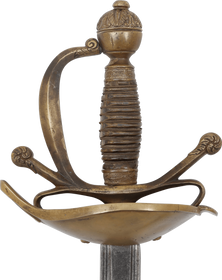
SPANISH OFFICER'S RAPIER C.1800. This sword is a good example of the individuality and stylistic expression which influenced Spanish sword design in the colonial period. It is a rapier with its roots in the European officers small swords of the period. The boat form guard was widely adapted to the Spanish taste but seldom as faithfully as here. The wire wrapped horn grip has a distinctively colonial flavor. It likely was made as part of the armament in anticipation of Spain's involvement in the Napoleonic Wars and may have served in the Peninsular War after 1808. It is as likely to have carried on its service in the colonies including North America and the Caribbean, where Spain struggled to maintain control after Napoleon's defeat. In true Spanish character, it is as functional as it is charming.
  • Nation : Confederate
  • Local Price : $2,295.00
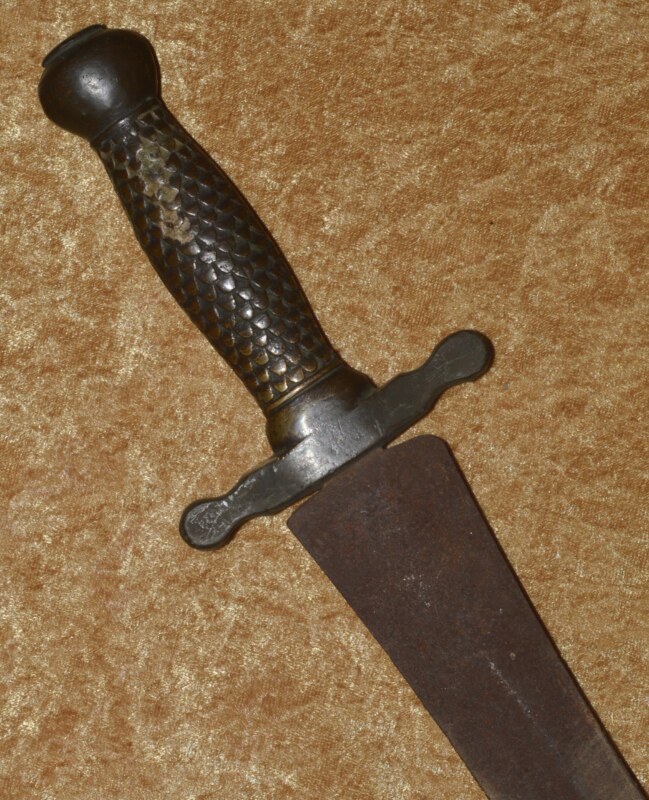
Rare Confederate Froelich Artillery Short Sword. All Confederate-made swords are relatively rare, but perhaps one of the rarest is the foot artillery short sword made by Louis Froelich of Wilmington, NC and later Kenansville, NC. It would appear that the artillery sword was one of his earliest pieces, as the State of North Carolina contracted for 200 foot artillery swords in 1861 and it is known that the ordnance office in Raleigh paid $12 each for 151 of these between December 1861 and March, 1862. In Wilmington the company was known as the Wilmington Sword Factory or the Confederate Arms Factory, but in September, 1862 Froelich bought a 2.5 acre tract in Kenansville, NC and the new factory became known as the Confederate States Armory, where most of their wartime production occurred. They produced a wide array of products from buttons, knapsacks, and accouterments, to all types of edged weapons, including swords and surgical instruments. They are perhaps best known for their cavalry sabers, of which they provided over 11,000 to the Confederacy. The quality of their products was generally better than other Confederate-made items. The example offered here is of simple form with cast one-piece brass hilt comprising guard, scaled grip, and pommel. Double-edged 18 1/4″ blade of gladius form with unstopped fuller on each side. It is completely unmarked and identified mostly from its distinctive cross guard. Like almost all foot artillery short swords of the period it was fashioned after the French model which was a modern recreation of the ancient Roman gladius. When adopted by the French, these were originally intended to kill or maim charging cavalry horses, but such use during the Civil War was rarely practical so these stout weapons were largely used to clear brush and help with setting up the artillery batteries. As such, the blade of this example shows much use with numerous deep edge nicks and the tip is worn. The piece is uncleaned and the high copper content brass hilt show a dark patina with some lighter patches. Blade with dark rust patina. Most Confederate swords show considerable wear and use, as is the case with this very rare example. No scabbard. Overall length 23 1/2″.
  • Nation : British
  • Local Price : $2,295.00
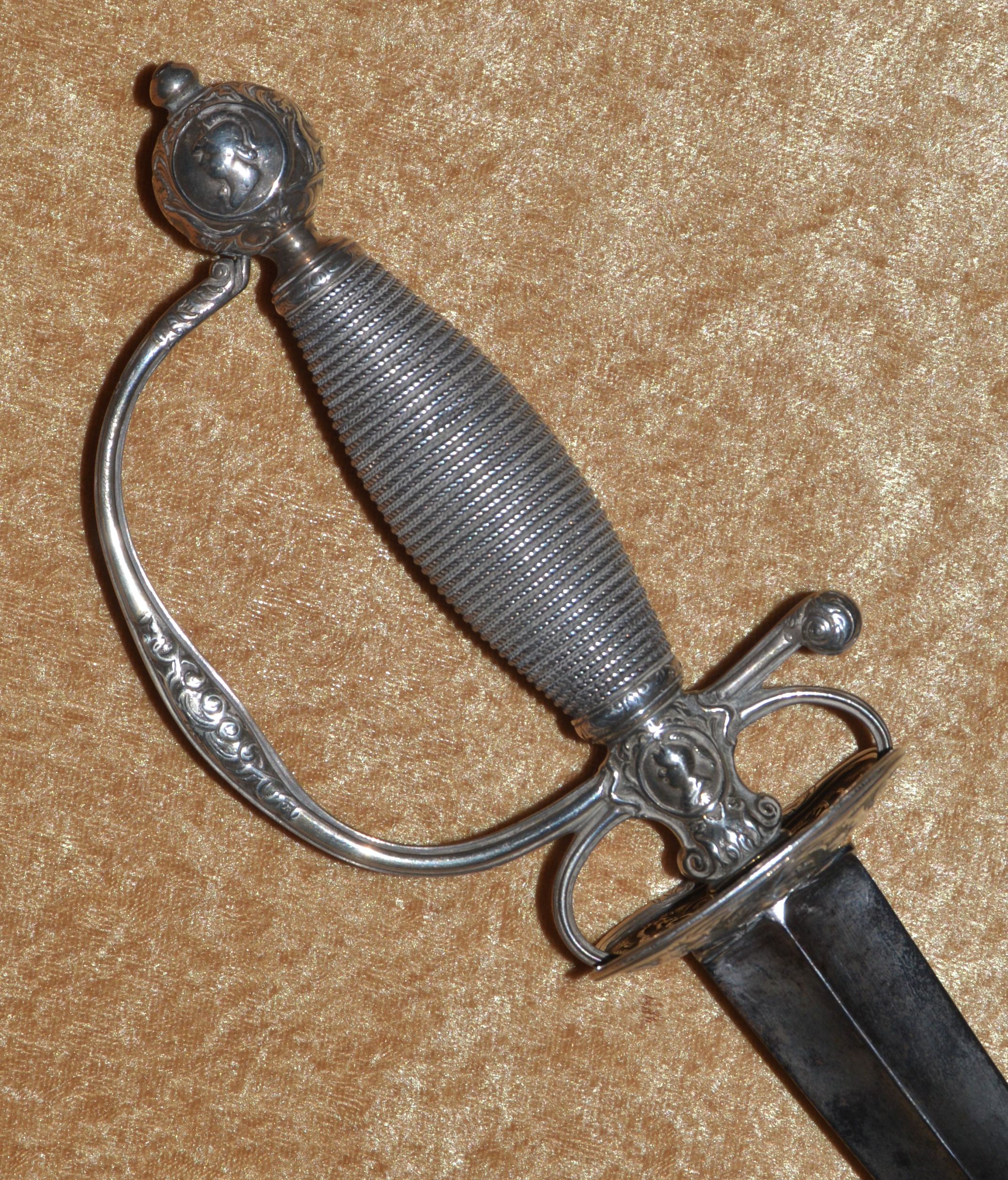
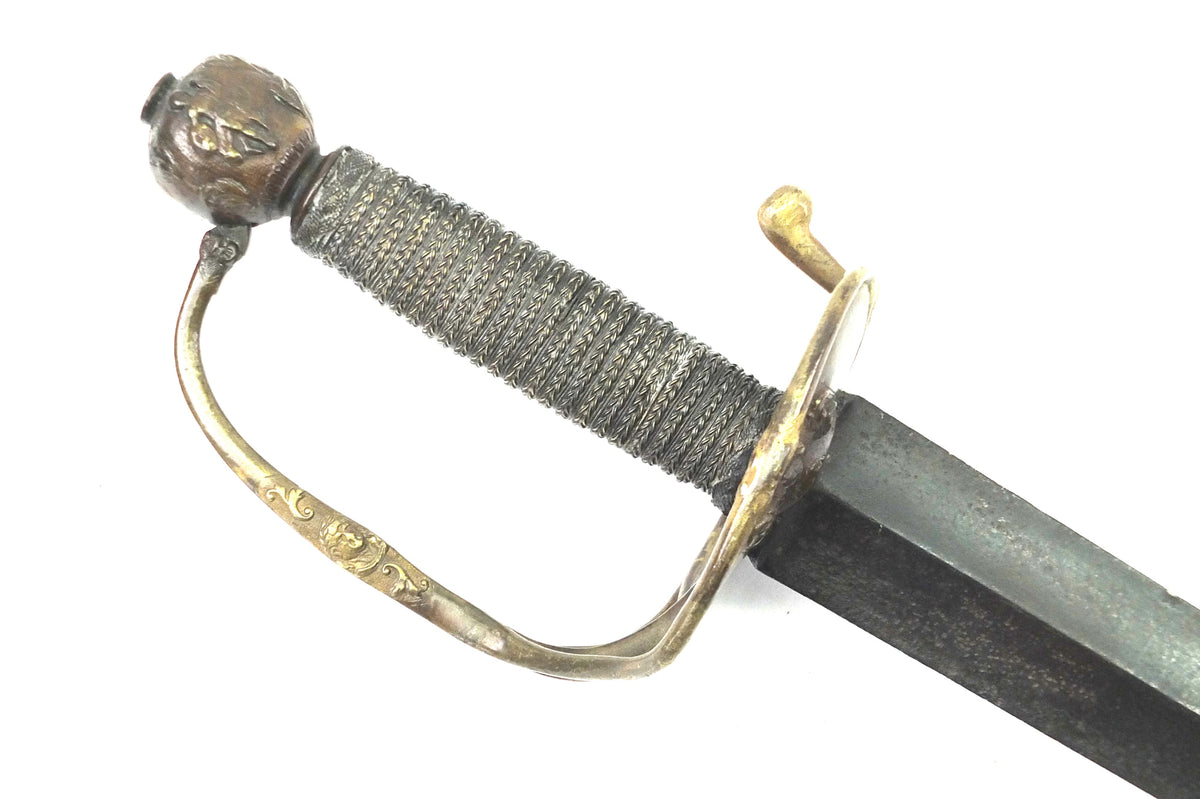
English Silver Hilt Smallsword, Mid 18th C. Featuring cast and chased silver hilt with symmetrical double shell guard, pas d’ane, single reverse quillon with scroll finial, and knuckle bow with London hallmarks and maker’s initals “np”(?) joining the spherical pommel. The decoration depicts human profile busts on the pommel, quillon block, and center of the shell guard; the latter also depicting mythical beasts, including one with female head and breasts with the lower body that of a lion. Grip with twisted silver wire wrap (shallow dents) and silver ferrules top and bottom. Hollow-ground 30 1/2” blade of triangular-section with full length central fuller; inlaid brass mark on the forte (lightly pitted). Overall length 36 3/4”
  • Nation : British
  • Local Price : £2295.00
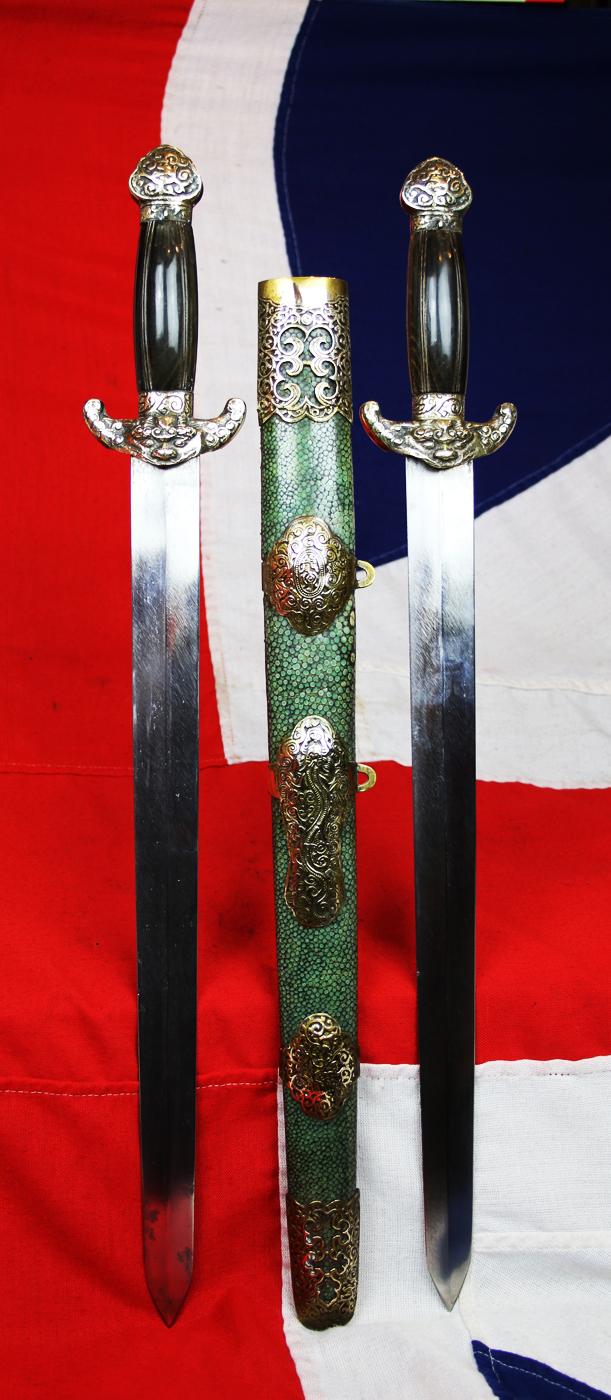
A Most Scarce Antique Ching Dynasty Chinese Shuāngjiàn (雙劍). A Twin-Sword Jian, Late 18th Early 19th century. Near Identical to Admiral Sir James Hanway Plumbridge's Sword in the National Maritime Museum Collection. And The Metropolitan In New York. A 19th century Chinese especially large sized double sword (Shuang Jian) with green, giant rayskin scabbard, and elaborate brass mounts, The cast brass mounted hilts are of classic form with zoomorphic guards depicting the taotie (饕餮), a monster from Chinese folklore that was so voracious that it devoured even its own lower jaw. This is quite like kirtimukha of the Hindu cultural sphere, and there is probably an ancient relationship between the two. The rendering of the faces is detailed, their presence strong, unlike very similar guards on most late Qing duanjian that lack detail and look weak. A most rare sword arrangement where each sword has a rounded outer and a flat inner side hilt system, of two swords that fit back to back and parallel together, and are simultaneously worn in a single scabbard. The blades were designed to be used in pairs, one in each hand. During the Qing Dynasty, these were not just combat weapons but also popular symbols of high status. Many Jian were brought back to England by the earliest visitors to China, both before and after the Boxer rebellion. A similar piece was exhibited in the British Museum, Chinese weapons and armour, 15th of December 1994 to the 15th of January 1995. A Chinese jian double or twin sword, with two double edged blades retained in a single scabbard. Principle sword with a engraved brass mounts, the bats and longevity symbols on the brass mounts form the pun fúshòu (福壽), meaning a long and happy life, and a lined darkwood grip, the secondary sword has an identical matching hilt with buffalo horn grip, and both are simultaneously retained in a superb single giant rayskin covered scabbard, with two interior slots, one for each blade, with typical stylized brass mounts, typically decorated with a traditional, intricate, bat and seal design, fúshòu (福壽). The stylized longevity symbol called shòu (壽) surrounded by bats, fú (蝠) Each sword has a double edged blade. Overall with stunning original patination, this would be a Chinese antique sword, of the larger size than usual, that would likely be impossible to improve upon. Likely brought back to England as a souvenir of the Opium War period to the Boxer Rebellion. Truly original, antique, Chinese weapons are very scarce indeed, as historically, few swords were ever brought back from China. Porcelain and silk were far more popular and preferable souvenirs and exports for Europeans, and in China, in the mid 20th century, nearly all the surviving antique edged weapons were melted down and destroyed in the era of Mao, under Chairman Mao's Cultural Revolutionary instructions, in order to create new steel. A fabulous example that has breathtaking natural age patina. Effectively, in wondrous condition for its age. A near identical sword {but withy a single blade} was once belonging to Admiral Sir James Hanway. His family believed he wore it as a midshipman at the Battle of Trafalgar in 1805. It is on display in the National Maritime Museum, exhibit number; WPN1157. Described as follows Chinese sword, which belonged to Admiral Sir James Hanway Plumbridge (1787-1863). Description of the admirals sword; The hilt of the sword consists of a gilt pommel and crosspiece with very short down-turned quillons, and a fluted brown grip. The hilt is ornamented with a design of bats, which are a symbol of good luck. The steel blade is straight and double-edged. The point of the blade has evidently been broken off; it is about an inch too short for the scabbard and is rather roughly ground. The wooden scabbard is covered with lacquered paper actually tortoishell, and has four gilt lockets and a chape, which is ornamented with a design of bats. The two middle lockets are fitted with loops. This sword was offered to the National Maritime Museum as the sword which was worn by Admiral Sir James Hanway Plumbridge when he was a Midshipman at Trafalgar. It is inconceivable that he wore a Chinese weapon at Trafalgar. He probably obtained the sword during one of his three commissions in the East Indies. Admiral Sir James Hanway Plumbridge (1787-1863) entered the Royal Navy on the 6th September 1799 and was a Midshipman in HMS 'Leda' in the expedition to Egypt in 1801. At Trafalgar he was acting 6th Lieutenant in HMS 'Defence', and on the 20th August 1806 he was confirmed in rank. See photo 10 in the gallery, it shows the admiral's identical Jian sword on display in the National Maritime Museum, the photo is sadly of poor quality The two paintings in the gallery are original Chinese gouache of a seated Ching Emperor, and his sword bearer, holding the very same type of Jian sword with green scabbard. The antique Chinese jian is a straight, double-edged sword used in China for over 2,500 years, with the earliest examples dating to the 7th century BC. We actually have some original, ancient jian museum pieces, from this era, acquired by us from the world renown Dove Collection. See them offered for sale within our website. It was a multi-purpose weapon, optimized for thrusting but also capable of cutting and slashing, and was a symbol of status. The design was effective and remained relatively consistent over long periods, with minor variations in length, weight, and balance. The jian's most defining feature is its straight, double-edged blade. While it could be used for both cutting and thrusting, it was often considered more optimized for thrusting than the single-edged dao (sabre). The jian was a symbol of power and status, wielded by the elite and sometimes carried as a symbol of authority. Its use dates back to the Spring and Autumn period, with some of the earliest specimens being the Sword of Goujian. Design variations: The length, balance, and weight of the jian varied significantly across different periods and purposes. It is a crucial tool in traditional Chinese martial arts training. Military use: It was a formidable weapon on the battlefield and, due to its length and reach, was sometimes used like a long spear to favour thrusting techniques. The jian is a significant symbol in Chinese culture and history, frequently appearing in films, historical reenactments, and museum exhibits. Antique jian are valuable as historical artifacts, collectibles, and striking decorative pieces. A comparable set is held in the Metropolitan Museum, accession number 36.25.1480a–c It weighs 2.2 lbs, overall length
  • Nation : British
  • Local Price : £2,295.00
Williamite Walloon Hilted Officers Sword, very fine. Ref 9114. A Very Fine Williamite Walloon Hilted Officer´s Sword. 43&157; overall, 36&157; earlier flattened diamond section hollow ground blade, characteristic gilt bronze hilt, the solid cast oval side guards decorated with scrolls & classical figures of warriors to the underside & inside, upturned quillon, D shaped knuckle guard decorated with a Roman bust at the mid point, two short supporting side bars, spherical pommel decorated to match, gilt brass wire bound grip with Turk´s heads. Sword 1685-1710, blade circa 1620.&194;&160; &194;&160; &194;&160; &194;&160; &194;&160; &194;&160; &194;&160; &194;&160; &194;&160; &194;&160; &194;&160; &194;&160; &194;&160; &194;&160; &194;&160; &194;&160; &194;&160; &194;&160; &194;&160; &194;&160; &194;&160; &194;&160; &194;&160; &194;&160; &194;&160; &194;&160; &194;&160; &194;&160; &194;&160; &194;&160; &194;&160; &194;&160; &194;&160; &194;&160; &194;&160;&194;&160; Very fine Anglo-Dutch sword in good condition, very fine hollow ground blade probably German fitted&194;&160; to later hilt. Images courtesy of West Street Antiques (https://antiquearmsandarmour.com/)
  • Nation : British
  • Local Price : £2,250.00
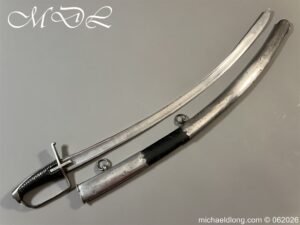
British 1788 Troopers Light Cavalry Sword. 1788 British Troopers Light Cavalry Sword in very good condition all steel hilt with wooden ribbed grip bound with leather. The curved blade with fuller running nearly the full length of the blade. The hilt with single straight knuckle bow, German markings which were applied after WW 2 as all swords held in German collections had to be registered. Flat top pommel and bar shaped langets. The scabbard steel with cut out exposing the painted wooden liner and 2 loose rings overall length 39 inches the blade 34 inches for reference please see The British Cavalry Sword 1788 “ 1912 by Richard Dellar page 12 “ 13
  • Nation : Japanese
  • Local Price : £2,250.00
**HIGH GRADE SMITH**WW2 Japanese Army Gunzoku (Military Civilian Employee) Officer’s Gendaito Hand Forged Katana Long Sword Smith Signed Tang ‘NOSHU JU MORITA KANE SHIGE KIN SAKU’ Scabbard With Leather Field Combat Cover & Expert Assessment. An original WW2 Japanese Officer’s Sword and Scabbard. The sword has been assessed by UK Japanese sword expert Bill Tagg. A copy of his hand written notes and illustrations accompany the sword. In extracts from his notes he states “Gunzoku katana (army civilian employee) sword with hand forged (gendaito) blade signed by its maker, shoshin mei genuine signature NOSHU JU MORITA KANE SHIGE KIN SAKU see John Slough book of second war swordsmiths page No. 63 for oshigata and info on this man. Real name Morita Isamu born 1900 student of Mizuta Sei Jiro Kuni Shige. Won highest award in 1939 National exhibition rated 1 Million Yen, man making high grade gendaito. In very good old polish, few scratches. Saya wood with extra reinforcing brass strips under leather field service cover, in good condition for its age. Habaki brass with etched armoury storage number 282-180064 ? Tsuba is gunzoku civilian pattern mokko shape in brass (been gilt) with flower decoration complete with several seppa & o seppa. Tsuka (hilt) is gunzoku pattern (civilian) with later war shortages plastic imitation Same fish skin. Brown military ito wrap with 2 sets of menuki (rare). One standard gunto showa blossoms in gilt brass, other pair a spray of flowers & leaves in shakudo metal ? never seen this before. Finished off with rank tassel tied on hanging ring of scabbard (Lieutenant to Captain rank tassel). There is no hole to be fitted with sarute loop. Fuchi kashira are civilian (flowers) in brass, matching tsuba. A scarce pattern sword in untouched collectors condition”. In his illustrations Bill translates the signature on the tang. He describes the cutting edge as 67.5 cms & total length 88.5 cms. He also describes & measures other blade characteristics which can be seen in the images. The price includes UK delivery. Sn 23059
Page 23 of 124