
Show

Forgot your password?

Error message here!

Error message here!

Error message here!

Error message here!

Show Error message here!

Show Error message here!

Lost your password? Please enter your email address. You will receive a link to create a new password.

Error message here!

Back to log-in

Close

For Sale

The following items are listed by for sale by users of the site and dealers. They are in no way endorsed or guaranteed by www.antiquearmsresearch.com

Add a Classified Item
to

Clicking on the sword will take you through to the relevant classified item or dealer site.
Don't miss out! - Do you want to be kept informed weekly of new aditions? Just join our weekly update list.

You can also receive regular email notifcations when items match your keywords. To recieve them just register or logon at the top right of this page.

Page 22 of 156
  • Nation : British
  • Local Price : £3,250.00
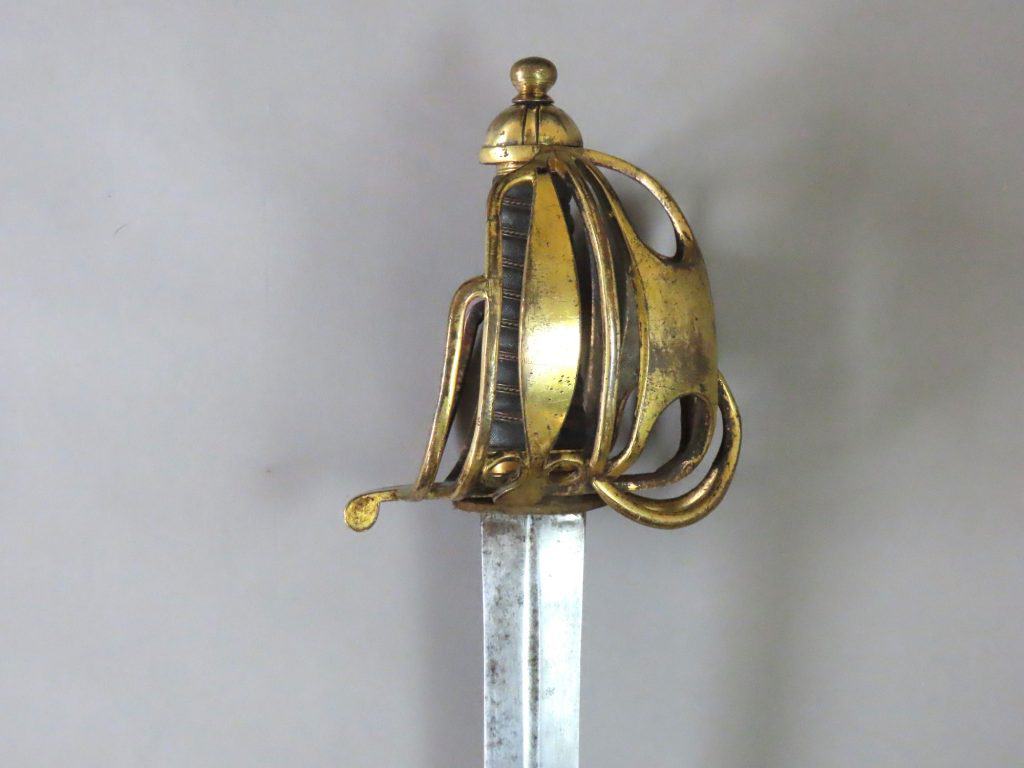
Basket Hilted Sword Royal Horseguards, rare. Ref 9215. A Rare Royal Horseguards Basket Hilted Sword. 41&157; overall, 35 1/2&157; broad blade with twin fullers with GR crown to one side and ´Harvey´ engraved on the other. Basket hilt welded from pierced panels and straps, bun shaped pommel, leather grip with twisted wire. No scabbard Circa 1755&194;&160; An attractive large sword in good condition, blade engraving faint.&194;&160;&194;&160; Provenance Robert E Brooker Jr Collection author of British Military Pistols 1603-1888.&194;&160; Images courtesy of West Street Antiques (https://antiquearmsandarmour.com/)
  • Nation : British
  • Local Price : £3250
Fine 1798 Pattern Scottish Highland Infantry Officers’ Sword with Original Scabbard. A fine example of the distinctive basket hilted sword introduced for Scottish Infantry officers in Highland Regiments in 1798. It was replaced by the regulation steel basket hilt 1828 pattern three decades later. The sword type was used throughout the Napoleonic War period. This sword is in fine original uncleaned condition and retains its scabbard. The bronze hilt and scabbard mounts were once covered with a gilt finish much of which has now worn away or is hidden under the patina. An inscription on the knucklebow reads “UNION LODGE NO 555 Carlisle”. It would seem that at some time the sword was gifted to the Masonic Lodge in Carlisle. Carlisle is an English town near the Scottish border. The hilts of these swords were most usually made of gilt copper, bronze or brass. The hilt of this sword is of gilt bronze and made of rounded bars and flattened plates in the usual manner with forward loop guards and a swollen solid wrist guard terminal extending from the rear quillon. The upper terminals of the guard arms are fixed onto a ring inside which the stem of the mushroom shaped pommel is fitted. The pommel is dome-shaped with a large separate waisted pommel button on top from which four sets of decorative grooves flanked by narrower lines radiate to the pommel edge. The double-edged gently tapering blade is 32.75 inches (83 cm) long and in fine condition. Typically it is of lenticular section with a short ricasso. A central fuller commences a short distance from the hilt on each side and is 9 inches (23 cm) long. The blade is unmarked and probably a German import which was the norm for this sword type and most probably of Solingen manufacture. The grip is of spirally grooved wood covered with shagreen held in place with thin ropes of twisted copper wire flanked with plainer thinner wire now coloured with age. It is mounted with gilt bronze ferrules top and bottom which are incised with decorative lines. The scabbard is in fine condition made with a wooden core covered with granulated leather stitched along the middle on one side. The mouthpiece and middle band retain their ring carrying mounts. The chape has a knopped terminal. For other examples of the 1798 type see: Harvey J S Withers, “The Scottish Sword 1600-1945”, Paladin Press, 2009, pages 13 to 151 and Cyril Mazansky, “British Basket-Hilted Swords”, Boydell Press, 2005, pages 131 to 133.
  • Nation : British
  • Local Price : £3250
Click and use the code >23387 to search for this item on the dealer website Superb Late 18th Century, Napoleonic Wars British Officer´s Sabre With a French ´Trophy´ Blade, With An Ancient Egyptian Goddess Wadget Entwined Serpent British Hilt
  • Nation : British
  • Local Price : £3,250.00
English Dragoon Basket Hilted Sword c 1740. English Dragoon Basket Hilted Sword c 1740 good solid basket with dome pommel and raised tang button, the grip leather bound secured with turks heads top and bottom. The basket is engraved with 1 over 8 however other marks seem to have be removed which may indicate a battle field pick up please see images. The blade single edged with double fullers again with stamps which have been obscured near the hilt. Overall length 42 inch the blade 36 inch for reference please see British Basket Hilted Swords by Mazansky pages 94 and 95
  • Nation : British
  • Local Price : £3,245.00
Brass Barrelled Flintlock Blunderbuss by P. Jackson. SN X3241. A&194;&160; Brass Barrelled Flintlock Blunderbuss by P. Jackson. 29 1/2&157; overall, 141/2" ring turned brass octagonal to round three stage barrel flared at the muzzle, with cannon barrel turnings, signed on the top ’R. Jackson London’. Struck with Post 1813 Birmingham proofs and Birmingham Tombstone mark, with steel flick bayonet. Stepped flat lockplate, swan necked cock, roller on feather spring. The trigger guard has a pineapple finial, the brass buttplate engraved with floral patterns on the tang. Walnut full stock chequered at the wrist. &194;&160;Original horn tipped ramrod with worm retained by 2 brass ramrod pipes. In good condition. Circa 1815. &194;&160;&194;&160;&194;&160;&194;&160;&194;&160;&194;&160;&194;&160;&194;&160;&194;&160;&194;&160;&194;&160;&194;&160;&194;&160;&194;&160;&194;&160;&194;&160;&194;&160;&194;&160;&194;&160;&194;&160;&194;&160;&194;&160;&194;&160;&194;&160;&194;&160;&194;&160;&194;&160;&194;&160;&194;&160;&194;&160;&194;&160;&194;&160;&194;&160;&194;&160;&194;&160;&194;&160;&194;&160;&194;&160;&194;&160;&194;&160;&194;&160;&194;&160;&194;&160;&194;&160;&194;&160;&194;&160;&194;&160;&194;&160;&194;&160;&194;&160;&194;&160;&194;&160;&194;&160;&194;&160;&194;&160;&194;&160;&194;&160;&194;&160;&194;&160;&194;&160;&194;&160;&194;&160;&194;&160;&194;&160;&194;&160;&194;&160;&194;&160;&194;&160;&194;&160;&194;&160;&194;&160;&194;&160;&194;&160;&194;&160;&194;&160; Images courtesy of West Street Antiques (https://antiquearmsandarmour.com/)
  • Nation : British
  • Local Price : 4,500.00 USD
AN EXTREMELY RARE SCOTTISH PLUG BAYONET C.1690. This example, with 9" blade, belongs to a group of daggers with similar blades and guards, decorated in silver as is this one, many of which bear Jacobite mottos. They have spatulate profile reeded bog oak grips. A very few, as this one are mounted as plug bayonets. The hilt is darkly grained bog oak with a silver ferrule and silver flower head disk at the top. The Jacobite Rebellion came at a time when the plug bayonet had reached its greatest popularity and this is the Scottish separatists rendition. Provenance: J. F. R. Winsbury Collection
  • Nation : -
  • Local Price : 4,400.00 USD
RARE EXPERIMENTAL US M.1860 CUTLASS. Unmarked but obviously produced by Ames as the tooling specifically compares to production examples made for Civil War use which are encountered both marked (usually with 1862 date) and unmarked. The pattern was adopted in two variations for officer and seaman. The officer's pattern (Peterson #140) varied from the seaman's with scrolling foliage on the pommel. As well, the semi bowl guard was fluted cut out (pierced) with U S N. This example is fluted, but not pierced and the pommel is plain, without the floral scroll as adopted.  The grip and scabbard conforming to the adopted pattern. The distinctive features are the guard, absolutely identical to officer's swords but not pierced with the universal U S N. The key is the tooling: The guard accords in detail and dimensions with the production examples, indicating that the dies had been produced at the time when this sample was submitted. The other distinguishing feature is that the blade is unmarked, indicating that it was a prototype. In our collection for 40 years, it has been shown to those who need to see it with no constructive result, verifying its one of a kind identity. Clearly made by Ames, it represents the step before approval for production of the 1862 cutlass, possibly contending for approval as either the enlisted man's or officer's pattern. That dated Ames cutlass' are dated 1862 and the Civil War broke out in April 1861 after 7 states declared their succession in February 1861 indicates that an immediate call for securing the coasts, the source of supply for the South, was made.  The 1841 cutlass was Old School based on the Napoleonic/post-Napoleonic model of heavy blade suitable for whacking as a last resort. The 1860 cutlass was a cut (marginally) and thrust weapon and notably the only swords, other than cavalry, which were primary weapons. The dependence by the South on imports by sea foretold the need for extensive naval action to choke off the supply necessitating maximizing naval resources including adopting an improved cutlass.
  • Nation : Italian
  • Local Price : $5895.00 CAD
ITALIAN SWEPT HILT RAPIER. ITALIAN SWEPT HILT RAPIER: Circa 1640. wonderful 40½ inch blade, 1⅛ inch wide. Original wire wrapping with Turk's heads at each end. A very plain but graceful hilt. Maker's initials “A.C.” are faintly visible on the tang. Maker's stamps of 3 dots on the cross-guard. $5895.00
Page 22 of 156