
Show

Forgot your password?

Error message here!

Error message here!

Error message here!

Error message here!

Show Error message here!

Show Error message here!

Lost your password? Please enter your email address. You will receive a link to create a new password.

Error message here!

Back to log-in

Close

For Sale

The following items are listed by for sale by users of the site and dealers. They are in no way endorsed or guaranteed by www.antiquearmsresearch.com

Add a Classified Item
to

Clicking on the sword will take you through to the relevant classified item or dealer site.
Don't miss out! - Do you want to be kept informed weekly of new aditions? Just join our weekly update list.

You can also receive regular email notifcations when items match your keywords. To recieve them just register or logon at the top right of this page.
Page 53 of 152
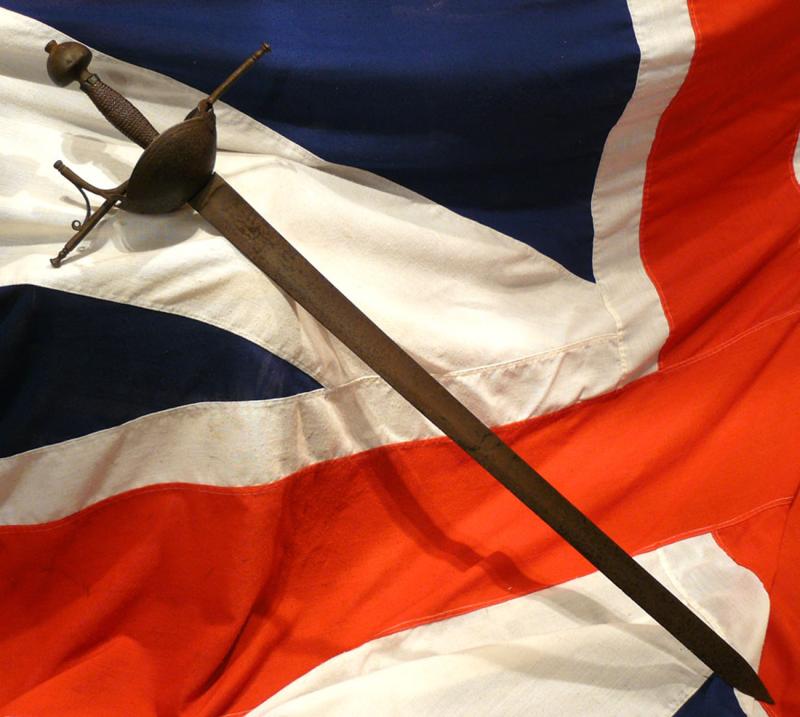
  • Nation : Spanish
  • Local Price : 1,350.00 USD
SPANISH RAPIER C.1700-50.
  • Nation : British
  • Local Price : £975.00
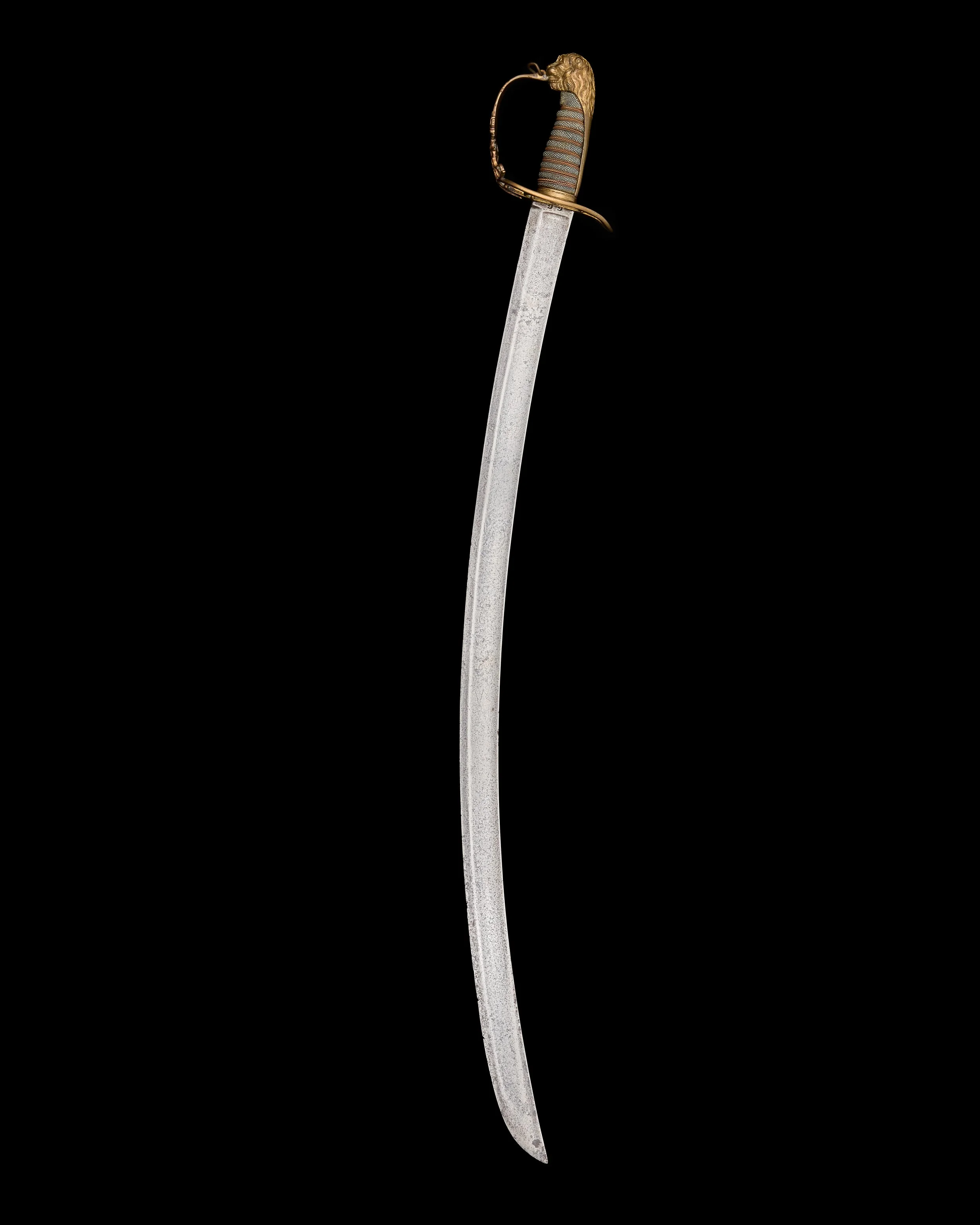
**NAPOLEONIC WARS ERA**EARLY VARIANT**British 1796 Pattern Heavy Cavalry Officers Sword With Gilt Etched Blade By JJ Runkel Solingen. ED 2197 -. An original early example of a British 1796 Pattern Heavy Cavalry Officer’s sword ((Withers, World Swords, 1st edn 2006, p. 86)). It has its regulation brass hilt with correct early variant rigid shell guard. Later variants of the 1796 Infantry sword had folding clamshells. It has the correct knuckle bow & urn shaped pommel. It has a wire bound grip, all tight and undamaged. It has a 32 ½” long blade with fullers. The spine of the blade is marked by the German manufacturer ‘J.J. Runkel Solingen’. The blade has its original leather hilt washer. The blade is etched on both sides. The etchings include ‘Crown GR’ (George Rex), heraldic arms and foliate devices. There is much original gilt on the etchings. The blade is undamaged and has just light staining consistent with age. The sword has its original brass mounted leather scabbard. The scabbard’s throat mount has a single brass hanging ring. The price includes UK delivery. ED 2197
  • Nation : British
  • Local Price : £975.00
Post 1845 Victorian British Stockport Rifle Volunteers (Cheshire) 1822 Pattern Infantry Officer’s Sword With Etched & Blue Blade, Brass Gothic Style Pierced Basket Hilt & Scabbard. Sn 22426:58 -. The Cheshire Regiment was a line infantry regiment of the British Army, part of the Prince of Wales’ Division. The 22nd Regiment of Foot was raised by the Duke of Norfolk in 1689 and was able to boast an independent existence of over 300 years. The 4th Volunteer Battalion was formed in 1860. The regiment was expanded in 1881 as part of the Childers Reforms by the linking of the 22nd (Cheshire) Regiment of Foot and the militia and rifle volunteers of Cheshire. The title 22nd (Cheshire) Regiment continued to be used within the regiment. On 1 September 2007, the Cheshire Regiment was merged with the Worcestershire and Sherwood Foresters Regiment (29th/45th Foot) and the Staffordshire Regiment (Prince of Wales’s) to form a new large regiment, the Mercian Regiment, becoming the 1st Battalion, Mercian Regiment. The Stockport Armoury building (Armoury Street, Stockport) was the Headquarters of the Stockport Rifle Volunteers (Cheshire Volunteer Rifles) in 1862. The 1822 pattern sword was a radical departure from previous designs, having a ‘gothic’ style pierced basket hilt so named after its resemblance to window shapes in gothic architecture and folding langet on one side. Pre 1845 these swords had pipe back blades. Post 1845 they were made with slightly curved fullered blades (see page 173 of World Swords by Withers & Page 159 of Robson). This original Stockport Volunteer Rifles infantry Officer’s Pattern 1822 sword has a post 1845, 32 ½” single edged fullered curved blade (38 ¼” overall). The blued blade has foliate etched decoration on both sides. There are no maker or date marks on the blade. One side of the blade has The etched Rifle Brigade ‘hung Bugle’ badge and ‘Stockport Rifle Volunteers’ and etched proof star with inlaid brass roundel. The reverse has Queen’s crown Royal Cypher ‘VR’ (Victoria Regina). The gothic style voided brass guard has stylised Royal Cypher VR & Queen’s Crown in the centre. The bar guard is fully intact. It has the correct folding langet on one side. Its fish skin grip with finger grooves & wire binding is in good condition with just light service wear. The sword is complete with its brass mounted leather scabbard which has a frog locket on the throat mount. All leather and stitching are intact. The leather has areas of surface scuffing consistent with age & service use. The price includes UK delivery. Sn 22426:58
  • Nation : British
  • Local Price : £975.00
Victorian Era Indian Pata Gauntlet Long Sword. Sn 22753 -. Pata swordsmen of the 17th century through to the Victorian era were specially trained in the use of this weapon, and could be extremely accurate with this somewhat unusual sword form. Peculiar to the Indian subcontinent, these broadswords had a protective gauntlet or armguard of steel, the grip being set at right angles to the blade (see page 485 item 6 of Stone’s A Glossary Of Arms & Armor where a Pata with similar gauntlet form as ours is illustrated). The steel gauntlet on this example has even age and use related patina. The sword has a 38 ½” flat steel double edged fullered blade and measures 4’ 2 ½” overall. The blade is riveted to the ornate extended tang of the Gauntlet. The blade is sharp with no damage and just light staining consistent with age. The inside of the gauntlet has a bar grip set across the inside of the fist part of the gauntlet. The ’cuff’ of the gauntlet has a curved fore arm bar / bracelet which hooks into 2 holes, one either side of the gauntlet. The price includes UK delivery. Sn 22753 (armoury next to bucket)
  • Nation : British
  • Local Price : £975.00
Post 1845 Victorian British Stockport Rifle Volunteers (Cheshire) 1822 Pattern Infantry Officer’s Sword With Etched Blade, Brass Gothic Style Pierced Basket Hilt & Scabbard. Sn 22426:60 -. The Cheshire Regiment was a line infantry regiment of the British Army, part of the Prince of Wales’ Division. The 22nd Regiment of Foot was raised by the Duke of Norfolk in 1689 and was able to boast an independent existence of over 300 years. The 4th Volunteer Battalion was formed in 1860. The regiment was expanded in 1881 as part of the Childers Reforms by the linking of the 22nd (Cheshire) Regiment of Foot and the militia and rifle volunteers of Cheshire. The title 22nd (Cheshire) Regiment continued to be used within the regiment. On 1 September 2007, the Cheshire Regiment was merged with the Worcestershire and Sherwood Foresters Regiment (29th/45th Foot) and the Staffordshire Regiment (Prince of Wales’s) to form a new large regiment, the Mercian Regiment, becoming the 1st Battalion, Mercian Regiment. The Stockport Armoury building (Armoury Street, Stockport) was the Headquarters of the Stockport Rifle Volunteers (Cheshire Volunteer Rifles) in 1862. The 1822 pattern sword was a radical departure from previous designs, having a ‘gothic’ style pierced basket hilt so named after its resemblance to window shapes in gothic architecture and folding langet on one side. Pre 1845 these swords had pipe back blades. Post 1845 they were made with slightly curved fullered blades (see page 159 of Robson’s Swords of the British Army). This original Stockport Volunteer Rifles infantry Officer’s Pattern 1822 sword has a post 1845, 32 ¾” single edged fullered curved blade (38 ½” overall). The blade has faint etched decoration on both sides. One side of the blade has foliate etched panels, the etched Rifle Brigade ‘hung Bugle’ badge and ‘Stockport Rifle Volunteers’ together with etched proof star with inlaid brass roundel. The reverse has foliate etched panels, Queen’s crown Royal Cypher ‘VR’ (Victoria Regina) and etched maker / retailer name and address ‘J&W Wood, Cutlers, Manchester. The blade has areas of staining consistent with age. The gothic style voided brass guard has stylised Royal Cypher VR & Queen’s Crown in the centre. The bar guard is fully intact. It has the correct folding langet on one side. Its fish skin grip with finger grooves & wire binding is excellent. The sword is complete with its brass mounted leather scabbard which has an ornate frog locket on the throat mount and it has 2 brass hanging rings. All leather and stitching are intact. The leather has areas of surface scuffing consistent with age & service use. The price includes UK delivery. Sn 22426:60
  • Nation : British
  • Local Price : £975.00
**MAHDIST WAR ERA (1881-99)**Victorian British WD Mole Birmingham Egyptian Forces Contract Pattern 1827 Rifle Brigade Type Officer’s Sword With Etched Blade, Cord With Portepee & Scabbard. Sn 23484:86 -. The Mahdist War 1881–1899 was fought between the Mahdist Sudanese, led by Muhammad Ahmad bin Abdullah, who had proclaimed himself the "Mahdi" of Islam (the "Guided One"), and the forces of the Khedivate of Egypt, initially, and later the forces of Britain. In that era the British had control of and trained the Egyptian army, supplying them with arms before becoming involved in the conflict themselves. This is an original 1827 Pattern type Officer’s sword made by Mole Birmingham, British ordnance proofed then supplied to Egypt to support their war effort. The sword has an undamaged 31 ½” blade (37” overall) with partial fullers. The blade is etched on both sides with foliate panelsand has a crest with crescent moon and what looks like Egyptian script on a shield. The blade also has the British ordnance proof acceptance roundel on one side & is signed by the maker ‘Mole Birmingham’. It has a brass voided full knuckle guard similar to the British 1827 pattern and has the same badge as features on the blade forming part of the guard & folding langet on one side. It has a wire bound fish skin grip in excellent condition. The hilt is fitted with Officer’s Cord With Portepee. It is complete with steel scabbard with 2 hanging rings, fixed belt bar and shoe. The scabbard has just a few small dents consistent with service wear. The price for this sword worthy of further research includes UK delivery. Sn 23484:86
  • Nation : British
  • Local Price : £975.00
**NAMED**British WD WW1 1915 George V 1897 Pattern British Fenton Brothers Sheffield Presentation Sword With Blued & Etched Blade To ‘Harry L. Searle, Commander D’ Company, 1st Battn. B.C.V.F, Cord, Acorn Knot & Leather Field Scabbard & Sam Bro. This is an excellent original, George V 1897 Pattern British Infantry Officer’s WW1 1915 dated presentation Sword to a named Officer with original leather cord, acorn knot & Leather Field Combat Covered Wood Scabbard with leather Sam Browne Frog. The Sword has a clean 33” single edged blade with fullers. The blade has etched & blued panels to both sides. One side has a Ordnance proof star and proof WD / ordnance inspection mark. The reverse has the makers name and trademark ‘Fenton Bros Sheffield Cutler To The War Office’ & Royal AppointmentBoth sides have foliate etched panels King’s crown above ‘GR V’ Royal cypher (King George V Rex) and heraldic arms of Great Britain. The hilt is fitted with its original leather washer. It has the correct ornate bowl guard with stylised King’s crown & Royal Cypher ‘GR V’ and wire bound fish skin grip together with ball top steel pommel. The guard is inscribed ’Presented to Harry L. Searle, Commander D’ Company, 1st Battn. B.C.V.F. by the officers N.C.O’s, and men of his Com.y. July 28th 1915’. The hilt is fitted with original officer’s brown leather cord (worn and frayed with sections absent) and excellent acorn knot. The sword is complete with its brown leather covered field scabbard which has a German silver insert in the throat in very good condition. The scabbard is fitted with a clean & complete period Sam Browne pattern leather frog. The price for this WW1 presentation sword worthy of further research regarding the named Officer and regiment includes UK delivery. Sn 23458
  • Nation : British
  • Local Price : £975.00
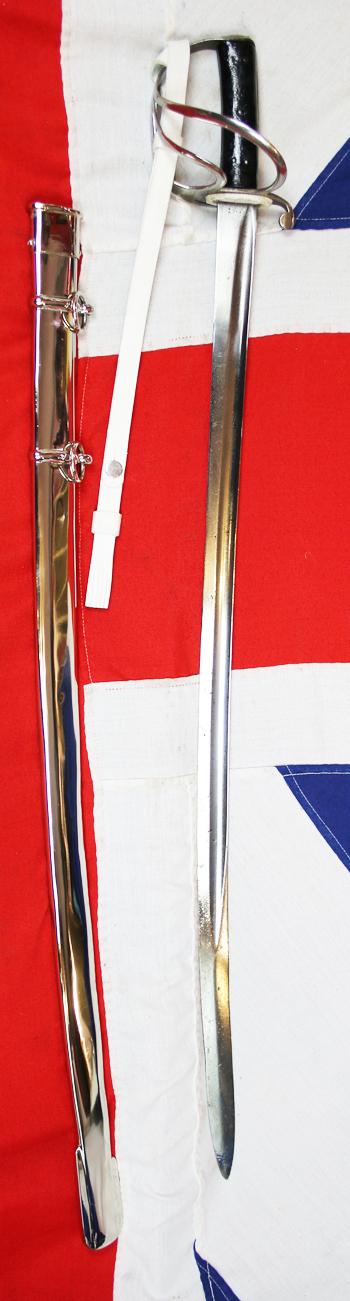
**RARE**NAPOLEONIC WARS ERA**British 1804 Pattern Royal Navy Seaman’s Boarding Cutlass With Correct ‘Figure Of 8’ Guard Hilt, Rope Lanyard With WD Brass Boatswain’s Call / Bosun’s Pipe Attached. Sn 23174:31 -. The British Royal Navy due to its global presence and command of the sea was by far the most organised and trained of all the World major sea services and it’s edged weapons used for boarding and repelling boarders reflected this. The Royal Navy was one of the first Navies in the 18th Century to begin standardising the personal edged weapons used by ordinary seaman. The 1804 Pattern Naval Seaman’s Boarding cutlass was the first regulation Naval cutlass issued to British Seamen (see page 241 of World Swords by Withers where a cutlass with 1804 pattern hilt the same as ours is illustrated). British Naval Boarding Cutlasses were made by a number of Government contracted manufacturers. In the Napoleonic-era Royal Navy, a Boatswain’s call (or Bosun’s pipe) was a specialised, high-pitched whistle used to communicate orders across a vessel. As a Command Tool, Its shrill, high-pitched tone was designed to be heard over the roar of gale-force winds, the crashing of waves, and the thunder of cannon fire during battle. In the Napoleonic era, the pipe was a badge of rank for Boatswains / Bosuns. This is a very good, rare to find, original British RN 1804 patten boarding Cutlass. It has the correct 1804 pattern hilt consisting of a black painted flat metal figure of 8 shaped guard and ribbed / segmented iron handle. The 28 ¾” long cutlass blade has staining and old stable pitting consistent with age and sea service carry. The cutting edge has some nicks to the cutting edge consistent with age and service use (34” overall). There is no rust. There are no manufacturer or date marks on the blade or hilt but the may be present under the black finish. As is common the cutlass is without scabbard as they were predominantly stored in ship deck racks. The cutlass was found with a rope lanyard attached to it which is mounted with a brass Boatswain’s Call / Bosun’s Pipe). The Gun: A narrow tube that directs air is straight and The Buoy (or Bowl): A hollow metal sphere with a hole that resonates to create the sound work correctly. The Keel: A flat piece of metal beneath the gun that provides structural support is present with no damage & The Shackle: A ring at the end used to attach a lanyard is present and attached to the lanyard. The Call is 4 ½” length and the Buoy has ‘WD Broad Arrow’ mark. The Call has no date or other maker marks. The price for this piece of British Naval history includes UK delivery. Sn 23174:31 (in bucket armoury)
Page 53 of 152