
Show

Forgot your password?

Error message here!

Error message here!

Error message here!

Error message here!

Show Error message here!

Show Error message here!

Lost your password? Please enter your email address. You will receive a link to create a new password.

Error message here!

Back to log-in

Close

For Sale

The following items are listed by for sale by users of the site and dealers. They are in no way endorsed or guaranteed by www.antiquearmsresearch.com

Add a Classified Item
to

Clicking on the sword will take you through to the relevant classified item or dealer site.
Don't miss out! - Do you want to be kept informed weekly of new aditions? Just join our weekly update list.

You can also receive regular email notifcations when items match your keywords. To recieve them just register or logon at the top right of this page.
Page 52 of 156
  • Nation : British
  • Local Price : £1195
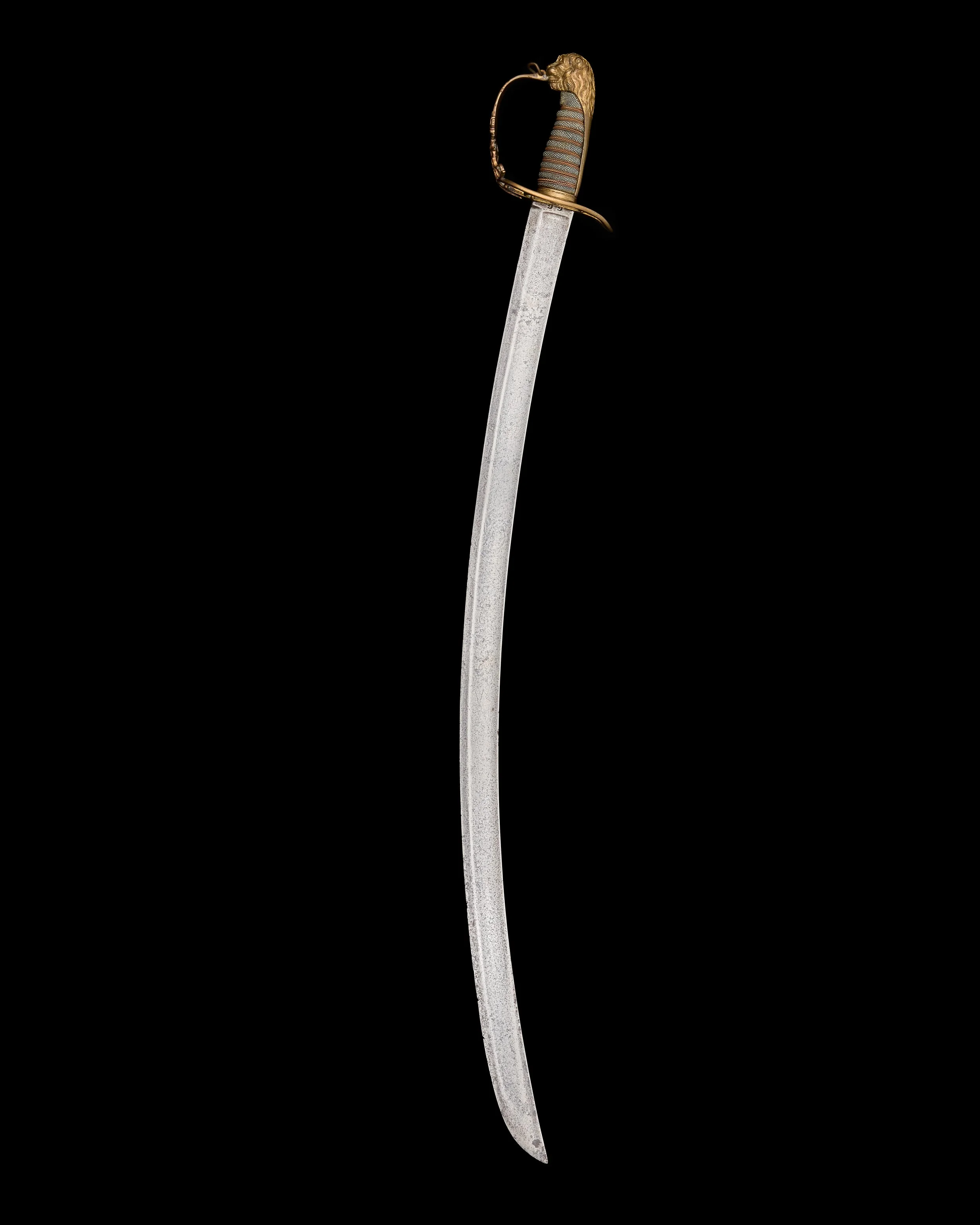
Click and use the code >21041 to search for this item on the dealer website Wondrous Quality 18th Century Gilt Bronze Hilted Royal Naval Officers Sword of Hunting Hanger Form
  • Nation : British
  • Local Price : £1195
Click and use the code >18951 to search for this item on the dealer website Very Fine, Early to Mid 18th Century, Regimental 27th Foot Inniskillings, 1st Land Pattern Brown Bess Musket Bayonet. One of the Most Desirable and Collectable Bayonets, Used By One Of The Most Famous of Regiments
  • Nation : British
  • Local Price : £1195
Click and use the code >25838 to search for this item on the dealer website Superb, Heavy Grade, Original Viking ´Bearded´ Battle Axe, Around 1000 Years Old. Almost Every Viking Warrior Used the Axe or Spear As Their Main & Primary Combat Weapon. Swords Were the Prerogative of Kings and Earls {Jarls}
  • Nation : Japanese
  • Local Price : 15,000 kr
Japanese ww2 officer's katana.
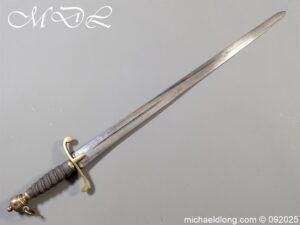
  • Nation : British
  • Local Price : £1175
English Civil War / Restoration Period Officers’ Walloon Sword. English Walloon Swords were mainly produced from the second to the fourth quarters of the 17th century. The pierced guard plates which are typical of the hilt design were influenced by earlier developments in Europe, which were combined with the features of existing English sword styles, to create this  form of English hilt. English Walloons were in use throughout the English Civil War period, the Restoration period, and in the battles fought during the Glorious Revolution of 1688 when James II was deposed. Most usually these are cavalry swords mounted with single edged blades. This example has a double edged blade. The hilt is made up of slender rounded bars built upon a sturdy quillon block. The cross bar is extended into a rear quillon which terminates in a swollen  wristguard. To the front, the quillon is extended into a knuckle bow, the flat grooved terminal of which is tucked into an aperture located at the front lower part of the pommel. Robust oval ring guards are mounted on each side of the cross bar, each with decorative bisected pairs of square shapes in the outer middle. Each ring is filled with a slightly downwardly convex plate, intricately engraved and pierced with concentric oval designs. The plates are integral in the manufacture of the ring guards rather than of separate manufacture sprung into place in grooves chiselled around the insides of the rings. The sprung plates are a later European development rarely present on English swords of this time. The knucklebow has two subsidiary bars emanating from near the base which join with the edges of the ring guards to strengthen the hilt structure. The hilt floor has a raised platform on the inside which supports the grip. The slightly flattened oval pommel has a fluted top with an integral raised button and a flared neck beneath. The slightly baluster shaped wooden grip is bound with  twisted brass wire and has woven Turks Heads top and bottom. The plain blade is of slender diamond section. The overall length of the sword is 38.5 inches ( 98 cm) and the blade is 32.75  inches (98 cm) long. Overall the sword is in firm lightly pitted condition. For further information on English Walloon swords, and to see similar examples, see Stuart C Mowbray, “British Military Swords – Volume One: 1600 to 1660”, Mowbray Publishing, 2013, pages 246 to 254. See also for further discussion, Cyril Mazansky, British Basket Hilted Swords, Boydell Press 2005, Chapter 11, pages 281 to 284. The swords are described as “Hilts based on pierced side rings”.
  • Nation : British
  • Local Price : £1175
Click and use the code >25845 to search for this item on the dealer website Rare, Original, Ancient Viking Iron Battle Hammer-Axe. Around 1100 to 1200 Years Old. Almost Every Viking Warrior Used the Axe or Spear As Their Primary Combat Weapon. Swords Were the Prerogative of Kings or Earls {Jarls} A South West England Find
  • Nation : Russian
  • Local Price : £1,150.00
Russian Cossack Shasqua 1881 Troopers. Russian Cossack Shasqua 1881 Troopers, this example post Russian Civil War with the Soviet Star and Hammer plus sickle symbol of the Soviet Socialists Republic to the hilt pommel which is plated. The scabbard adapted to carry Moisin Nagant 1891 socket bayonet later type with spring catch, the blade with various stamps and marks.
  • Nation : British
  • Local Price : £1150
Click and use the code >22171 to search for this item on the dealer website Stunning & Very Rare Kings Royal Rifles Corps Officer´s ´Battle Honour Blade´ Presentation, Combined Combat and Dress Sword
Page 52 of 156