
Show

Forgot your password?

Error message here!

Error message here!

Error message here!

Error message here!

Show Error message here!

Show Error message here!

Lost your password? Please enter your email address. You will receive a link to create a new password.

Error message here!

Back to log-in

Close

For Sale

The following items are listed by for sale by users of the site and dealers. They are in no way endorsed or guaranteed by www.antiquearmsresearch.com

Add a Classified Item
to

Clicking on the sword will take you through to the relevant classified item or dealer site.
Don't miss out! - Do you want to be kept informed weekly of new aditions? Just join our weekly update list.

You can also receive regular email notifcations when items match your keywords. To recieve them just register or logon at the top right of this page.
Page 61 of 157
  • Nation : British
  • Local Price : £895.00
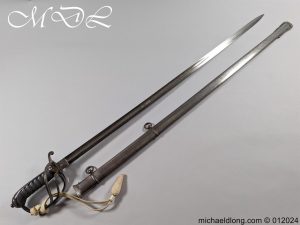
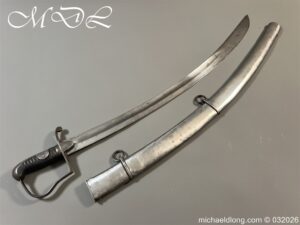
Cape Mounted Rifles 1853 Troopers Sword. Cape Mounted Rifles 1853 Troopers Sword, regulation British cavalry trooper&#acute;s sword. Slightly curved blade with single fuller and maker marked Mole with a small crown over B over 47 Regulation iron hilt 3 bar hilt with chequered leather slab grips worn. Complete with scabbard marked C.M.R please note one ring missing and throat overall length 41.25 inch the blade 35.25 inch for reference: Swords of the British Army by Brian Robson page 12 “ 13
  • Nation : British
  • Local Price : £895.00
Original Victorian Era Indian Pata Gauntlet Long Sword. Sn 22752 -. Pata swordsmen of the 17th century through to the Victorian era were specially trained in the use of this weapon, and could be extremely accurate with this somewhat unusual sword form. Peculiar to the Indian subcontinent, these broadswords had a protective gauntlet or armguard of steel, the grip being set at right angles to the blade (see page 485 item 6 of Stone’s A Glossary Of Arms & Armor where a Pata with similar gauntlet form as ours is illustrated). The steel gauntlet on this example has age and use related wear and one small hole possibly old battle damage. The sword has a 37” flat steel double edged blade and measures 49 ¾” overall. The blade is riveted to the ornate extended tang of the Gauntlet. The blade with coarsely formed fuller / blood groove is sharp and has a few nicks consistent with age. The inside of the gauntlet has a steel bar grip set across the inside of the fist part of the gauntlet. The ’cuff’ of the gauntlet has a curved fore arm bar/ bracelet which hooks into 2 holes, one either side of the gauntlet. The price includes UK delivery. Sn 22752 (armoury next to bucket)
  • Nation : British
  • Local Price : $895.00
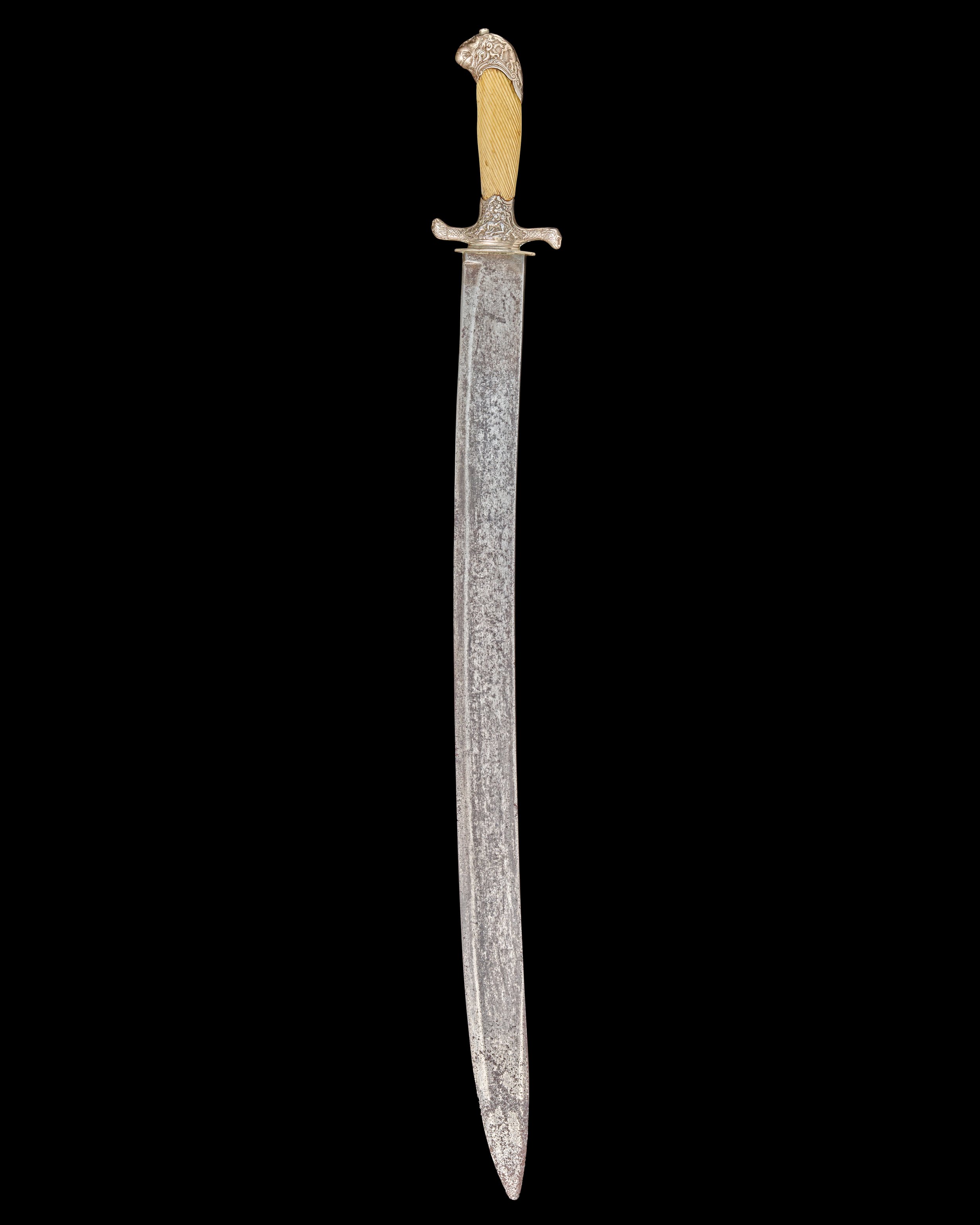
English Plug Bayonet, Last Quarter 17th C. The plug bayonets of England had curved blades more often than any other country. The example offered here features an unmarked slightly curved 11 1/16″ single-edged blade of wedge section, the last 4 3/4″ double-edged. Brass guard with acorn finials and brass pommel with small turned button finial. Figured walnut grip with brass base ferrule. Blade smooth and near excellent, with one tiny edge nick. Grip and guard also near excellent, appearing to have never been mounted in a gun barrel. Overall length 17″. Though probably originating around 1550, the plug bayonet had a relatively short span of use from around 1650-1720 (except in Spain where they were used into the 19th C). Their rise in popularity largely paralleled the development of standing armies in Europe, which were realizing the importance of the musketeer, while at the same time not wanting to wholly abandon the pike. In this sense the plug bayonet can be considered a transitional weapon. However, despite its use as a dagger on its own, it was soon found to be impractical since it's use prevented the musket from being fired. Countless soldiers also found great difficulties in removing a stuck plug bayonet from the muzzle, rendering the musket useless as a firearm. Many were damaged while being removed and as a result relatively few survive. For these reasons it was soon superseded by the socket bayonet, which did not affect the musket's ability to fire and could much more easily be removed.
  • Nation : French
  • Local Price : £895.00
French Five Ball Hilt Spadroon. Ref X3409. A Fine French Five Ball Hilt Spadroon. 38 1/2&157; overall, 33&157; slender blue & gilt straight blade decorated with trophies of arms. Five ball gilt hilt with star in side bar, cushion pommel engraved with bay leaves & chequered ebony grip, with gilt brass edges. Lacks scabbard. Circa 1800&194;&160; &194;&160; &194;&160; &194;&160; &194;&160; &194;&160; &194;&160; &194;&160; &194;&160; &194;&160; &194;&160; &194;&160; &194;&160; &194;&160; &194;&160; &194;&160; &194;&160; &194;&160; &194;&160; &194;&160; &194;&160; &194;&160; &194;&160; &194;&160; &194;&160; &194;&160; &194;&160; &194;&160; &194;&160; &194;&160; &194;&160; &194;&160; &194;&160; &194;&160; &194;&160; &194;&160; &194;&160; &194;&160; &194;&160; &194;&160; &194;&160; &194;&160; &194;&160; &194;&160; A very attractive high quality sword in good condition, possibly for a Naval Officer. &194;&160; &194;&160; &194;&160; &194;&160; &194;&160; &194;&160; &194;&160; &194;&160; &194;&160; &194;&160; &194;&160; &194;&160; &194;&160; &194;&160; &194;&160; &194;&160; &194;&160; &194;&160; &194;&160; &194;&160; &194;&160; &194;&160; &194;&160; &194;&160; &194;&160; &194;&160; &194;&160; &194;&160; &194;&160; &194;&160; &194;&160; &194;&160; &194;&160; &194;&160; &194;&160; &194;&160; &194;&160; &194;&160; &194;&160; &194;&160; &194;&160; &194;&160; &194;&160; &194;&160; &194;&160; &194;&160; &194;&160; &194;&160; &194;&160; &194;&160; &194;&160;&194;&160; Images courtesy of West Street Antiques (https://antiquearmsandarmour.com/)
  • Nation : British
  • Local Price : £895.00
1796 Infantry Officer´s Sword by Osborn. Ref 9275. A 1796 Infantry Officer´s Sword by Osborn. 39&157; overall, 32 1/2&157; straight fullered engraved blade with crown GR, foliage & trophies of arms with Pre 1801 Union Jack,&194;&160; Osborn & Warranted in a ribbon . Forte with GG blade smith mark . Folding guard, D shaped knuckle bow, faceted pommel, twisted silver wire grip. In its original black leather scabbard with gilt brass top mount & chape with frog button & one suspension ring. Circa 1796-1801. &194;&160;&194;&160;&194;&160;&194;&160;&194;&160;&194;&160;&194;&160;&194;&160;&194;&160;&194;&160;&194;&160;&194;&160;&194;&160;&194;&160;&194;&160;&194;&160;&194;&160;&194;&160;&194;&160;&194;&160;&194;&160;&194;&160;&194;&160;&194;&160;&194;&160;&194;&160;&194;&160;&194;&160;&194;&160;&194;&160;&194;&160;&194;&160;&194;&160;&194;&160;&194;&160;&194;&160;&194;&160;&194;&160;&194;&160;&194;&160;&194;&160;&194;&160;&194;&160;&194;&160;&194;&160;&194;&160;&194;&160;&194;&160;&194;&160;&194;&160;&194;&160;&194;&160;&194;&160;&194;&160;&194;&160;&194;&160;&194;&160;&194;&160;&194;&160;&194;&160;&194;&160;&194;&160;&194;&160;&194;&160; Sword in good condition, scabbard repaired with leather full length contemporary reinforcement. Henry Osborn, Sword Cutler, Bordsley Near Birmingham, Circa 1800 &194;&160; Images courtesy of West Street Antiques (https://antiquearmsandarmour.com/)
  • Nation : British
  • Local Price : £895.00 GBP
Scottish Basket Hilt, Edward VII. An Edward VII Scottish Officer's basket hilted sword in exceptional condition."
  • Nation : British
  • Local Price : £895.00
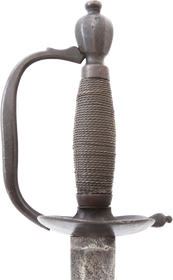
English Infantry Privates Hanger c 1750. English Infantry Privates Hanger c 1750, brass hilt comprising oval pommel on a stand and with a prominent tang-button, D-shaped knuckle-guard which spreads to form a heart-shaped stool around the blade, and very short rear quillon with drop-finial inclined towards the blade. Wooden grip no traces of being bound with wire, slightly curved single-edged blade with a narrow fuller almost at the back edge and stamped with crown over a 2 maker marked bates, overall length 33.75 inch the blade 28 inch
  • Nation : British
  • Local Price : £895.00
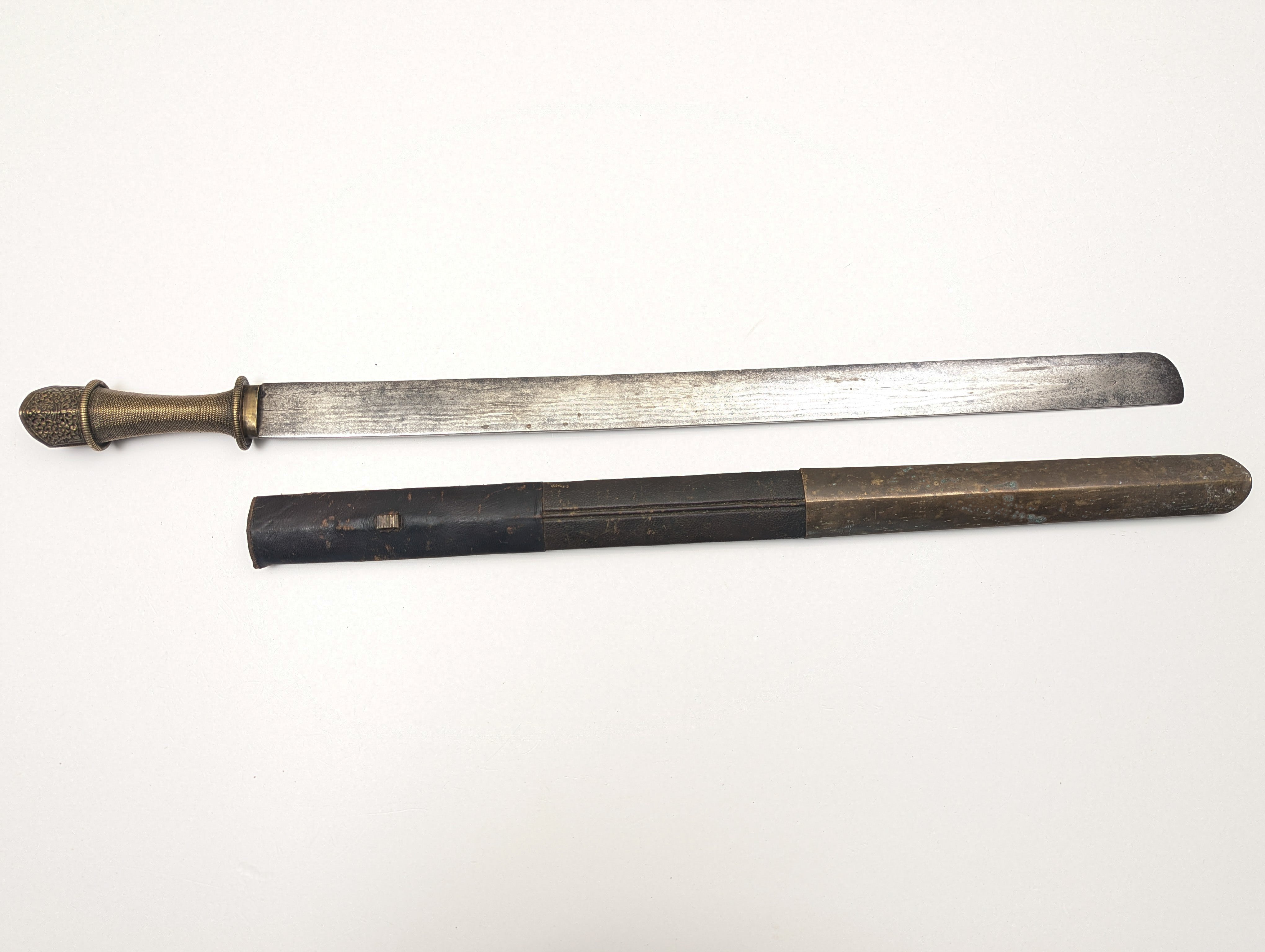
**RARE**MATCHING REGIMENT MARKS**Victorian British Army In India North West Frontier Era Wilkinson London Mountain Artillery Pattern 1896 Sword With Scabbard Both Marked ‘7 MN’ To The 7th Battery Mountain Division Royal Artillery Regiment. Sn 21. The Mountain Division, Royal Artillery, was an administrative grouping of mountain artillery units of the Royal Artillery from 1889. It continued as a distinct branch of the Royal Garrison Artillery until World War I. 7th Battery was based at the Kasi Pashtun tribe ruled area of Quetta near to the NW Frontier border with Afghanistan. In 1876, Quetta was occupied by the British and subsequently incorporated into British India. In 1856, British General John Jacob had urged his government to occupy Quetta given its strategic position on the western frontier. British troops constructed the infrastructure for their establishment. In 1896 a special Pattern of sword was introduced for Mountain Artillery Batteries. This pattern of sword is one of the rarest of regulation patterns and was used by British & Indian troops during campaigns on the North West frontier (see pages 228-230 of Robson’s book Swords Of The British Army). This is an excellent original example. The Sword has a 30 ¼” long single edged sabre blade with fullers (35” overall). The blade is clean with no rust or damage. The ricasso is marked With ‘ISD with WD arrow’ mark denoting British production for use by the British Army in India. The blade is signed by the manufacturer ‘Wilkinson London’ & with ‘I with WD arrow mark’ denoting acceptance by the India Stores Depot for use in the Indian Services. Our example has a brass flat bow guard and correct grooved cast iron ribbed grip. The guard is Regiment marked ‘7 MN’ To The 7th Battery Mountain Division Royal Artillery Regiment above weapon number ‘84’. The sword is complete with its original correct leather scabbard with brass mounts. The throat mount with locket has matching Regiment mark and weapon number together with other letters and numbers (illustrated). All stitching & leather of the scabbard are intact. The price includes UK delivery. Sn 21591
Page 61 of 157