
Show

Forgot your password?

Error message here!

Error message here!

Error message here!

Error message here!

Show Error message here!

Show Error message here!

Lost your password? Please enter your email address. You will receive a link to create a new password.

Error message here!

Back to log-in

Close

For Sale

The following items are listed by for sale by users of the site and dealers. They are in no way endorsed or guaranteed by www.antiquearmsresearch.com

Add a Classified Item
to

Clicking on the sword will take you through to the relevant classified item or dealer site.
Don't miss out! - Do you want to be kept informed weekly of new aditions? Just join our weekly update list.

You can also receive regular email notifcations when items match your keywords. To recieve them just register or logon at the top right of this page.
Page 9 of 156
  • Nation : Spanish
  • Local Price : 9,100.00 USD
SPANISH CUP HILT RAPIER C.1650. This fine rapier is distinguished by retaining a considerable original gold overlay. It gives us a glimpse of what most fine weapons would have looked like when they were being used. While most rapiers survive in the white, with bare iron surfaces, each had a surface treatment when produced. Many were blued or browned (russet) but a considerable proportion were gold or silver overlaid which served to protect the hilt as well as enhance them aesthetically. This example is of further interest as it represents the cup-hilt rapier in its most highly developed form, with long elegant thrusting blade and robust grip for the gloved fencer's hand. 44" length blade.
  • Nation : British
  • Local Price : £6450
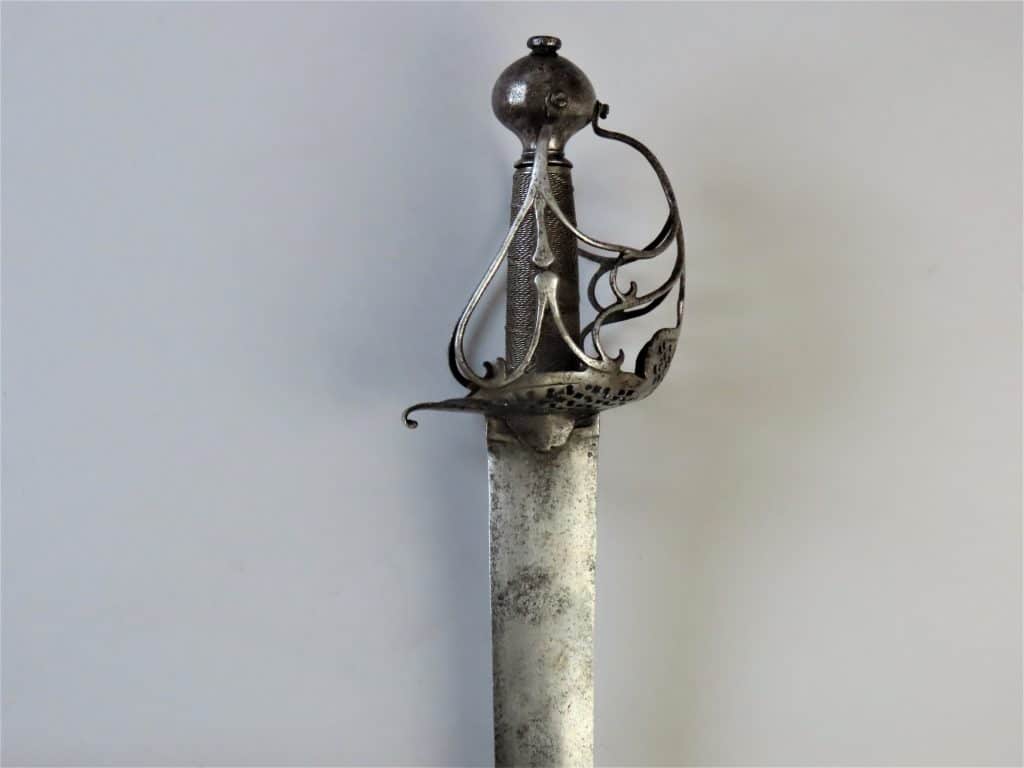
Scottish Basket Hilted Sword dating to circa 1730 mounted with an ANDRIA FARARA marked blade. A fine and robust Scottish basket hilted sword dating to circa 1720 to 1740. The sword is a bold and attractive example mounted with a broad double edged blade and is typical of what most collectors of Scottish arms and armour refer to as a “period” piece, in that it is a fully developed basket hilt and dates to the period before the Highland clan structure was dismantled after the  failure of the 1745 Jacobite Rebellion. The fully developed basket guard is finely forged into its elegantly rounded profile. The two main frontal guard panels are decorated in traditional style, with vertical and horizontal border lines incised into the exterior surfaces towards the panel edges to form squares. Inside these squares a circle is pierced into the centre, surrounded by pierced flanged hearts at the sides and circles in the corners. The smaller, secondary guard plates to the sides, and the knucklebow plate at the front, are finished with similar features enhanced with decorative parallel lines along the vertical lengths and laterally at the base. The side panels are mounted on decorative merlons which connect the side guard bars and strengthen the guard. All of the panels are symmetrically  decorated at the edges with intricate file work consisting of cusps, crescents and merlons. The dome-shaped pommel has a flat ribbed button on top and is decorated with three sets of incised lines, equally spaced apart, the centre line being  wider than those on its flanks, which radiate from the button. The upper guard arm terminals of the basket fit into a chiselled groove which extends for the full circumference of the pommel just below its middle to secure the structure. The spirally grooved wooden baluster shaped grip is covered with shagreen bound with flat metal strip and mounted with decorative metal ferrules top and bottom. The hilt has a full leather liner covered with red cloth on the outside and stitched with a blue silken hem, most of which is missing. The double edged tapering German-made blade, most likely of Solingen manufacture, is of fine quality lenticular section. It has a  ricasso which extends 1.75 inches (4.5 cm) from the hilt which  has a narrow fuller cut just inside each blunt edge for the same length. From the end of the ricasso two fullers extend for 5.5 inches (14 cm) along the blade middle. The fullers contain the armourer’s mark ANDRIA FARARA flanked with patterns of small crosses. An elaborate cruciform shape is present just beyond the termination of the fullers on each side. The blade is 33.5 inches (85 cm) long. The blade shoulders sit in a chiselled groove in the cross guard bar underneath the hilt which retains its scrolled wrist guard. The scabbard is of thick leather stitched along the middle on one side. The mounts are missing. However, the evidence of where the suspension clips were once placed shows it is of early form. For similar contemporary swords see Cyril Mazansky, “British Basket-Hilted Swords”, The Boydell Press, 2005, particularly that shown on page 113, fig F15c for an example in the Marischal Museum in Aberdeen and page 120, fig F16f(WA) for a sword made by Walter Allan of Stirling displayed at Dean Castle. The overall length of the sword is 39.5 inches (100.5 cm) long. The sword is in fine structural shape and undamaged although there is some delamination to one of the front guard panels.
  • Nation : Japanese
  • Local Price : £6450
Click and use the code >26072 to search for this item on the dealer website Stunning, Early, Signed Munemitsu, Bizen School Koto Blade Katana With Hi Circa 1480. A Most Beautiful And Incredibly Elegant Ancient Samurai Sword By a Master Smith Of the 15th Century, Of The Reign Of The Emperor Go-Tsuchimikado (å¾
  • Nation : Japanese
  • Local Price : £6450
Click and use the code >25647 to search for this item on the dealer website Fabulous, Museum Grade Signed, Antique, Samurai O-Tanto, Shinto Period. All Original Edo Fittings, Goto School. Absolutely Impeccable Blade Showing Fine Original Edo Polish & Displaying It&#acute;s Excellent Gunome Hamon. Overall An Incredibly Handsome Sw
  • Nation : Indian
  • Local Price : £9¸000
Beautiful Antique Silver Indo-Persian Rulers Sword. Beautiful Antique Silver Indo-Persian Rulers Sword\"This is a long curved¸ early antique Mughal Blade and is very rare. It is almost last 17th and early 18th century old sword and belongs to North India (at that time). The Hilt of this sword is called kuftgari hilt and is Silver.
  • Nation : Japanese
  • Local Price : £6350
Click and use the code >24449 to search for this item on the dealer website Absolutely Superb, & Signed, Samurai&#acute;s Large Sunobi-Tanto or Wakazashi Late Koto to Early Shinto Period. Mutsu no Kami Daido School. Carved Horimono Blade With Bonji, of FudÅ
  • Nation : American
  • Local Price : £6250
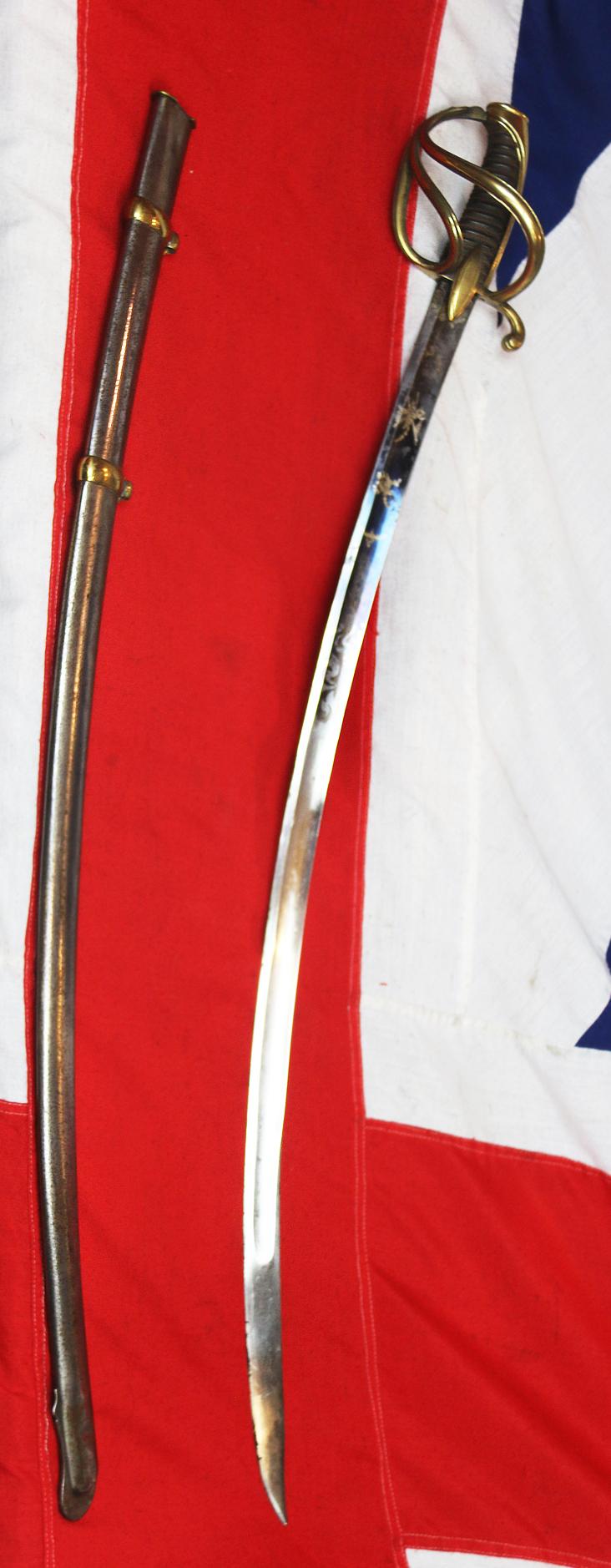
Click and use the code >25317 to search for this item on the dealer website Stunning Directoire Period French Blue and Gilt &#acute;Award&#acute; & Imperial Garde Grade Sabre of a General or General Staff Officer, Probably By Boutet Director of Versailles. Napoleon´s Personal Sword Maker
  • Nation : ?
  • Local Price : $5995.00
European Rondel Dagger, Misericorde, Late 14th C. Designed solely for thrusting against an armored opponent, this dagger is very stoutly constructed of solid steel, with thick unmarked 10 1/4” diamond-section blade with long rectangular ricasso. The guard is forged in two pieces in a cog wheel shape, with a down-turned lobe extension serving as a belt hook. Tapering octagonal grip with cross hatching and decorative turned top, bottom, and central features. The 2” diameter pommel disc is forged in two pieces and features a decorative flower head washer at the blade peen. Never been apart and blade with moderate pitting, the entire piece with a dark gunmetal gray patina. Shows lamination and slight forging flaws. Similar examples illustrated in AEuropaische Hieb-und Stichwaffen@, by Muller, Kolling, and Platow (published 1984), page 174. A very rare untouched piece of medieval history, possibly used at the famous Battle of Agincourt. This style dagger is known as a rondel dagger due to it=s round-shaped guard and pommel, though it can also be classified as a AMisericorde@. The latter name is a French term derived from the Latin Amisericordia@, meaning Aact of mercy@. The intent of such daggers was to dispatch a seriously wounded knight and end his suffering. Such daggers were known to have been used at the famous Battle of Agincourt in 1415, when a force of English knights, men-at-arms, and longbowmen under the command of Henry V, defeated a much larger force of French knights, men-at-arms, and crossbowmen. Despite the code of chivalry and the value of ransomed prisoners, Henry ordered the killing of many of the prisoners because he saw the French forming for what he feared would be a renewed attack, which could have caused an uprising among the prisoners. When the French fled the field of battle, he ordered the killing to cease. Despite the overwhelming English victory, the result of the battle had little effect on the continuing Hundred Years War, which was ultimately won by the French. Henry returned to England the following month, but the French nobility and military were decimated, with entire noble families being wiped out.
Page 9 of 156